For retirees, fixed deposits are often the default choice, but they may not be enough to generate the income needed to support household expenses, medical costs, and other day-to-day needs.
A retiree needs three things from a portfolio: regular income, emergency liquidity, and long-term growth. Bonds can play a useful role in providing predictable income and helping retirees diversify their income sources.
High-quality bonds can offer higher yields than bank deposits, allowing retirees to generate the income they need without relying entirely on FDs.
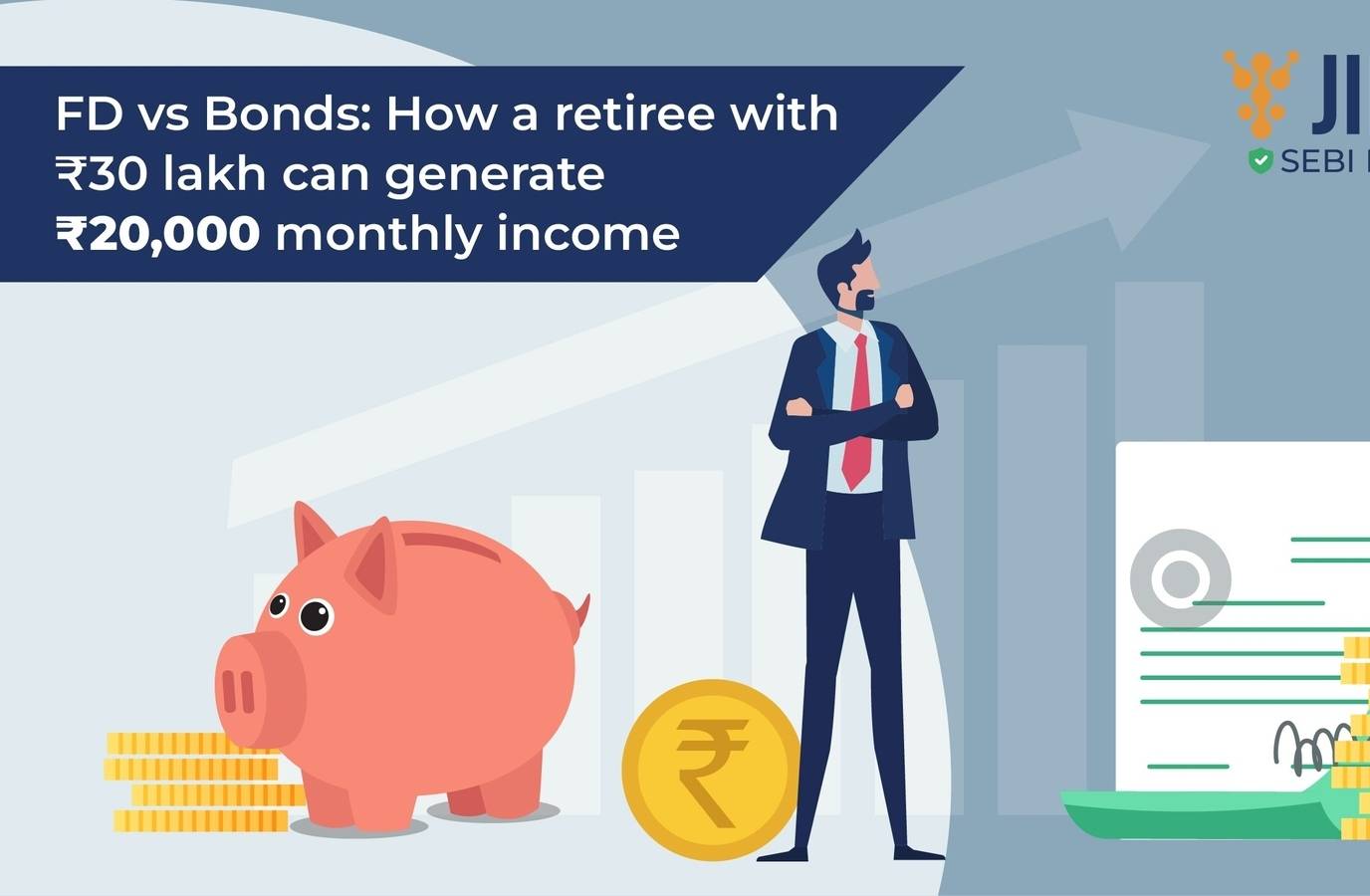
A case study shows how a retiree with ₹50 lakh can generate ₹20,000 per month by investing ₹30 lakh in AAA and AA bonds at an assumed 8 percent yield.
This leaves ₹20 lakh available for emergency needs, liquidity, and growth, which can be allocated across different needs, such as emergency funds, savings accounts, and growth mutual funds.
Bonds provide regular income, while FDs and savings accounts provide liquidity and comfort, and growth mutual funds help the portfolio fight inflation over time.
A retirement portfolio has two jobs: generate income today and protect purchasing power for tomorrow. Bonds can handle the first job, while growth products help prepare for tomorrow.
However, retirees should focus on higher credit-rated bonds and manage risk carefully, checking credit rating, issuer quality, repayment record, security cover, tenure, coupon frequency, and liquidity before investing.
The bottom line is that a retiree's portfolio should provide emergency liquidity and long-term growth, in addition to regular income.