After Far-Right Triumph, Merz Faces Narrow Path to Save His Government | World News
The state election result could lead to a debate over the future of the firewall that has kept the Alternative for Germany out of power. | World News
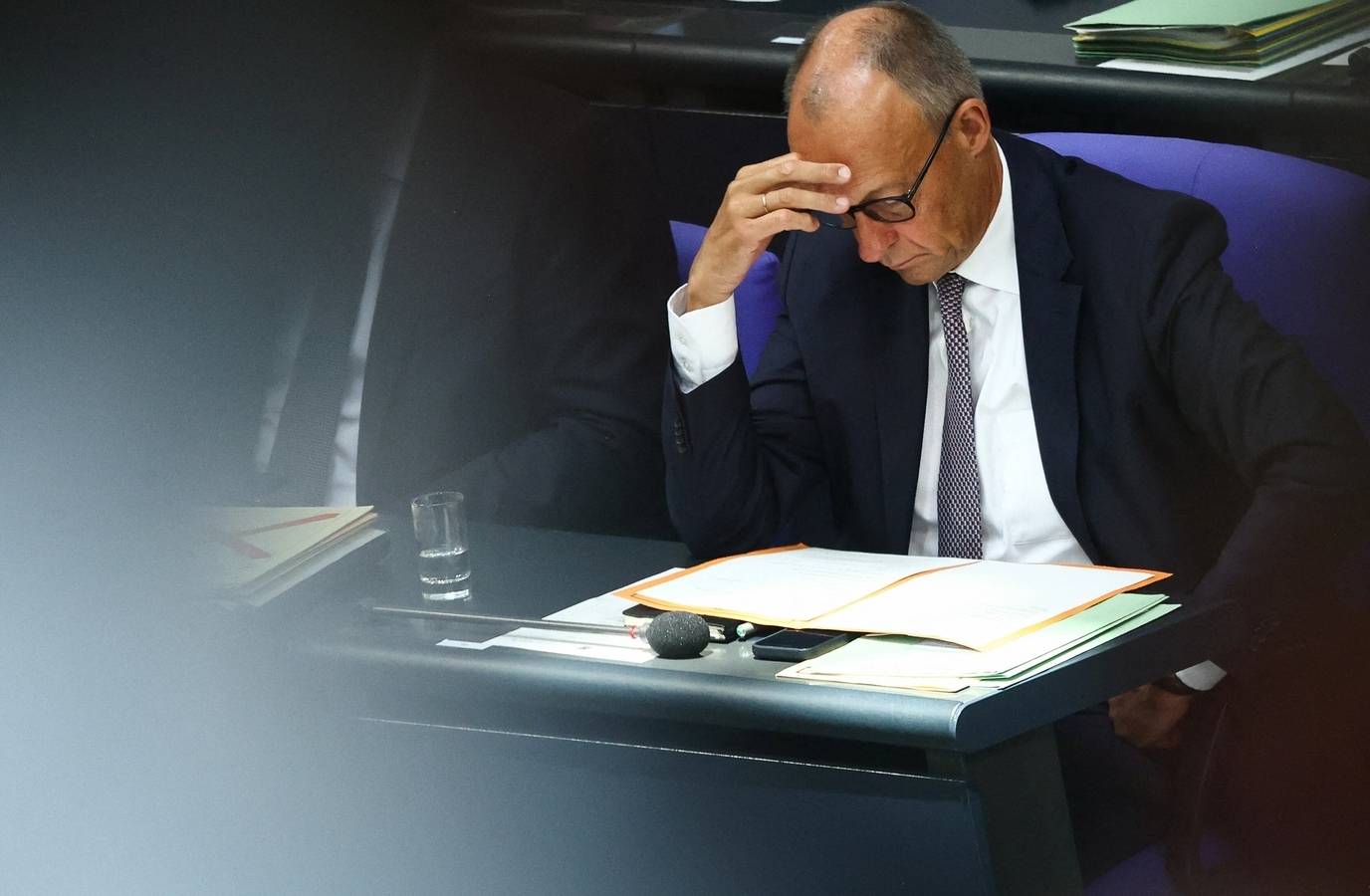
BERLIN—Germany’s embattled leader faces an uphill battle to save his government after a historic far-right victory on Sunday that could reshape the country’s political system.Chancellor Friedrich Merz sounded both humbled and defiant when he addressed his party’s defeat on Monday. “This is the worst defeat the CDU has experienced in years, even decades,” he said. “It will of course have consequences.”But he signaled he would stay the course on some of his signature policies. He pledged to deliver on a package of measures aimed at boosting Germany’s struggling economy, and he said his government would be unwavering in its support for Ukraine. The Alternative for Germany, or AfD, has criticized Germany’s support for Kyiv and favors stronger ties with Moscow. “Giving up is no option,” said Merz. The election defeat and sagging poll numbers have put Merz in a corner that will leave him with difficult choices, such as potentially ending the unspoken rule among Germany’s establishment parties to ostracize the far right. At stake is whether Europe’s largest economy and the region’s emerging conventional military superpower will succumb to the political instability that is crippling its neighbors from the U.K. to France.Will the AfD run its first government?The AfD scored 43.8% of votes at Sunday’s election in the eastern state of Saxony-Anhalt, the best result since its creation. Merz’s Christian Democratic Union saw its score more than halve to 17.2%, worse than any poll had predicted.Despite its victory, the AfD came just short of a majority of seats that would have allowed it to form a state government. Its leaders said on Monday they would approach other parties and individual state lawmakers to persuade them to back an AfD-led government.So far, no party has said it would accept the offer and these negotiations could take weeks. As long as no new government is sworn into office, the departing CDU state premier would continue to govern in a caretaker capacity.A small far-left group that could play kingmaker has suggested it may offer passive support to an AfD state premier. Under the state’s constitution, a head of government can be elected with a mere plurality of votes if they fail to obtain a majority in three consecutive votes in the house.Tino Chrupalla, the AfD’s national co-chairman, seemed to reject this option on Monday, saying “we need a stable majority.”Why is a vote in a small German state threatening Merz?Since Merz’s election in 2025, the AfD has seen its ratings soar in national polls while the CDU’s have collapsed. This is creating unease among CDU lawmakers and regional politicians, many of whom blame the government.More than 80% of voters—and almost 60% of CDU voters—are unhappy with Merz’s work, according to an Infratest dimap poll released last week. His government is one of the least popular in German post-World War II history.Part of the reason he is so unpopular is that Germany’s economy has been stuck in a rut. It has barely grown since 2019. A multibillion euro spending program to fix the country’s military and upgrade its decrepit infrastructure has yet to translate into higher growth. Sunday’s election result matters because in Germany’s federal system, state power is a prerequisite for national power. A succession of state-level electoral defeats can gut a party’s political base, raising pressure on the leadership to change course or give way to a new team.Impatience with Merz is now turning to panic and spreading among the CDU grassroots and elected officials, who are in turn pushing him to shift the government’s political course. A minority also wants him to lift an internal party ban on cooperating with the AfD at the state level.What are Merz’s options?The first—which Merz sketched out on Monday—is to forge ahead with his government and persuade the partners in his coalition government, the Social Democrats, or SPD, to stick to a planned overhaul of the cash-strapped welfare system.“Precisely because he’s wobbled on so many issues in the past, he can’t afford to waver and show weakness now,” said Sudha David-Wilp, vice president and senior fellow at the German Marshall Fund of the U.S., a think tank.The SPD is pushing back. Lars Klingbeil, the SPD vice chancellor and finance minister, said Monday that the vote was “a signal that we need to think about our policies here in Berlin and about the government’s planned reforms.”If this fails, Merz could deflect attention by surrendering his party’s chair to a more popular figure. But this could further undermine his authority.Many analysts expect the chancellor will have to abandon or weaken the so-called firewall, the informal agreement among mainstream parties to ostracize the AfD. A decision could come as early as next month after two more state elections in late September.Merz could give CDU politicians at the state level latitude to vote with the AfD on specific bills while barring them from formally joining an AfD government. An internal party ban on working with the postcommunist Left Party could also be lifted for balance.Ending the firewall would be highly risky. It could spook the SPD, prompting it to abandon the coalition, and even fracture the CDU. If this happened, Merz might have to lead a fragile minority government.“It would be a jump into the unknown and a big risk,” said Andreas Rödder, a historian and longtime critic of the arrangement. “But it is the only chance for this government to achieve anything historically significant.”Write to Bertrand Benoit at [email protected]