How a Restaurant at the Top of the World Trade Center Changed New York | Hindustan Times
Windows on the World, over 100 stories up the North Tower, was a culinary juggernaut that shifted the city’s culture.
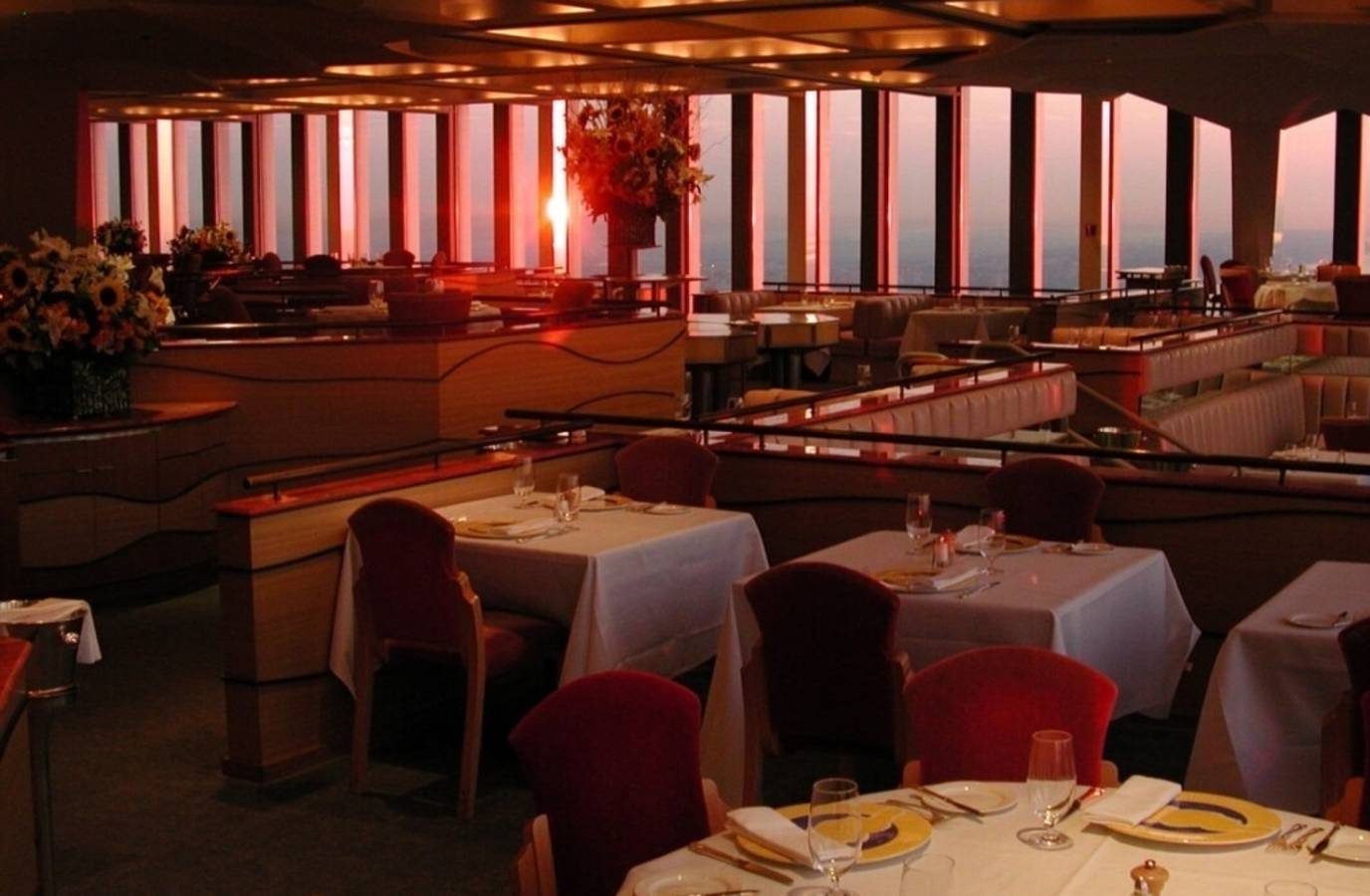
When a team set out to build a destination restaurant at the top of the World Trade Center in 1971, lower Manhattan was not exactly a dining hot spot.“The city was in the s—s,” said Michael Whiteman, who partnered with restaurateur Joe Baum to open Windows on the World. “The ubiquitous graffiti had turned hostile. Wall Street was bust. Tourists were afraid to go south of 34th Street.”Making matters even worse, the World Trade Center—delayed by several years of political pushback—was being built with public money in a city that was broke. “It was rather grim, and people hated these two ugly filing cabinets coming out of the ground,” said Whiteman, 88.In some ways, the collective skepticism was liberating: Whiteman and Baum, who died in 1998, could let their imaginations run wild. “Everything was a blank sheet of paper,” he said.Architect Warren Platner envisioned a warm and sensory aesthetic that framed an uninterrupted view. Famed graphic designer Milton Glaser, who would go on to create the city’s famous I ♥ NY logo, defined the restaurant’s visual identity with dishware and matchbooks that pulled from the sky’s palette and used celestial motifs. Glaser’s aesthetic credo for the venue was appropriately grandiose: “A journey to the promised land, an adventure in imagination, the pursuit of the unexpected.” New Yorkers flocked to the 106th and 107th floors of the North Tower to see what that was all about. At the opening party for Windows on the World in 1976, headlined by opera star Beverly Sills and Mayor Abe Beame, Glaser’s dishware began to disappear.“A lot of people decided they were souvenirs,” Whiteman said. “I remember Joe standing in the elevator and bumping into people.” The telltale sign of a plate thief? “If they clanked, which a lot of them did.” New York City’s critics and tastemakers, who had steadily pilloried the World Trade Center, not only embraced Windows on the World—they anointed it. “‘Spectacular’ as an adjective limps from abuse, but spectacular it is,” raved New York magazine’s restaurant critic Gael Greene.“The city welcomed us,” Whiteman said. “The people welcomed us. They made it a success because, suddenly, there was a cause for optimism.”Dignitaries and celebrities welcomed it too and Windows became an it-venue for black-tie galas, weddings, fundraisers and hell-raisers. Following her first solo concert residency in New York City in 1977, Dolly Parton hosted a party that drew everyone from Andy Warhol to Barbara Walters. By the 1990s, everyone from Frank Sinatra and Liza Minnelli to Carolyn Bessette Kennedy and John F. Kennedy Jr. bridged the Windows clientele. In spite of its quarter-mile heights, Windows on the World deviated from lofty and pretentious fine-dining conventions. “If you had beef bourguignon on the menu, you would have to find a way to describe it in English,” Whiteman said. “That caused a whole shift in dining culture.”Its momentum came to a halt in 1993, when a truck bomb detonated on the sublevel of the World Trade Center, injuring over 1,000 people and killing six—including a purchasing agent for Windows on the World and four employees of the Port Authority.“They blew a big hole in the underground garage,” Whiteman said, adding that the attack shattered Windows’ supply infrastructure.The restaurant, already in need of updating for health ordinances and building codes, shuttered for a three-year renovation. Baum and Whiteman won the proposal to renovate, which cost $25 million. “We really didn’t feel the need to reinvent the place,” Whiteman said, adding one bombastic exception: The Greatest Bar on Earth, which had been Baum’s brainchild. The bustling scene featured three bars and a piano in the middle of the room; the concept carried a markedly younger demographic in mind with a menu that featured now-ubiquitous share plates and global street food like kebabs and dumplings for a hungry, striving clientele.“The idea was that as customers grew older, they would become more mature and we would be greeting our own future customers,” Whiteman said. “It was a good idea and it was a great success, but the future never arrived.”For several years, Windows would run neck-and-neck with Tavern on the Green as the highest-grossing restaurant in the U.S.; in 2000, its last full year of operations, Windows on the World held the mantle.Then the world changed forever. Among the thousands who died in the towers on Sept. 11, 2001, were more than 70 Windows on the World workers who had clocked in for their morning shift. For the surviving staff, absorbing the shock and the loss of the attacks meant springing into service. Many joined with volunteer organizations to prepare and dispense meals to first responders and recovery workers.“We served everybody. People used to bring food there and we just served it to police, to the fire department, to people who were helping there,” said former Windows server Fekkak Mamdouh, a Moroccan immigrant who started working at the restaurant in 1996. “It was all day and night. There was no stop.”In early 2002, Mamdouh co-founded the Restaurant Opportunities Center of New York in early 2002 to help former Windows staff members, along with affected downtown service workers in the area, find employment and advocate for higher pay.This year would have been Windows on the World’s 50th birthday. During its 25-year run, millions of guests rode to the top of the North Tower to see it for themselves.“Here we were on the 107th floor, the sun shining in and it was bright,” Whiteman said. “There was a lot of brass and glass and mirror and the thing sparkled. And there was unmitigated light because we were so high. We’d look down on the clouds. It was really exciting to watch a thunderstorm roll in underneath you. The light was amazing.”