Iran’s Oil Dollars Are Drying Up—and Plunging It Deeper Into Crisis | World News
The U.S. blockade and dwindling supplies already on the water are squeezing Tehran’s most important export earner. | World News
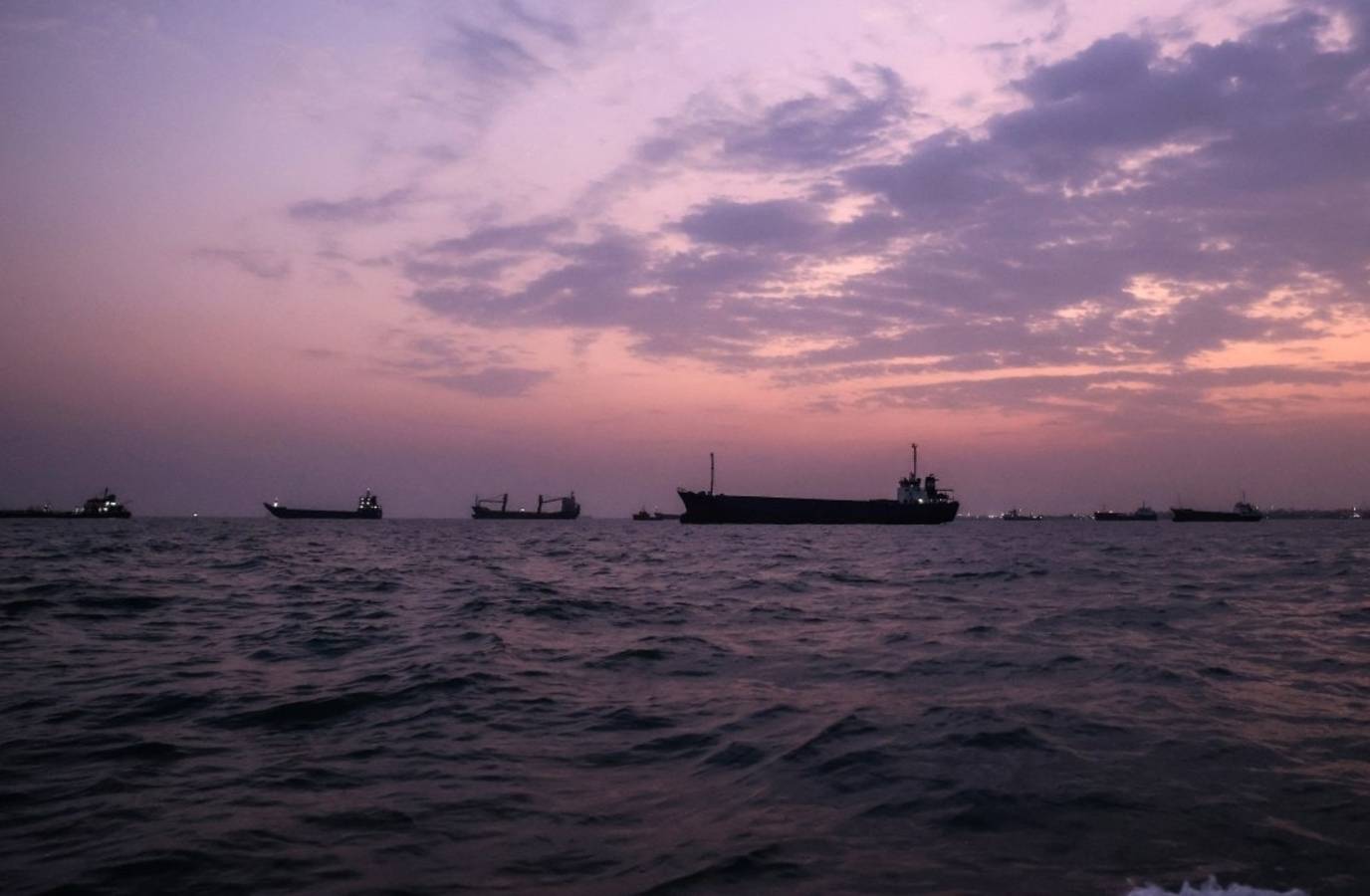
DUBAI—Iran’s oil export revenue is drying up as a U.S. naval blockade strangles shipments from the Persian Gulf and offshore stockpiles feeding China dwindle, putting more pressure on Tehran’s battered economy.No Iranian crude has crossed the blockade since it was reinstated by the U.S. Navy in mid-July, according to ship tracker Kpler. Iran is still loading small amounts of oil onto tankers, but those barrels remain trapped inside the Gulf.Meanwhile, the volume of Iranian crude already on vessels outside the blockade—a trove that is still generating revenue for Tehran—has fallen to around 29 million barrels from around 90 million barrels in mid-July and could run out next month, according to Kpler. Gulf oil officials, who run checks to see what their customers are buying before setting the monthly price for their oil, said they have found few Iranian cargoes changing hands. Six months into the war, the oil squeeze is depriving Tehran of its main source of foreign currency as the value of the Iranian rial plunges, inflation soars and the economy slides deeper into crisis. It is also testing Washington’s bet that greater economic pain will force concessions. Gulf officials and analysts warn the tightening vise could instead provoke more Iranian retaliation. On Saturday, the U.S. struck three Iranian oil tankers after Iran launched ballistic missiles toward two Navy warships, including an aircraft carrier.“Now, much will depend on the degree of economic pain that the Iranian regime is willing to bear to achieve its military and geopolitical objectives,” said Hamad Hussain, an economist at Capital Economics.Treasury Secretary Scott Bessent touted the squeeze Friday with a post on X accompanied by a “Jaws”-style graphic of a shark tearing into a chart of Iran’s falling oil exports and currency.Roughly a third of Iran’s state budget is typically funded by oil revenue. Oil sales also directly help finance the regime’s military. The U.S. Treasury says the armed forces, including the Islamic Revolutionary Guard Corps, use dedicated companies and shadow-fleet networks to sell crude and supplement their budgets.Iran loaded 255,000 barrels a day on vessels inside the Gulf in August, 85% below the February-April average, Kpler data shows. Those newly loaded barrels remain trapped behind the blockade line and haven’t made their way toward buyers.The diplomatic effort to end the war that led to a memorandum of understanding between the U.S. and Iran in mid-June, including a weekslong pause in the blockade, allowed Tehran to move substantial volumes of oil overseas for later delivery. The country is still living off the profit from those barrels.“The process of selling oil and delivering it to customers was carried out thousands of kilometers away from the Persian Gulf and the Sea of Oman,” Iranian Oil Minister Mohsen Paknejad said Friday.But now that lifeline is disappearing. Kpler estimates that current deliveries of around a million barrels a day—which mostly go to China—could exhaust the store of Iranian oil on the water by mid-October. Payments for previously delivered cargoes would likely dry up by mid-December.Even those payments could become harder to collect. Sanctions under Washington’s new economic pressure campaign are targeting banks and other financial channels that facilitate Iranian transactions.Some Chinese buyers are turning to Saudi, Iraqi and United Arab Emirates crude, Gulf energy officials said. In some cases, Iranian oil now costs refiners more than competing supplies due to its relative scarcity, they said. Iraq has offered discounts of nearly $30 a barrel on some grades. Brent crude was trading at around $97 a barrel Monday.The blockade is also forcing Iran to cut some production. Oil stockpiles haven’t risen much, suggesting Iran has brought its output down closer to what it needs at home, said Homayoun Falakshahi, head of crude-oil analysis at Kpler. That suggests the scenario analysts predicted during the initial blockade this spring—that Iran would have to pare back output to keep its backed-up oil from hitting the “tank tops” of available storage—is playing out.Overland routes offer little relief. It is only possible to move small amounts of oil by truck or rail compared with seaborne exports and Iran mostly lacks wagons designed for crude or refined products. Iran could move no more than 40,000 barrels a day via trucks, a sliver of its prewar exports of close to 2 million barrels a day, Falakshahi said.The pressure extends to petrochemicals. The sector, Iran’s second-largest source of foreign-currency earnings after oil, also depends heavily on seaborne exports. By August, loadings had fallen by about two-thirds from early 2026, Kpler estimates.By contrast, other Gulf producers have kept significant volumes flowing despite the conflict, with the U.S. guiding convoys through the Strait of Hormuz, and Saudi Arabia and the U.A.E. routing more crude through pipelines that bypass the waterway.The Iranian export squeeze is deepening the economic crisis in a country where official inflation is running at more than 80% year-over-year. The International Monetary Fund forecasts a 5.4% economic contraction this year, the country’s worst since the 1980s.Falling exports deprive Tehran of the hard currency it needs to support the rial and pay for imports, including raw materials for factories. That makes imports more expensive and fuels inflation. The rial has lost almost 15% of its value against the dollar since President Trump announced his economic squeeze campaign in August, Hussain said.Iran’s overall trade hasn’t stopped entirely. The regime exported nearly $15 billion of non-oil goods between mid-March and mid-August, according to Iranian media, though that value is down from last year.But a major commercial gateway has recently narrowed. Official trade through the U.A.E. has largely stopped after the country said last month it would suspend financial and economic transactions with Iran, officials familiar with the matter said, although some trade continues through shadow companies. Trade is also shifting through Turkey, Iraq, Oman and Pakistan, but that adds time and expense.Gulf officials and analysts see little sign that the mounting economic pressure will force Tehran to relent. Saudi officials say Iran is also providing more weapons, personnel and intelligence support to its Houthi allies in Yemen, increasing the threat to Saudi shipping and infrastructure, and threatening another shipping chokepoint.“The U.S. campaign will have a significant effect on the average Iranian household. But in terms of Iran capitulating at the negotiating table? I have a lot of doubts,” said Ellie Geranmayeh, an Iran expert at the European Council on Foreign Relations. “The evidence we have suggests the Iranian regime is likely to resist.”Write to Georgi Kantchev at [email protected] and Summer Said at [email protected]