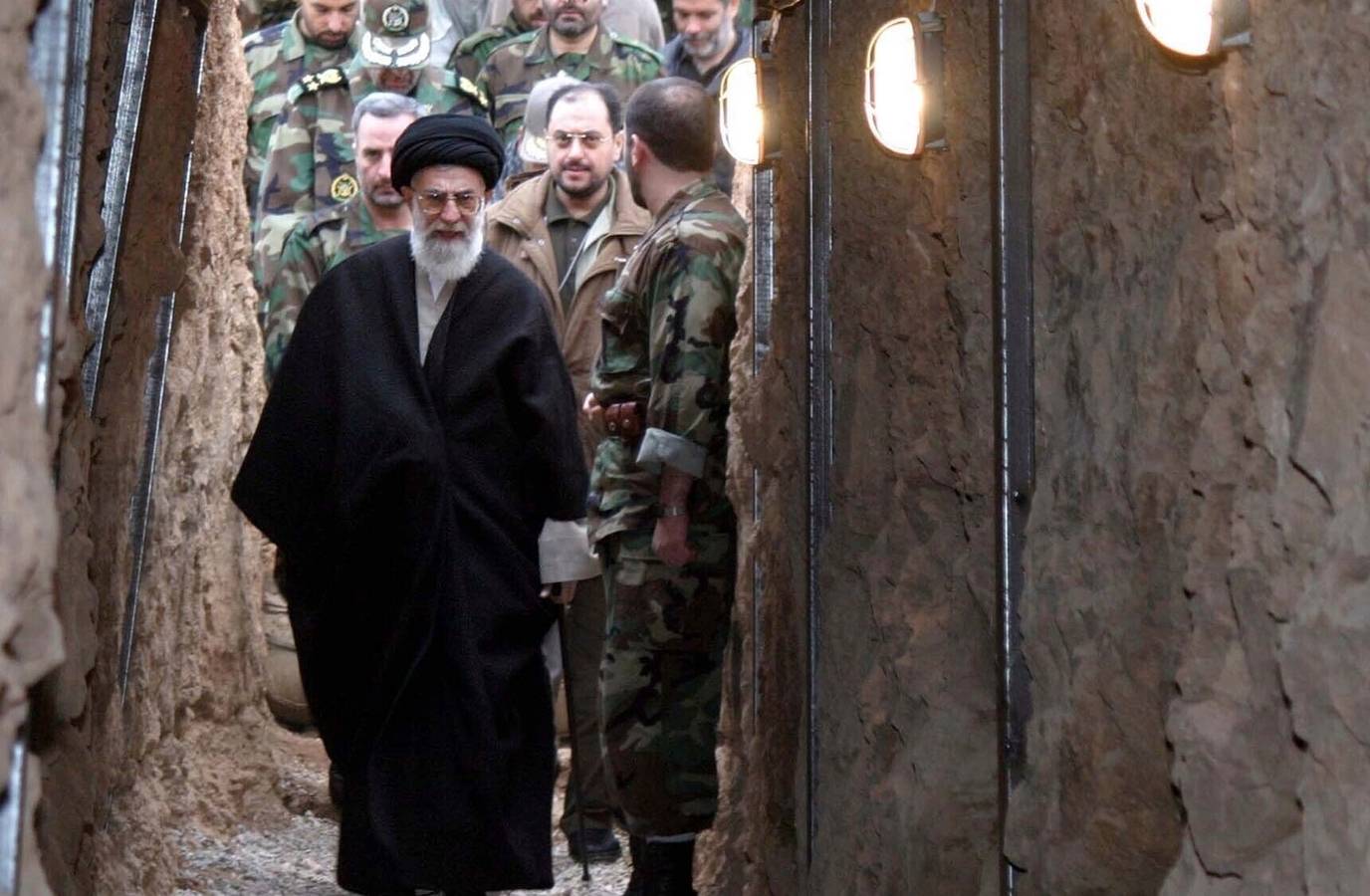
Iran's Supreme Leader Ayatollah Ali Khamenei was killed in an air strike, part of the joint US-Israel operation, on Saturday - an action that for the world was a surprise offensive but in reality was a sophisticated Israeli-US intelligence plan in the works reportedly for long.
Under the plan, all traffic cameras of Tehran were reportedly hacked for years. Angle of one particular camera all hacked in Tehran for years proved especially valuable, according to a Financial Times report, which cited two individuals familiar with the intelligence operation.
One of the sources said one camera revealed where the trusted and disciplined bodyguards to senior Iranian officials - including Khamenei - preferred to park their personal vehicles and offered insight into the daily routines within a tightly secured compound.
The result was what intelligence professionals describe as a 'pattern of life'. The above formed part of a long-running intelligence effort that ultimately set the stage for the assassination of Ayatollah Ali Khamenei - Iran's paramount leader since 1989.
This real-time stream of surveillance - one among hundreds of intelligence sources - was not the sole method Israel and the US' Central Intelligence Agency (CIA) used to pinpoint exactly when the 86-year-old Khamenei would be present at his offices that Saturday morning and who would be alongside him.
Nor was it the only tactic. 'We knew Tehran like we know Jerusalem' Israel was also able to interfere with individual components of roughly a dozen mobile phone towers near Pasteur Street, causing calls to appear as if lines were busy and preventing Khamenei's security team from receiving potential warnings, the Financial Times reported.
Long before the strike, 'we knew Tehran like we know Jerusalem', the report quoted as saying a current Israeli intelligence official. 'And when you know [a place] as well as you know the street you grew up on, you notice a single thing that's out of place.'
The extensive intelligence portrait of its primary adversary Iran's capital Tehran was reportedly built through painstaking data collection. Israel's signals intelligence unit - Unit 8200 - provided sophisticated signals intelligence capabilities; Mossad cultivated human sources abroad; and military intelligence processed vast quantities of information into daily operational briefs.
Israel also applied a mathematical technique known as social network analysis to sift through billions of data points, identifying unexpected centers of influence and selecting new targets for surveillance or elimination, according to a person familiar with the process.
The output of this system was singular: targets.
'In Israeli intelligence culture, targeting intelligence is the most essential tactical issue - it is designed to enable a strategy,' said Itai Shapira, a brigadier general in the Israeli military reserves with 25 years in its intelligence directorate.
'If the decision maker decides that someone has to be assassinated, in Israel the culture is: 'We will provide the targeting intelligence'.'
Over decades, Israel has carried out hundreds of assassinations abroad, targeting militant leaders, nuclear scientists, chemical engineers - and at times killing innocent bystanders.
Whether such aggressive use of technological superiority has delivered lasting strategic gains remains hotly debated inside and outside Israel, even in the wake of killing a figure as prominent as Khamenei.