What Trump Could Learn From Bush | World News
The president’s legacy depends on a clear victory in Iran. | World News
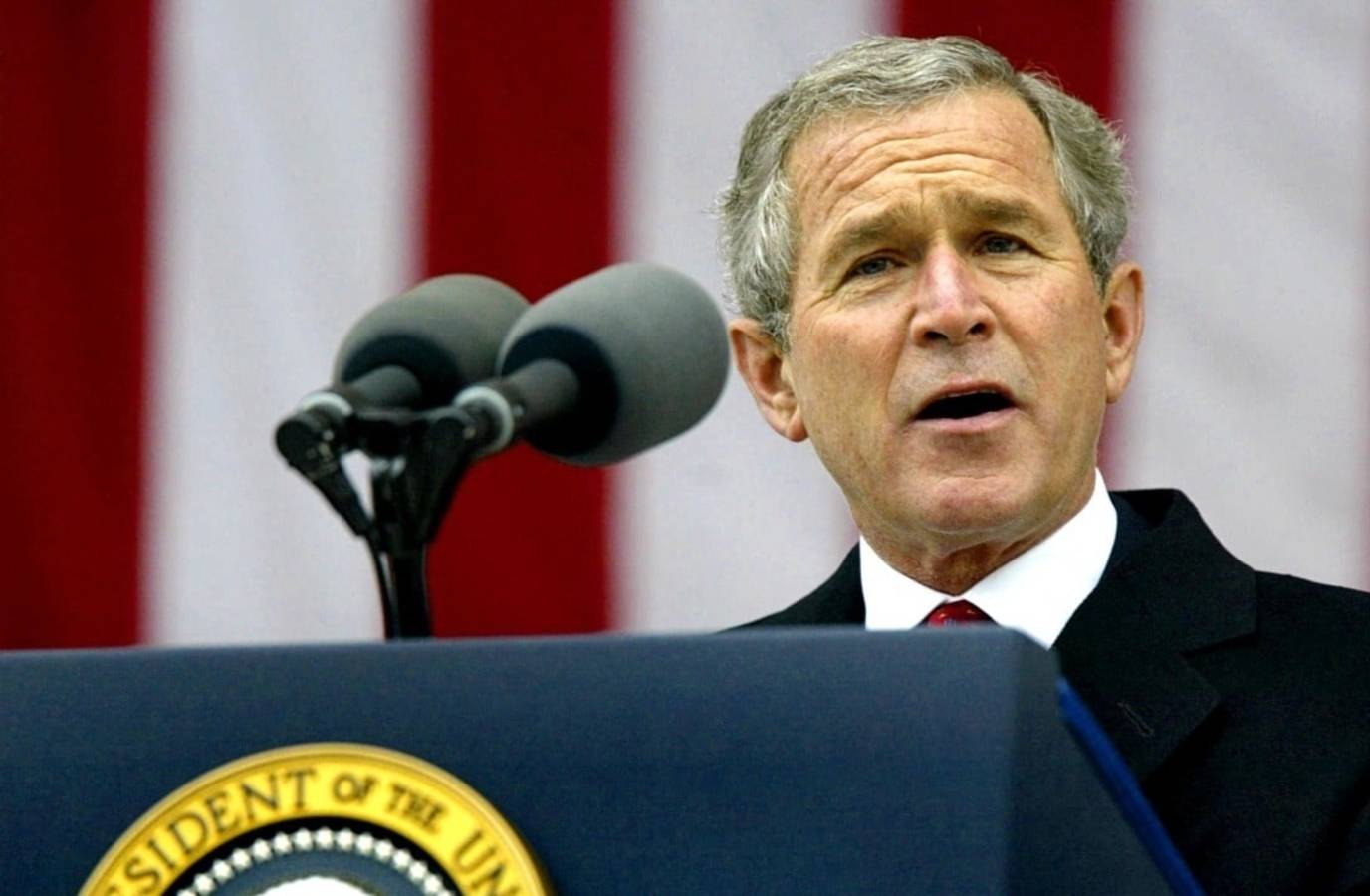
Running for president in 2016, Donald Trump said he hadn’t supported the war in Iraq. In a GOP debate in South Carolina, he stated his position with characteristic bluntness: “Obviously, the war in Iraq was a big fat mistake,” he said. “George Bush made a mistake.”In office, President Trump demonstrated a willingness to use military force, provided it was of limited duration. But today, as Tehran continues to resist, he finds himself in a similar spot with Iran to the one President Bush was in with Iraq before the surge.Mr. Trump also faces the same pressure to high-tail it out of there. The damage that U.S. military attacks and economic pressure are inflicting is real and considerable. Still, Tehran refuses to cry uncle.One of Mr. Bush’s stumbles was a May 2003 speech from the deck of the U.S.S. Abraham Lincoln. No one remembers what he said, but people remember the “Mission Accomplished” banner that flew behind him. Now Mr. Trump is posting on Truth Social an image of himself looming large above the sepia-tinted memory of Mr. Bush’s failure, declaring “Mission Accomplished”—implying this time it’s real.But Mr. Trump hasn’t accomplished his mission in Iran. The military operation he said would take four to six weeks is in its seventh month. The president himself alternates between solemn promises of annihilation and cease-fires. Americans may wonder how Iran can be so defiant if we are as victorious as the president says.“The entire country can be taken out in one night, and that night might be tomorrow night,” President Trump said in April. To keep promising decisive action to end the war only to pull back at the last minute leads friend and foe alike to conclude that such threats are empty, passing storms that Tehran will survive.Whatever Mr. Bush’s failings in Iraq, he knew he had to win. Without a clear victory, the lost lives of thousands of Americans would be for naught—and U.S. credibility would be damaged for decades.So he made the unpopular call to double down with the surge—adding more troops in a wholesale change in strategy. Everyone wanted out, including many conservatives. Doubters included some of the highest-ranking members of his administration.Mr. Bush vowed to Bob Woodward, “I will not withdraw even if Laura and Barney”—his wife and their dog—“are the only ones supporting me.” That spoke of his resolve.Inside the White House, where I was chief speechwriter, we were never in doubt. “Billy,” the president told me, “we are not going to abandon the people of Iraq the way we abandoned the people of Vietnam, from the rooftop of an embassy.” It made for a lonely presidency.Say this for Mr. Bush’s critics back then, including retired generals and Republicans in Congress. Their open dissent sure beats the sneaky way Barack Obama announced at West Point in 2009 a surge of 30,000 additional troops for what he had called “the necessary war” in Afghanistan—and in the next breath undermined it all by announcing they’d begin leaving in 18 months. Not to mention the utter humiliation of Joe Biden’s exit of U.S. troops from Afghanistan.In contrast, the additional troops Mr. Bush committed to Iraq achieved a decisive turn in the war—helped by the Anbar Awakening, the revolt by Sunni sheikhs against al Qaeda. To the Beltway cognoscenti, this military success was Mr. Bush’s unforgivable sin: winning a war the experts had decreed lost. And they never forgave him for it.The lesson for Mr. Trump is that whatever his Iran critics might say, many simply don’t want him to succeed, the cost to U.S. credibility be damned. Presidents who don’t win wars they initiate are treated unkindly by history.No doubt George W. Bush is the last man Mr. Trump believes he needs advice from. But the situation in Iran seems to be coming to a head, and if it all blows up, now or a few years from now, it will make Americans skittish about ever taking on Tehran again. Mr. Bush’s insistence on victory shows a path to vindicate America’s moral and military credibility—and even preserve Mr. Trump’s legacy.Write to [email protected].