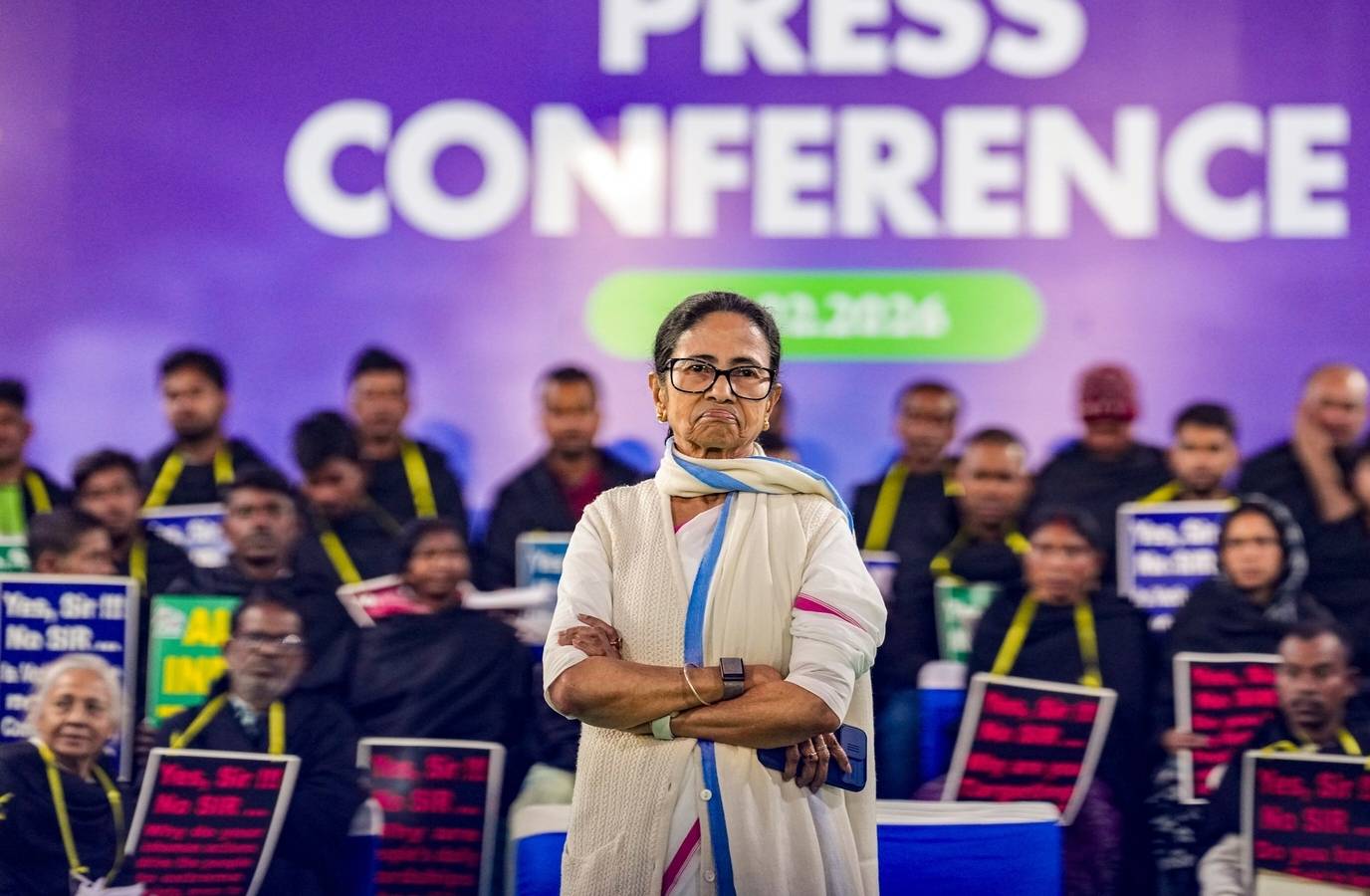
The Special Intensive Revision (SIR) exercise in West Bengal has been a contentious issue, with many questioning its impact on the state's election results. However, experts say that the BJP's win in the state is not solely due to the SIR exercise.
According to data, the BJP has gained 7.1 percentage points in vote share, while the TMC has lost 4.7 percentage points compared to the 2024 Lok Sabha elections. In absolute terms, the BJP has polled 5.6 million more votes, while the TMC has polled 1.7 million less votes.
The net SIR deletions in the state are 8.9 million, with 2.7 million deleted during the adjudication process. However, the decline in votes polled by the TMC is close to at least the adjudication deletions, making it tempting to believe that SIR could have played a role in the BJP's victory.
However, experts say that the SIR exercise did not lead to an absolute fall in voter turnout between the pre- and post-SIR election in West Bengal. In fact, the turnout has remained relatively stable, with only 20 out of 100 assembly constituencies seeing an absolute fall in turnout.
The extent of voter deletion in these ACs due to SIR ranges from 2.1% to 38.6%, with a median value of 9.5%. However, when it comes to tracking the change in vote shares of either the TMC or the BJP along with share of SIR deletions, there seems to be next to no correlation between the two.
Experts also point out that the BJP's win in West Bengal is largely due to an anti-incumbency wave, which has communal polarisation tailwinds. The TMC has lost vote share in 268 out of the 293 ACs for which votes were counted yesterday, while the BJP has gained vote share in 270 out of 293 ACs.
A historical comparison can help put things in perspective. The Communist Party of India (Marxist) led Left Front lost almost 11 percentage points in vote share between its thumping victory of 2006 and its crushing loss of 2011.