
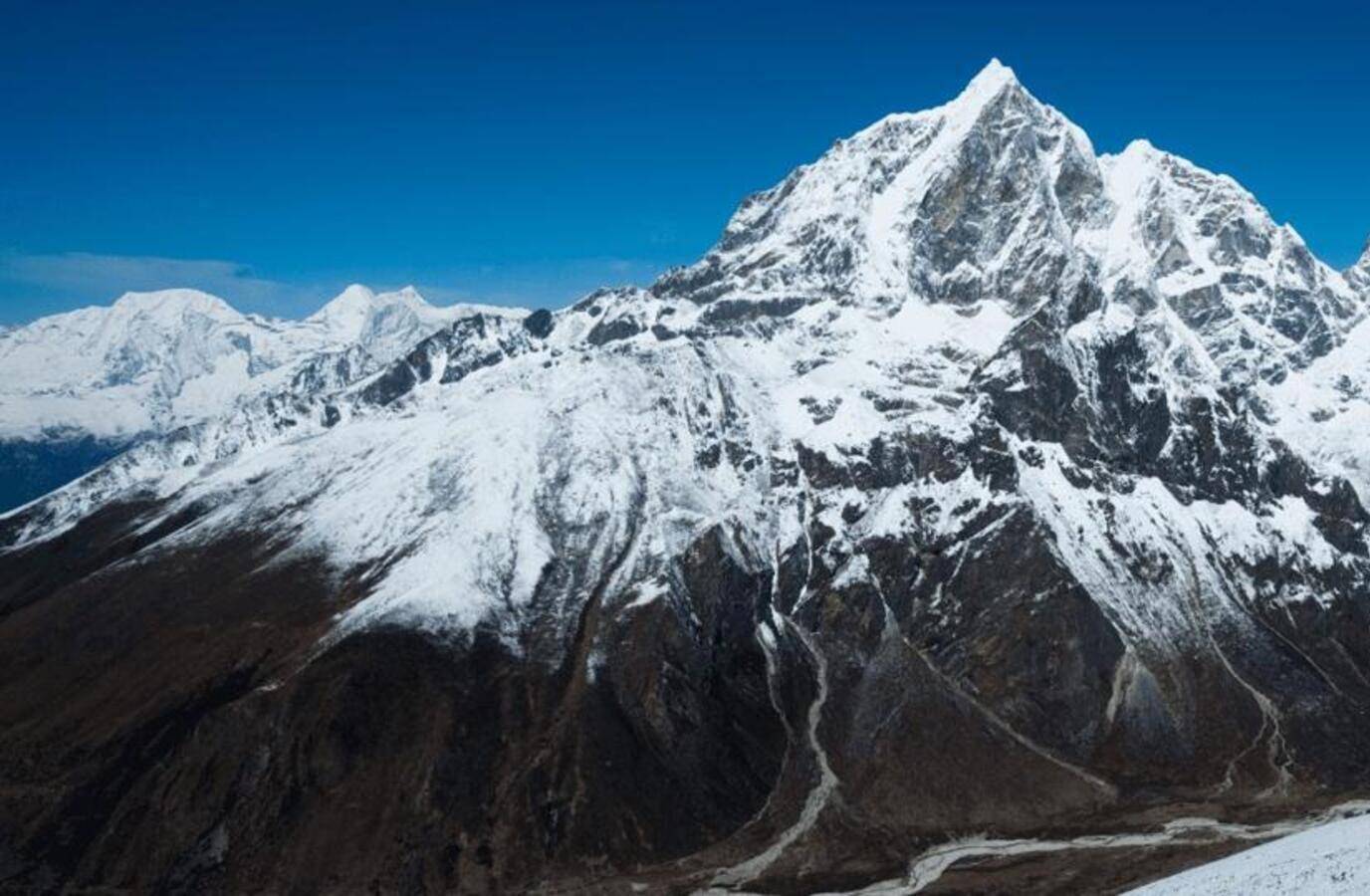
The rate at which glaciers are melting across the Hindu Kush Himalayas has doubled since 2000, according to a new report by the International Centre for Integrated Mountain Development (ICIMOD). The report found that the most recent decade recorded increasingly frequent extreme melt years and mounting risks of catastrophic floods and long-term water insecurity for a region home to billions.
The findings come on the back of visible consequences, including the 2021 Chamoli disaster, the 2023 glacial lake outburst flood in Sikkim, and last year's Dharali disaster in Uttarakhand. The Hindu Kush Himalayas hold the largest volume of ice outside the poles and are the source of at least ten major Asian river systems.
The ICIMOD report mapped 63,761 glaciers across the region covering nearly 55,782 square kilometres. Around 78% of this glacier area is highly exposed to elevation-dependent warming, a phenomenon where temperature rises faster at higher altitudes than at lower ones.
The latest insight on acceleration in melt is documented across 50 years of field data. The report draws on 302 annual observations from 38 representative glaciers recorded since September 1974. Of those, 270 — or 89% — were negative mass balance years, meaning the glaciers lost more mass than they gained.
The losses are not uniform across the region. The Indus Basin lost 6% of its glacier area between 1990 and 2020, while the Ganga and Brahmaputra basins experienced steeper reductions of 21% and 16% respectively.
The most immediate danger comes from the region's smallest glaciers, which are shrinking more rapidly than others. Three-quarters of the region's glaciers fall into this vulnerable size class, posing immediate risks of localised water shortages for high mountain communities and intensifying hazards like glacial lake outburst floods.