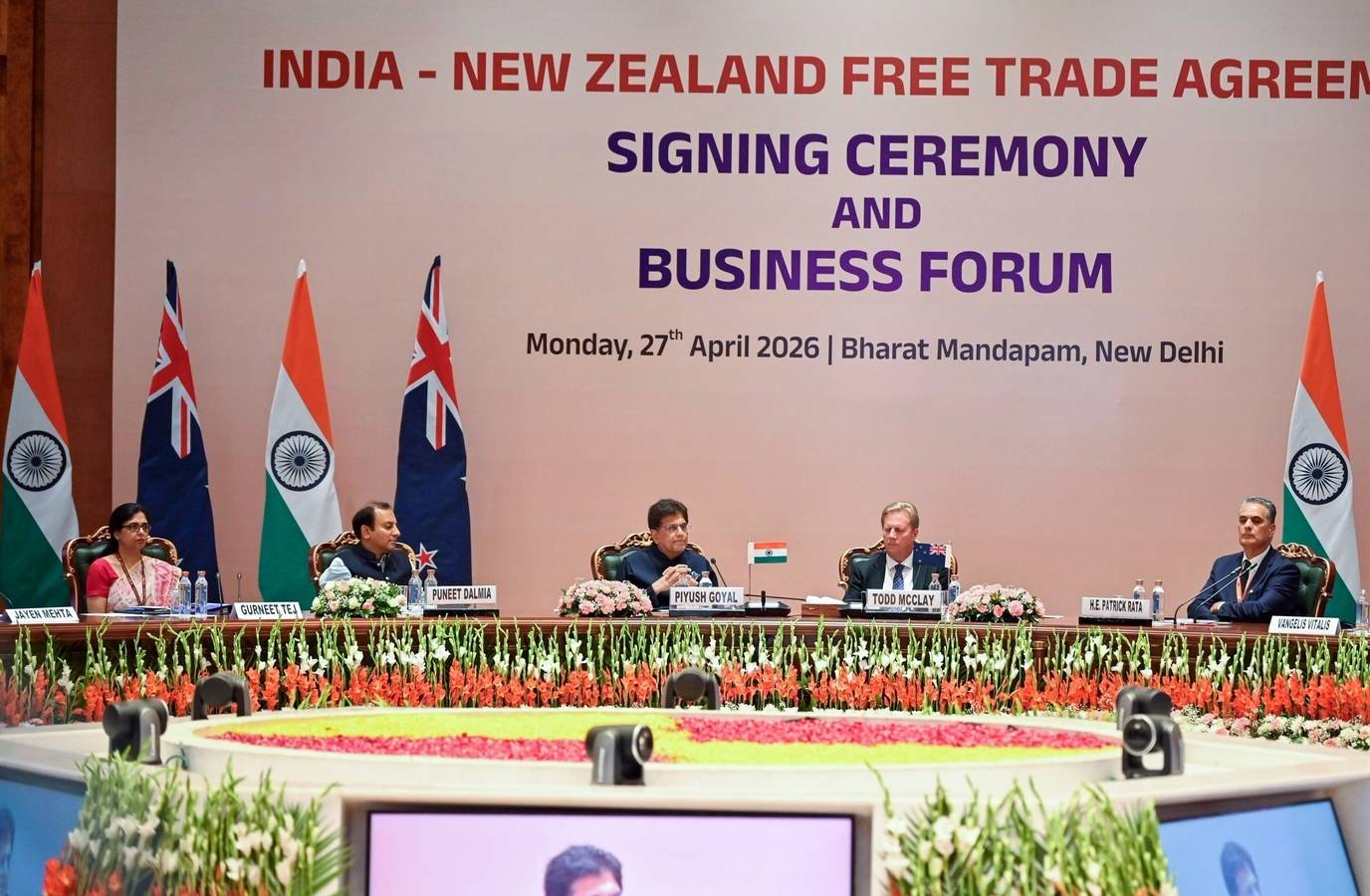
India and New Zealand signed their historic Free Trade Agreement on April 27, marking a significant milestone in their economic engagement. The agreement, inked after nine months of negotiations, covers 20 chapters and offers duty-free access to Indian goods in New Zealand.
Union Minister of Commerce and Industry Piyush Goyal hailed the deal, stating that it reflects the 'depth of trust and shared ambition between our nations.' Prime Minister Narendra Modi added that the FTA will benefit Indian farmers, youth, women, MSMEs, artisans, startups, students, and innovators.
New Zealand's Prime Minister Christopher Luxon stated that the FTA will open a new and 'dynamic' market for the country, helping to diversify its export markets and support its goal of doubling the value of its exports over 10 years.
The FTA includes key features such as a $20 billion investment commitment by New Zealand over 15 years, elimination of duties on Indian exports to New Zealand, and temporary employment for Indian professionals in New Zealand. The agreement also allows for duty-free wine and spirits from India and wines from New Zealand, as well as cooperation in agriculture.
Experts have hailed the FTA as a win for India, citing the elimination of duties on 100% of New Zealand's tariff lines and the opening of mobility pathways for Indian professionals in IT, healthcare, engineering, and education.