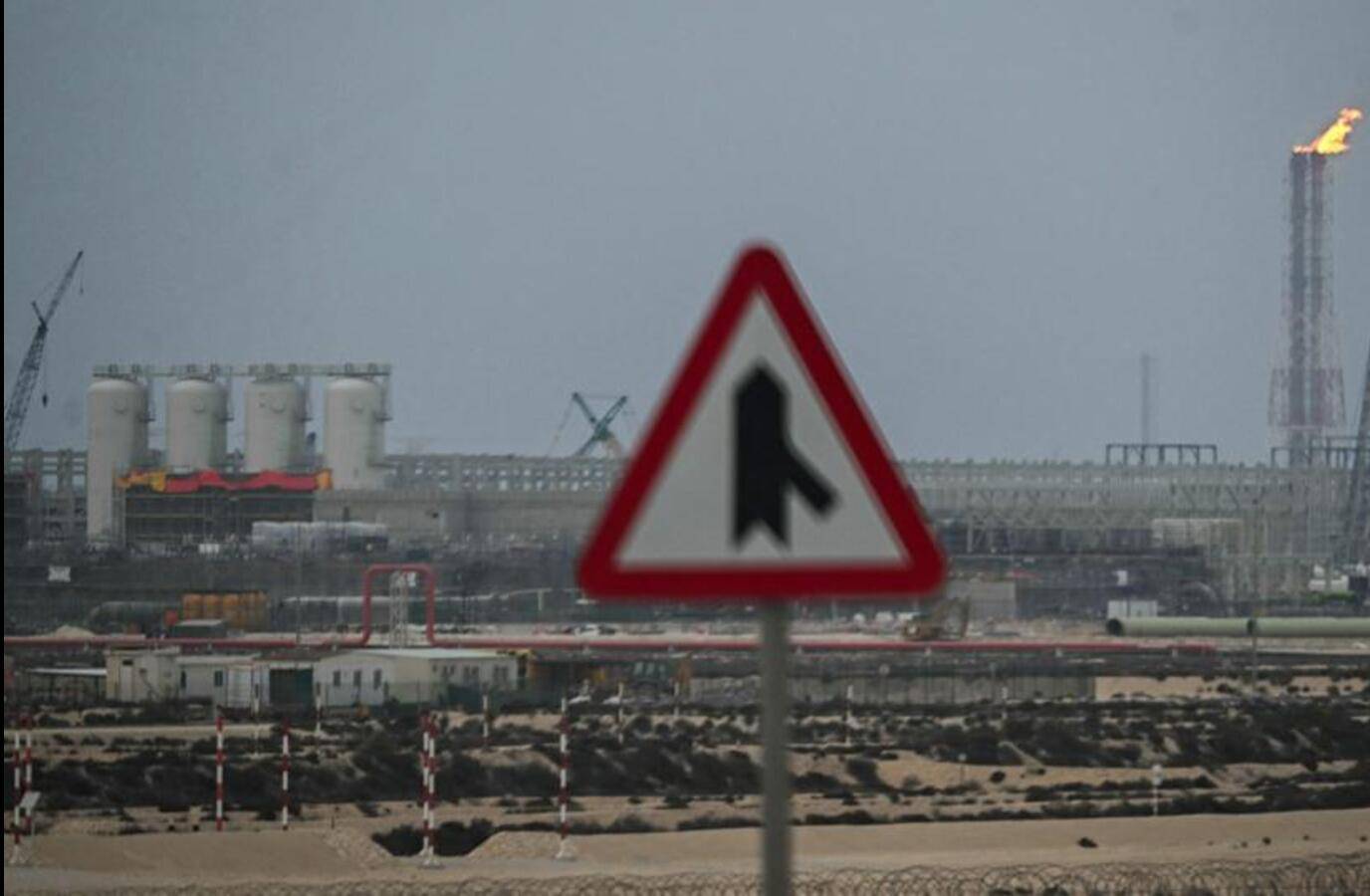
Iran's attack on Qatar's energy infrastructure at Ras Laffan industrial city is a significant blow to India, which relies heavily on crude oil and gas imports from the region. With over 88% of its crude oil and about 50% of its gas imports coming from Qatar, India's energy supplies are in jeopardy.
The disruption to India's gas imports from Qatar, which supplied about one-third of its total liquefied petroleum gas (LPG) and about half of its liquefied natural gas (LNG) imports, is a major concern. The damage to the Ras Laffan Gas-to-Liquids facility is a bigger worry as restoring it would take time even after the conflict in the region is over.
Indian firms such as Petronet LNG Ltd (PLL), GAIL India, and GSPC have long-term commercially beneficial gas supply contracts with Qatar. PLL has been importing about 7.5 million tonnes per annum (MTPA) of LNG from Qatar, GSPC 1 MTPA, and GAIL less than 1 MMTPA LNG from Qatar.
Qatar also supplied about 5 million metric tonnes of LPG to Indian firms, including oil marketing companies (OMCs). According to official data, Qatar is the largest LNG supplier to India. In 2024-25, it supplied LNG worth $6.39 billion. Qatar is also the largest supplier of LPG to India (worth $3.21 billion in 2024-25).
India also imports ethylene, propylene, ammonia, urea, and polyethylene from Qatar. Problems in the Gulf region have hit India's oil and gas sector in two ways. First, supplies have been hit. Diversion of natural gas to serve domestic consumers through PNG and automobiles through compressed natural gas (CNG) has left commercial and industrial consumers high and dry.
According to a government official, India produces about 90 Million Metric Standard Cubic Metres per day (MMSCMD) of natural gas domestically. It consumes about 189 MMSCMD. Import of about 30 MMSCMD through Gulf sources is currently affected by the force majeure declaration from a major Qatari processing facility.
Although the government is taking several measures to ensure energy supplies to all sectors through alternative means, it is impacting the prices of fuels. While state-run oil marketing companies raised LPG rates, they are still holding pump prices of petrol and diesel despite the average import price of crude oil (Indian basket) crossing $146 a barrel on Tuesday.
Surprisingly, the crude price of the Indian basket is surging very high compared to benchmark international crude prices. On Tuesday, Brent crude was at $103.42 a barrel. Due to the Iranian attack on the Ras Laffan industrial city, Brent surged 5.6% to $113.39 at 1:53pm (IST).
An official said that Indian refiners have diversified their sourcing from safer zones. India was previously importing approximately 60% of its LPG from Gulf countries such as Qatar, UAE, Saudi Arabia, and Kuwait, and 40% is produced domestically. Procurement has now been actively diversified, with cargoes being secured from the US, Norway, Canada, Algeria, and Russia.
Qatar is India's key trading partner. In 2024-25, India's bilateral trade with Qatar stood at $14.14 billion, with a balance of trade in favour of the Gulf nation. India's export to Qatar during that period was $1.68 billion. India's imports from Qatar were $12.46 billion. In 2024-25, India imported LPG, LNG, and some crude oil from Qatar worth $11.08 billion. It imported organic chemicals ($369.86 million), plastics ($222.47 million), and fertilisers ($208.4 million) from Qatar.
Key Indian exports to Qatar in FY25 included cereals ($165.03 million), articles of iron and steel ($154.04 million), nuclear reactors, boilers etc ($151.73 million), gems and jewellery ($113.76 million), vehicle and parts thereof ($95.49 million), inorganic chemicals ($89.78 million), mineral fuels ($71.17 million), electrical machinery and equipment ($69.19 million), ships, boats, floating structures ($49.62 million), and plastics ($48.64 million).