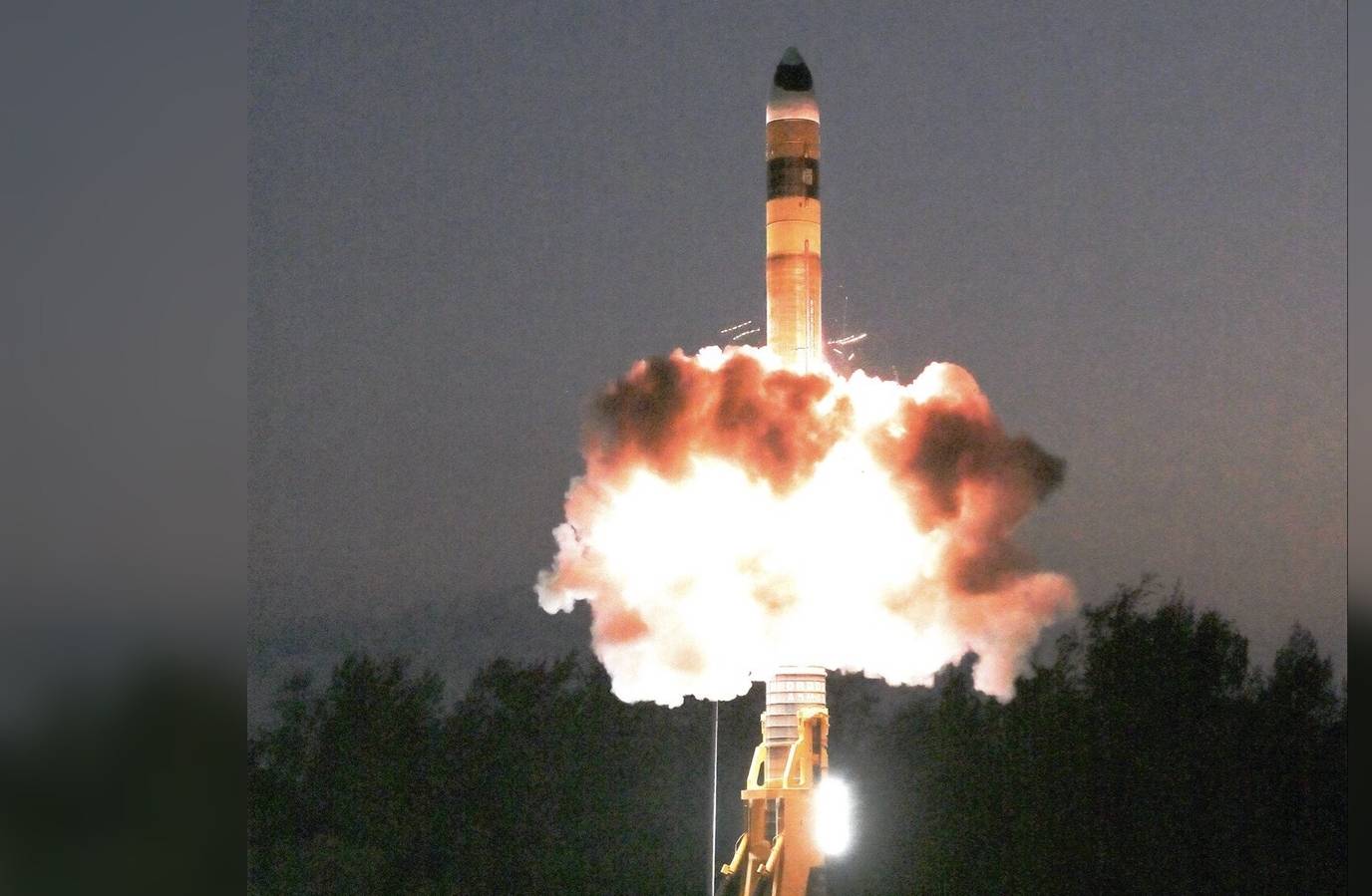
India's twin tests of an advanced Agni-5 with MIRV capability and a long-endurance scramjet engine are more than technological milestones; they are a deliberate move to harden India's nuclear triad and ensure that its deterrent survives in an era of missile defences and rising Chinese power.
Together, they signal that New Delhi intends not just to maintain, but to sharpen, its strategic edge in a far more contested Asian nuclear landscape.
A decisive leap in India's missile era, the space of 24 hours saw India demonstrate mastery over two of the most demanding technologies in modern warfare: Multiple Independently Targetable Re-entry Vehicles (MIRVs) and air-breathing hypersonic propulsion.
On May 8, DRDO and the Indian Army tested the latest variant of Agni-5, configured with MIRV payloads that allowed a single missile to release three warheads, each striking separate targets spread across roughly 150–200 kilometres after a flight of around 2,900 kilometres.
The missile, a three-stage system with two solid-fuel stages and a liquid-fuel third stage, climbed beyond the atmosphere to an optimum altitude, but figures remain classified, before dispensing its warheads, which then plunged towards their targets at hypersonic speeds.
A day later, on May 9, India successfully tested an air-breathing scramjet engine at DRDO's Hyderabad facility, sustaining hypersonic operation not for seconds, but for a full 1,200 seconds - 20 minutes - at about Mach 5–6.
For a country long viewed as a “conservative” nuclear actor, this pairing—precision MIRV delivery and sustained hypersonic propulsion—marks a clear transition into the top tier of technological powers.
It is, as Shishir Gupta calls it in the conversation, a “game changer” for India's strategic deterrent.