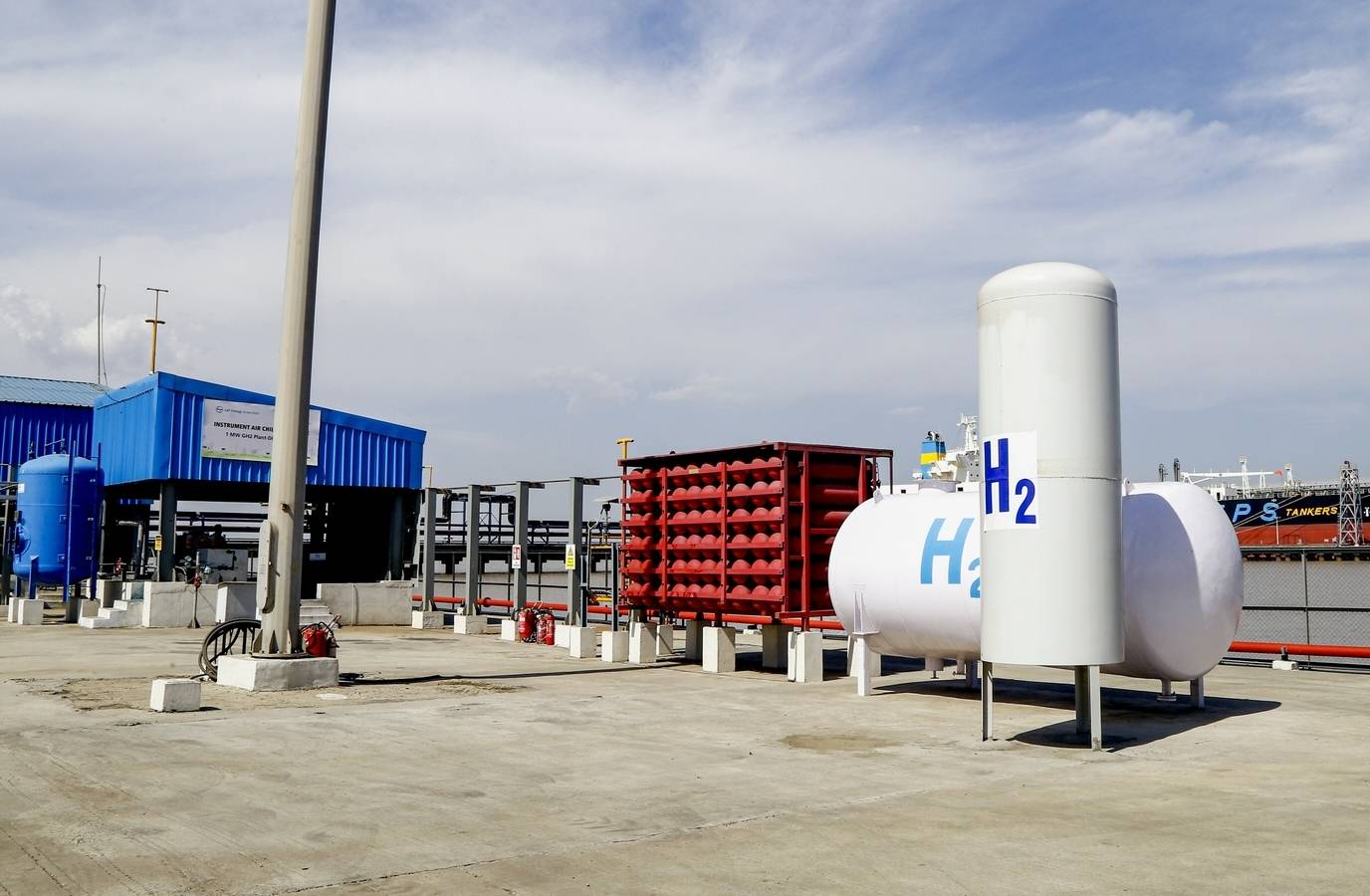
India has commissioned around 8,000 tonnes per annum capacity of green hydrogen as of February, against a target of 5 million tpa by 2030, achieving about 0.16% of the ambitious milestone envisaged under ₹19,744 crore-National Green Hydrogen Mission approved by the cabinet on January 4, 2023.
The wide gap between allocation of annual budgets under the National Green Hydrogen Mission (NGHM) and utilization of funds suggests tardy progress. According to data submitted in the Lok Sabha on March 25 by minister of state for new and renewable energy and power Shripad Yesso Naik, 68%, or ₹203.75 of the ₹300 crore allocated in 2025-26 (revised estimates) was used.
India's progress on the green hydrogen front has come under scrutiny following the current energy crisis, resulting from the war in West Asia. While Naik gave only revised estimates, budget documents showed that budget estimates (BEs) were even more ambitious, indicating gaps in ambition, annual planning, and execution.
A spokesperson of MNRE said green hydrogen is an “emerging industry” that is simultaneously navigating technology development, cost reduction, ecosystem building, and market creation. India is progressing along that same curve, and the limited commercial output at present is therefore not an anomaly specific to India, it reflects where the sector stands internationally in terms of technology and market maturity.
According to the spokesperson, structural issues and expensive electrolyser adds to both cost and project lead time. Besides, there are several demand side challenges impacting project economics and investment viability. The government is fully aware of these constraints, and the design of the National Green Hydrogen Mission directly addresses each of them in a structured and phased manner.
Currently, pilot projects across steel, transport, and shipping are generating the real-world operational data needed to de-risk larger commercial investments, the spokesperson said. The standards and certification framework being established is building the regulatory confidence that long-term investors and financiers require.
According to the spokesperson, since the inception of the mission, a number of developers have endeavored to set up small plants to establish different technologies and business models for proving the hydrogen capacity. The main pathways adopted are (i) electrolysis route and (ii) bio-mass route. Upto March 2026, about 8000 tons per annum production capacities have been reported at various locations.