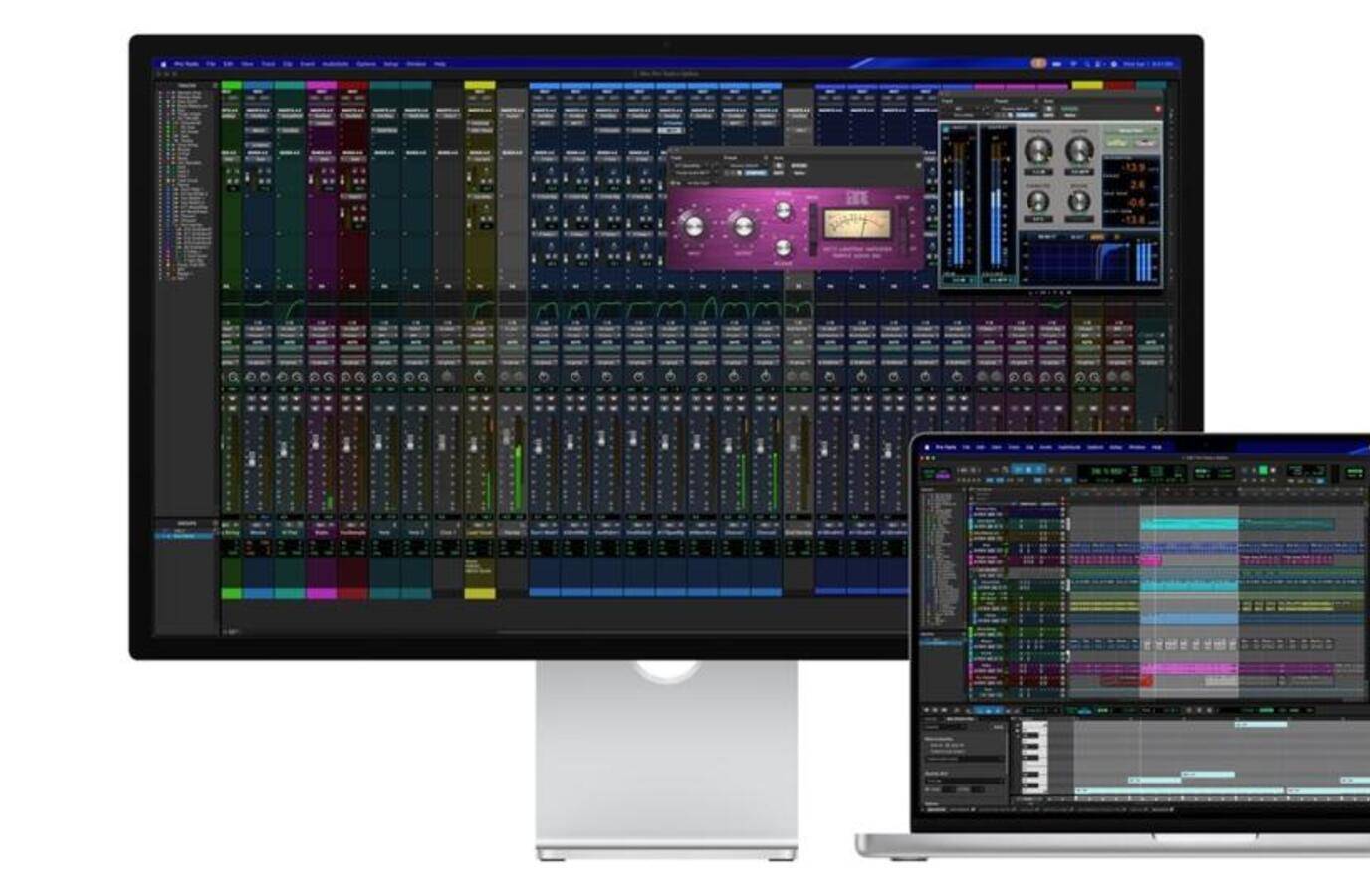
A gap of four years, but the basics don't change. That's the premise with which Apple has gone about this display refresh. The 2026 iteration of the Apple Studio Display retains the core display technology, which in 2022 was effortlessly resetting the benchmark much further with future-proofing in mind, and that continuity is now being complimented by upgrades and changes elsewhere.
One of the biggest generational upgrades is the Apple Studio Display (2026) being powered by an A19 chip, the one seen in the iPhone 17 and the iPhone 17e. This display's more powerful sibling, the Apple Studio Display XDR, in fact finds its beating heart in the A19 Pro chip, that also does duties in the iPhone 17 Pro and the iPhone Air.
The Apple Studio Display has a chip that's more powerful than the MacBook Neo. But why, you may be wondering, does an accessory that's essentially an external display, need such powerful processing capabilities? The A19 chip provides more image processing power, higher memory bandwidth, and a better graphics foundation for a display that is supposed to handle 120Hz refresh rates.
The Center Stage camera is certainly an upgrade in the truest sense for video meeting quality. The addition of the Desk View feature, which is more a top-down view processed by the Center Stage camera in case you're not using an iPhone for that, does require a fair amount of processing power.
The Studio Display (2026) also sees a change in the port configuration. There are now two Thunderbolt 5 ports and two USB-C ports. The USB-C ports are rated at up to 10Gbps speeds, while the Thunderbolt 5, which is rated at 120Gbps, is what matters most.
The Nano-texture variant of the Studio Display (2026) is priced at ₹2,79,900, which is a premium for this coating. The advantages are clear for a certain demographic of Studio Display users, especially in typical workplace scenarios with a lot of ambient lighting.
The display still has the same 270-inch 5K Retina display with 218 pixels per inch and rated at 600-nits of peak brightness. There are as many as nine reference modes available in the display settings, including HDTV Video (BT.709-BT.1886), Digital Cinema (P3-D65), and Design and Print (P3-D50).
However, there is a bug that doesn't let the Studio Display (2026) retain the 2880 x 1620 resolution setting at every fresh boot, and reverts to Default. There is also no HDR support, or High Dynamic Range, which is now a staple for not just video streaming platforms, but also video recordings on flagship smartphones.
Audio sees a significant improvement, which became even better after the update. It is still the same 6-speaker array, but there is much more bass response than before.
The primary reason you'll consider an Apple Studio Display is because Apple simply makes products that integrate seamlessly into your Mac setup and Mac-focused workflow.