
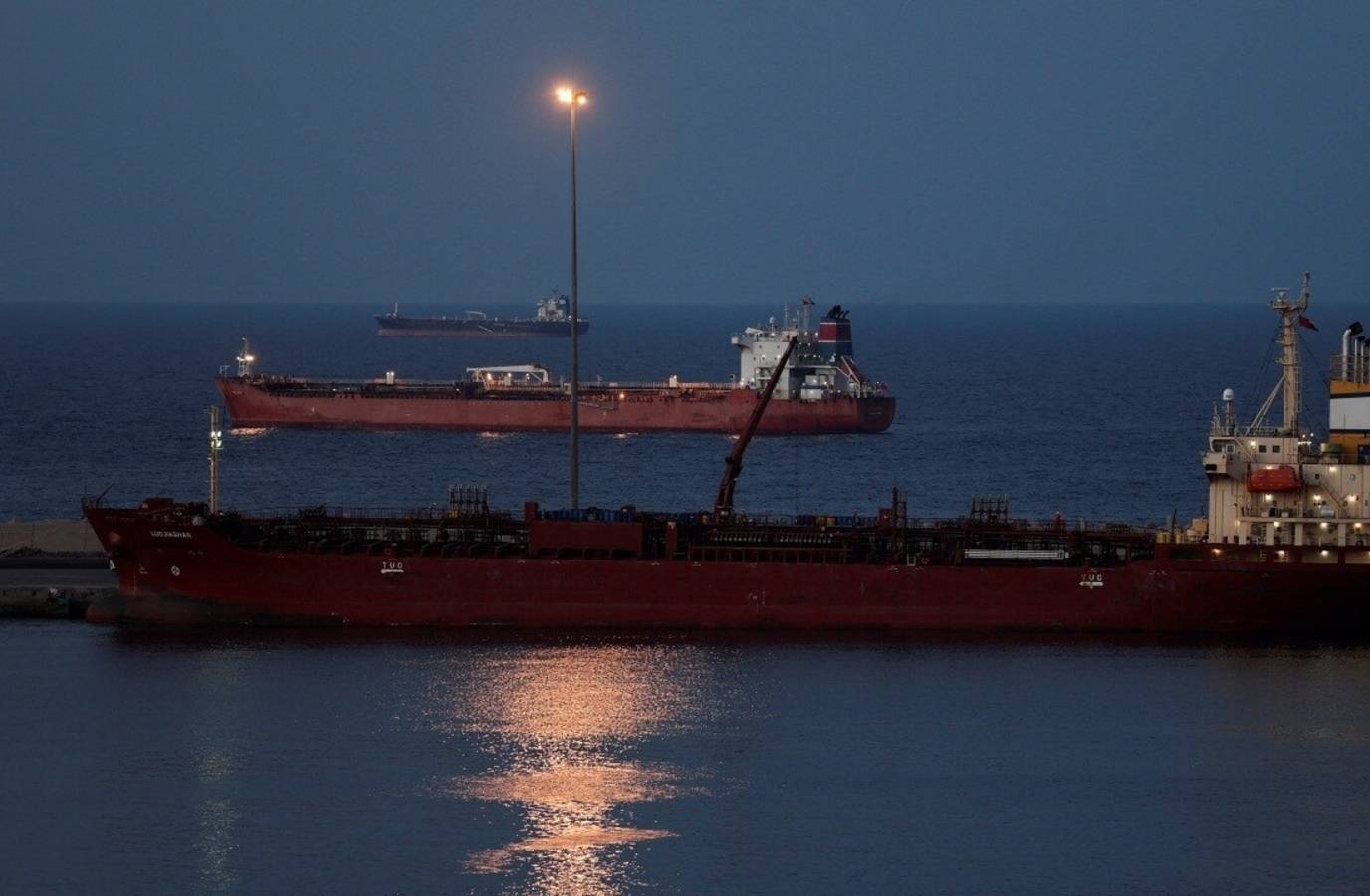
Iran is exporting more oil through the Strait of Hormuz than before the war, showing its control over a strategic waterway that other regional oil producers have closed off. According to data from tanker-tracking firm Kpler, seven tankers have loaded oil off the Iranian coast since the war started on Feb. 28, with a daily average of 2.1 million barrels of Iranian oil being loaded over the past six days.
This is higher than the 2 million barrels a day Iran exported in February, and shows that unlike other producers, Iran's shipments are unimpeded. The recent increase also suggests that China hasn't lost its appetite for Tehran's crude.
Iran's Islamic Revolutionary Guard Corps threatened to attack any ship trying to cross the strait since the U.S. and Israel launched airstrikes at the start of the conflict, scaring off ships carrying oil and goods between the wider world and the Persian Gulf. However, much of the Iranian oil moving across or toward the strait appears to be headed for China on tankers that are part of the so-called shadow fleet.
The shadow fleet, based on Kpler data, includes old tankers used by Iran and Russia, often sanctioned by the U.S., to covertly ship crude. These tankers are flying fake flags and have been able to cross the strait without incident.
However, other operators are struggling, with Danish containership major A.P. Moller-Maersk having 10 ships trapped in the Persian Gulf. Maersk CEO Vincent Clerc said the company would not put its colleagues in harm's way, and would take at least a week to 10 days to resume normal operations in the event of a cease-fire.