
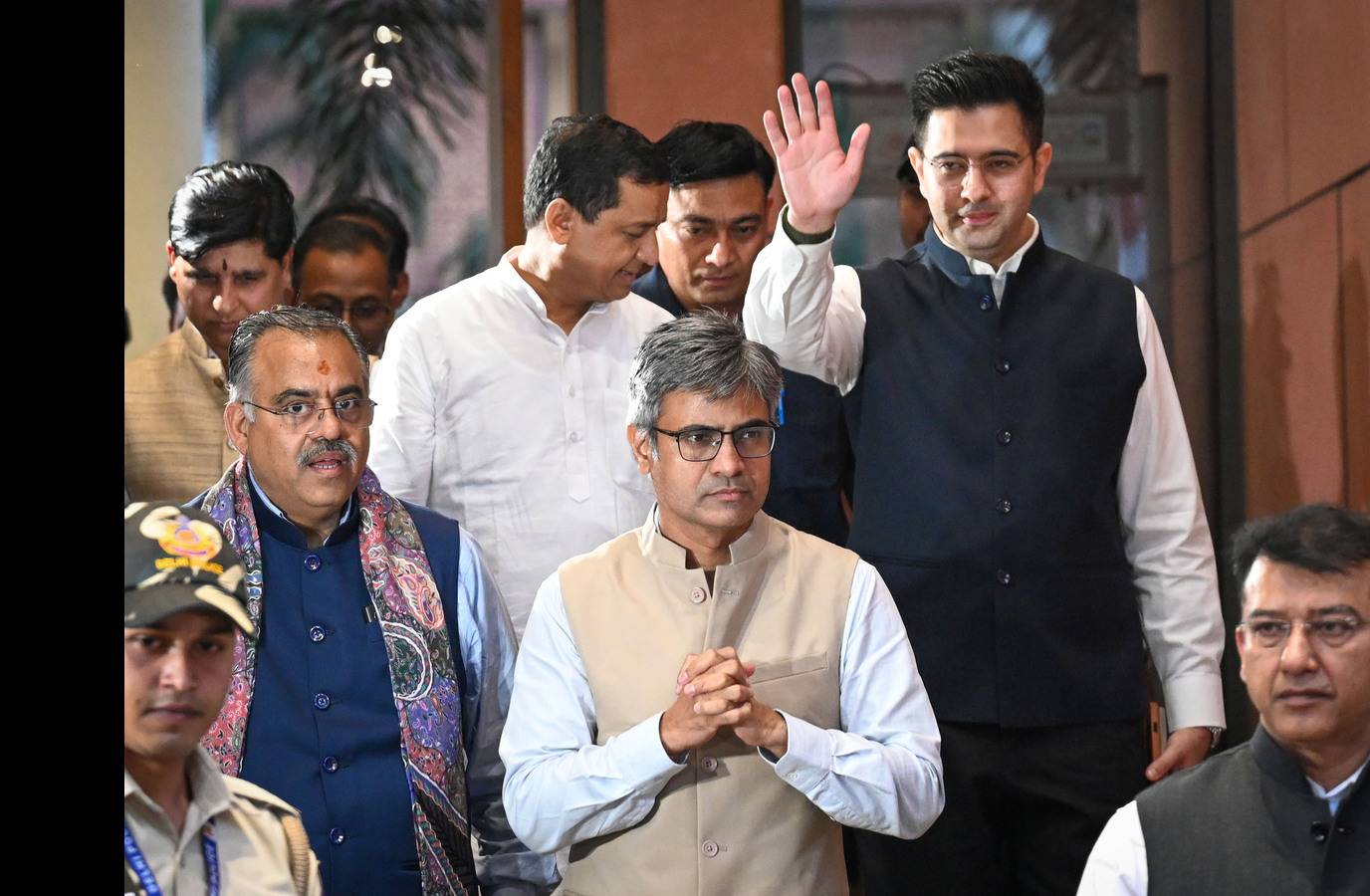
Seven Rajya Sabha MPs from the Aam Aadmi Party joined the Bharatiya Janata Party, claiming it was a 'merger' within the Tenth Schedule of the Constitution. This move raises significant constitutional issues, as it may subvert anti-defection laws.
The Tenth Schedule prohibits elected representatives from changing party allegiance, as it amounts to a betrayal of voter trust and undermines the democratic process.
However, when two-thirds or more elected representatives join another party, can they claim protection from the anti-defection law by citing a merger of the Legislature Party?
This will need to be examined within the legal framework of two laws, which govern political parties and Legislature Party.
The conduct of legislators is primarily regulated by the Tenth Schedule, while the constitution, recognition, and electoral activities of political parties are governed by the Symbols Order, 1968.
The Supreme Court has held that a clear demarcation is made between political party and Legislature Party for the purpose of a merger under Para 4 of the Tenth Schedule.
However, the Bombay High Court has held that in view of the deeming fiction provided for under Para 4(2), the merger of the original political party is not a sine qua non for invoking the exception.
This interpretation is contrary to the letter and spirit of Para 4 of the Tenth Schedule, completely opposed to Symbols Order and decisions of Supreme Court.