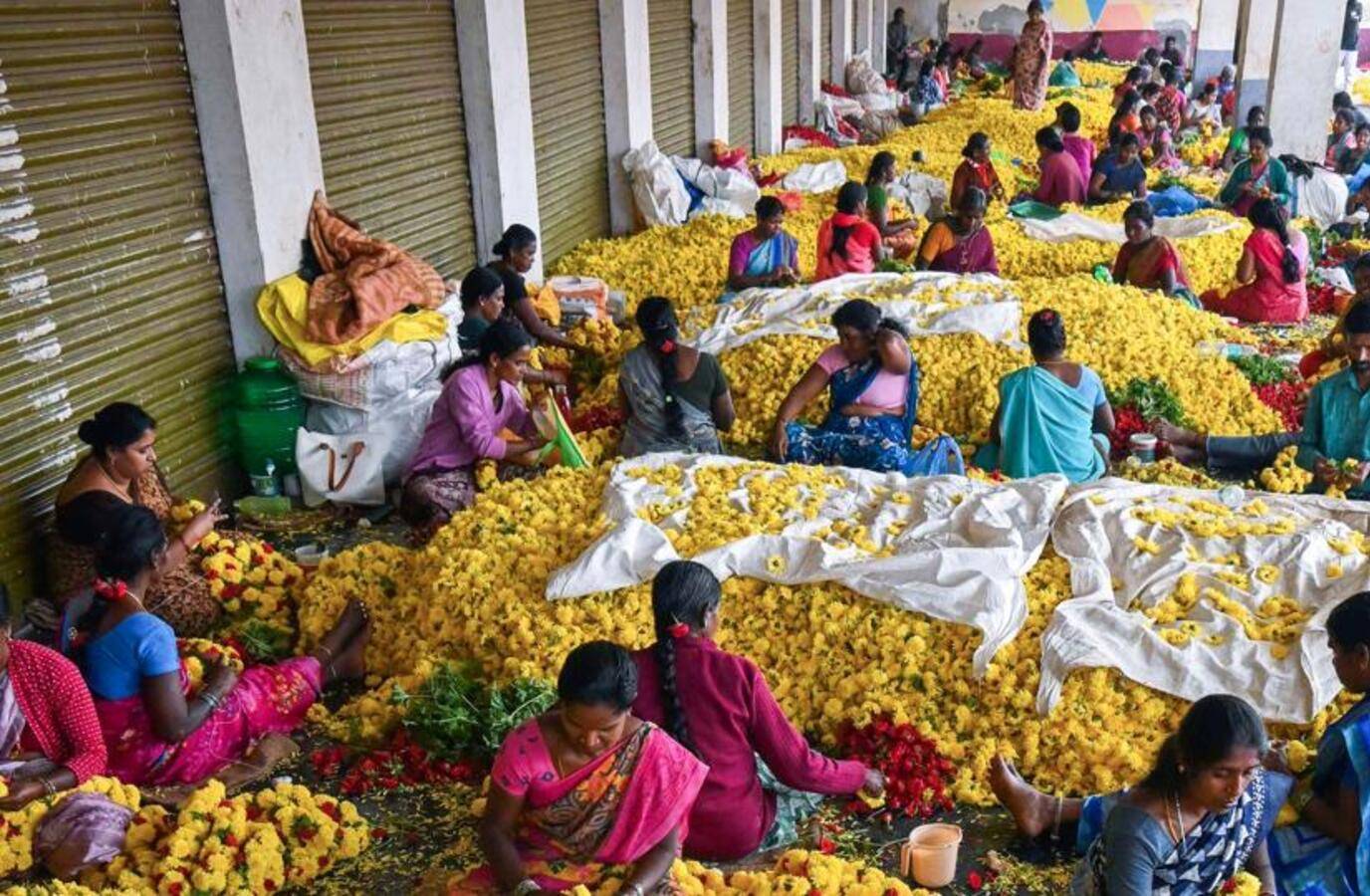
The first day of the Hindu lunisolar new year, Yugadi, is a time for renewal and reflection in Karnataka, Andhra Pradesh, and Telangana. Sree Gururaja, a retired UN official, shares her family's traditions, including making Appi Payasam, a rich basundi-type dish with fried chiroti-rava puris and sweetened thickened milk.
Yugadi marks the beginning of a yuga, a period of great significance in Hindu mythology, and is celebrated on Chaitra Shukla Pratipada, the first day after the new moon. The day is associated with the nakshatra Revathi and the sun's transit to Aries or Mesha Rashi in Vedic astrology.
The preparations for Yugadi begin a month in advance, with the collection of white neem flowers, which are then dried and stored for consumption throughout the year. The flowers are used to make the signature Yugadi pachadi, a dish that represents the six tastes or Shadruchigalu, which convey the six primary emotions.
The pachadi contains neem flowers for bitterness, jaggery for sweetness, young tamarind for sour, salt for salty, pepper for spice and pungency, and young mango for astringency. The dish is meant to metaphorically convey the ups and downs of life, with sweet and bitter episodes leaving a lasting impression.
Along with the pachadi, other traditional dishes like holige, Mavinakayi Chitranna, and Appi Payasam are also prepared during Yugadi. The feast is a time for family and friends to come together and celebrate the new year, with a focus on healthy and nutritious food.
As Shoba Narayan, a Bengaluru-based author, notes, Yugadi is a time for taking stock of the future and accepting that life is a mix of sweet and bitter moments. The celebration is a reminder that the future remains filled with all types of tastes, or in this case, the six tastes or shad-ruchi.