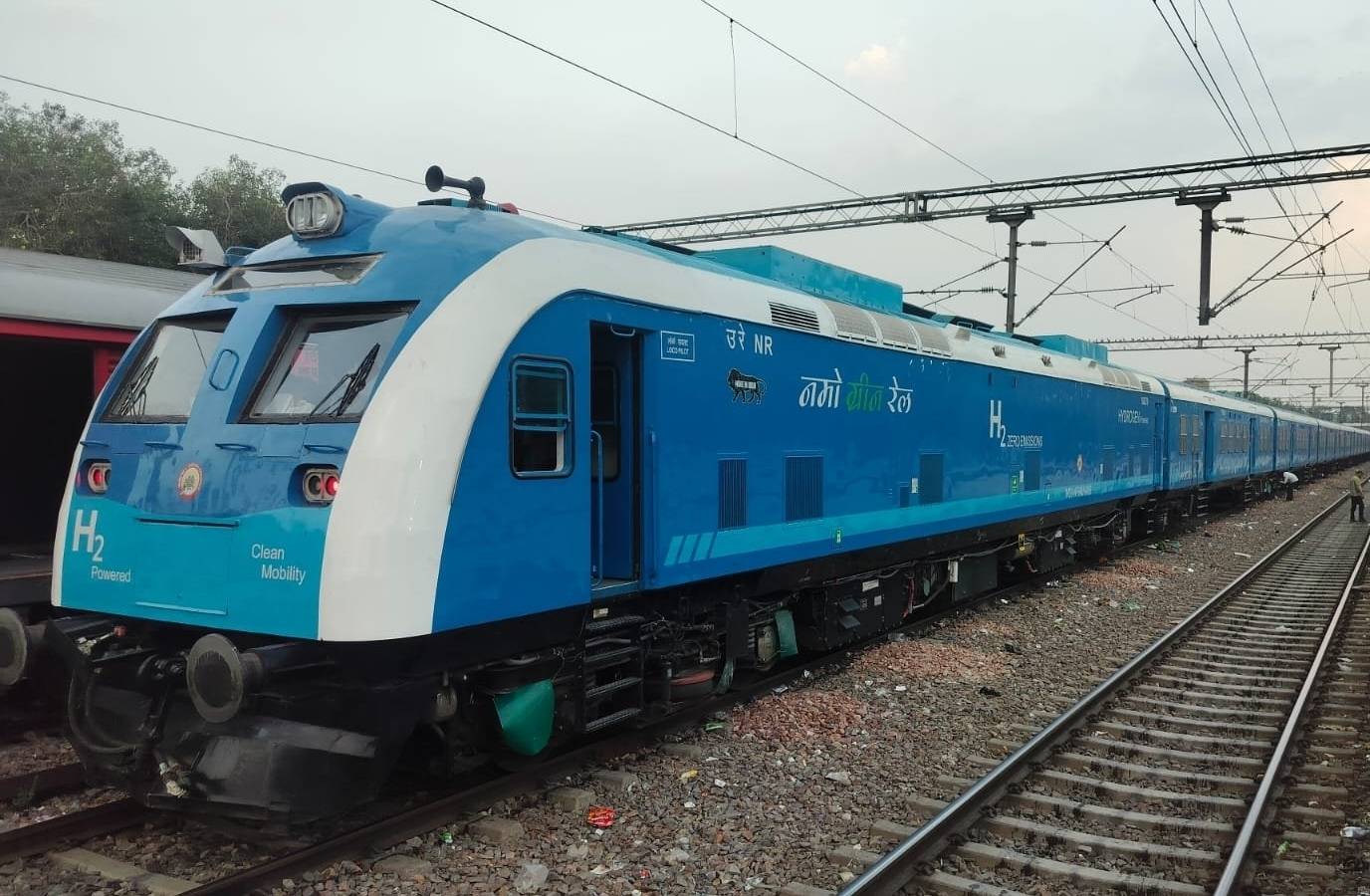
India's first hydrogen-powered train has completed a fresh set of trials between New Delhi and Jind, marking a significant step towards commercial service. The train, which has been retrofitted to run on hydrogen fuel cells, reached a top speed of 120kmph during testing, although its operational speed will be set at 75kmph. The Railway Board had cleared the introduction of the ten-coach trainset in May, and the railways ministry has announced plans to start passenger services soon.
The trainset is a converted diesel electric multiple unit (DEMU) that has been equipped with fuel cells and hydrogen storage tanks. The retrofit was contracted to Medha Servo Drives, which partnered with Canada's Ballard Power Systems for the fuel cell technology. The train will have two driving power cars and eight passenger cars, making it the longest and most powerful hydrogen trainset in the world.
Refuelling will be handled by a plant set up at Jind, which produces roughly 420-430 kg of hydrogen a day. The site has a storage capacity of 3,000kg and two dispensers for faster refuelling. The train can run about 250km on one cycle of fuel.
The project is part of India's 'Hydrogen for Heritage' programme, which aims to electrify most of the railways network. Hydrogen trains are being planned for lines that are difficult to electrify or involve heritage routes. The cost of each train is estimated at ₹80 crore, and the cost of route infrastructure is estimated at ₹70 crore.
The hydrogen fuel cell produces electricity through a chemical reaction with oxygen, and the only by-product is water vapour, making it a clean technology. India is among a small group of countries that have built or are building hydrogen-powered passenger trains, alongside Germany, Japan, China, and the US.