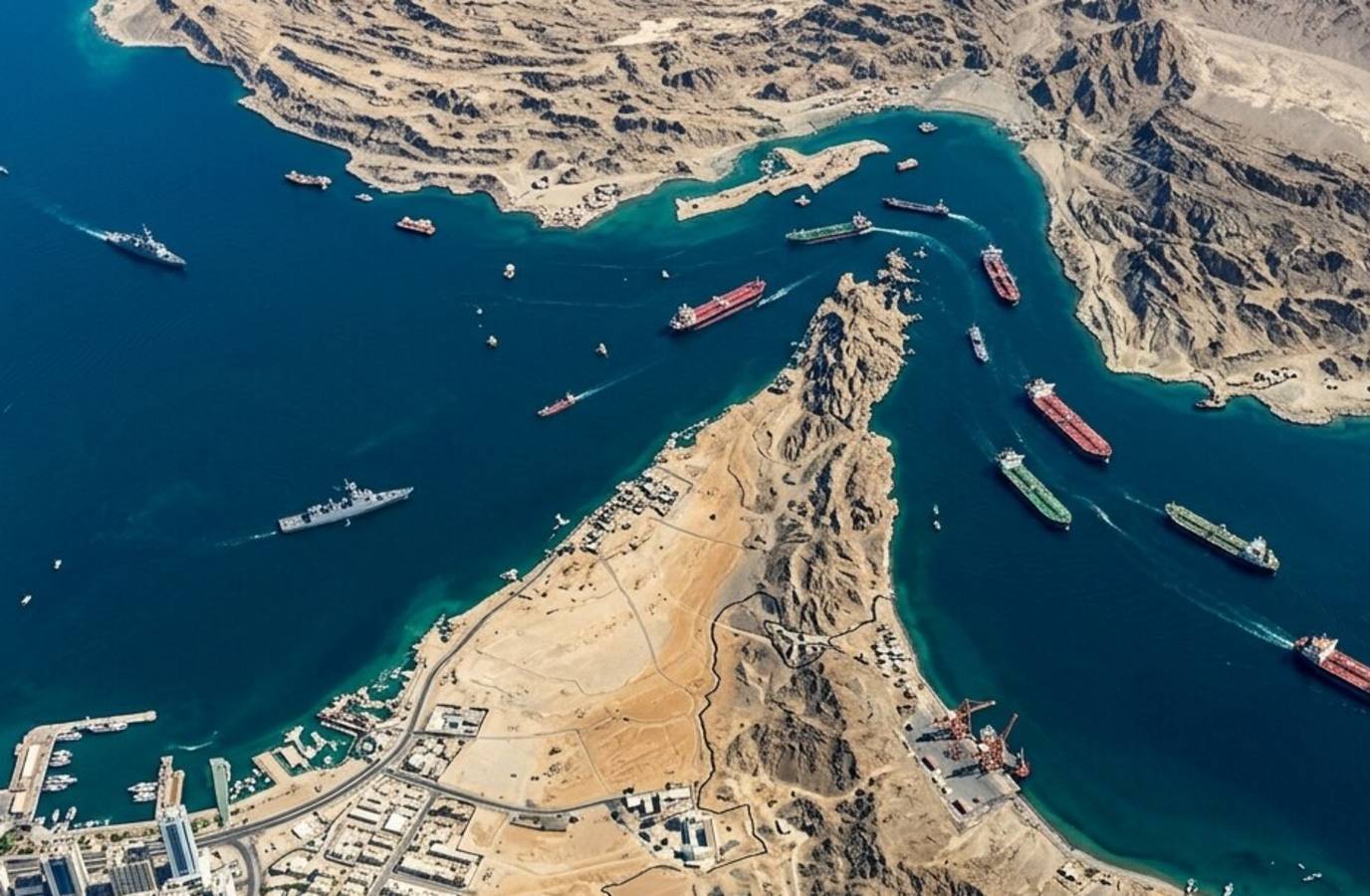
Disruptions in the Strait of Hormuz have had a severe economic impact and are causing energy instability in the region, said Admiral D K Tripathi, chief of naval staff.
The Strait of Hormuz, an international waterway between Iran and Oman, controls a large volume of global oil flow and is in focus due to the war in West Asia.
Competition at sea is no longer confined to oil and energy, but is now expanding towards resources that will shape future growth – such as rare earth elements, critical minerals, new fishing grounds and even data, said the admiral.
There is a significant increase in marine survey, deep-sea research activity, and illegal unreported and unregulated fishing (IUU), often encroaching upon the sovereign rights of littoral nations and exploiting gaps in monitoring and enforcement.'
Threats such as piracy, armed robbery and narco-trafficking backed by unimpeded access of advanced technology to non-state actors, have also become more complex and challenging to counter, said the senior naval officer.
The Indian Ocean region witnessed a staggering 3,700 maritime incidents of varying nature last year, with narcotics seizures exceeding USD1 billion in 2025.
The Ocean Ship Sagar initiative comes at a crucial juncture, when the global order is in a state of constant flux and friction, said the admiral.