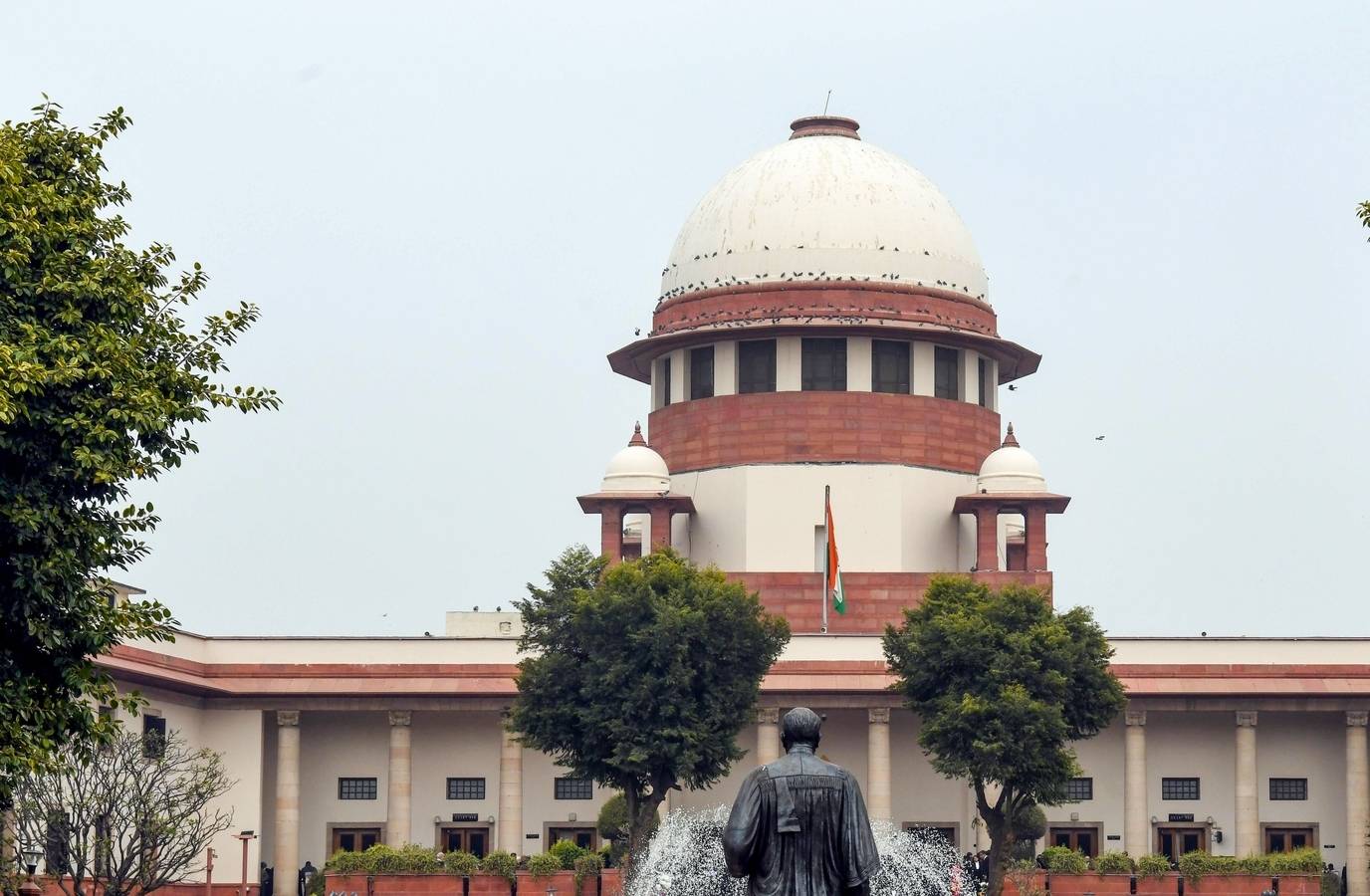
The Supreme Court has cautioned that restricting access to temples based on caste or sect could have a damaging effect on Hinduism, observing that the constitutional endeavour must be to 'unify and not create further divisions' within society.
A nine-judge bench led by Chief Justice of India Surya Kant made the remarks while examining the interplay between denominational rights under Article 26 and the State's power to enact social reform laws under Article 25(2)(b), particularly in the context of temple entry.
The court expressed reservations about a broad reading of denominational autonomy, pointing out that Article 26 itself is subject to public order, morality and health, and cannot be interpreted in a manner that permits exclusionary practices that undermine social cohesion.
The bench noted that even in the Devaru case, which involved a temple claimed by the Gowda Saraswat Brahmin community, the Supreme Court had upheld the validity of the Madras Temple Entry Authorisation Act, allowing entry to all sections of Hindus, thereby prioritising social reform over denominational exclusivity.
The court highlighted a potential inconsistency in arguments that seek judicial deference in matters relating to religious denominations and temple entry while endorsing intervention in practices such as triple talaq as measures of social reform.