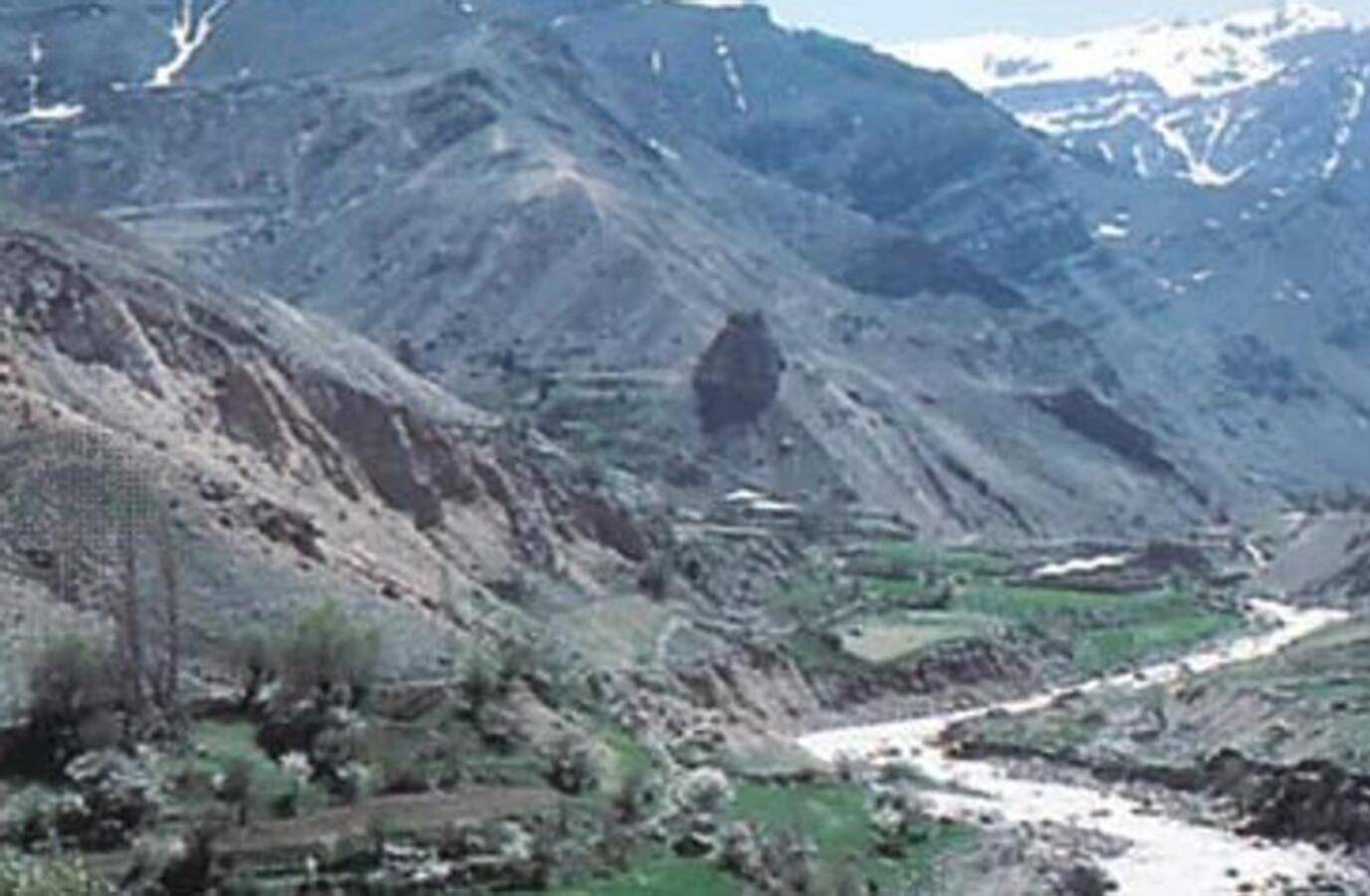
Tehran, the modern heart of Iran, has undergone a remarkable transformation from a small village to a bustling metropolis with over 10 million residents. The city's history dates back over two millennia, with the Alborz mountains and fertile plains surrounding it. For much of history, Tehran was overshadowed by its neighbour, the Shahr-e-Ray (City of Ray), which was the capital of the kingdom of Media during the first millennium BCE.
Ray, the ancient capital, was founded by Deicoes in the 7th century BCE and remained the preeminent city of Persia until the late 18th century. The city's strategic location between the desert and mountains, as well as its connection to different parts of Persia, made it a coveted gem. However, Tehran remained a minor settlement, benefiting from the natural advantage but not gaining prominence.
The history of Ray and the region around Tehran encapsulates the evolution of the entire region that was once called Persia. The Persian empire, which once ruled large parts of West Asia, Asia Minor, and Arabia, has an umbilical link with this city. The earliest mentions of 'Al-Ray' are found in Zoroastrian texts, and the city was revived by Seleucus Nikator, the general of Alexander, who brokered a peace deal with emperor Chandragupta Maurya in 303 BCE.
The Arabs exploited internal differences between Persian nobles and took control of the region from the Sasanians in 639 CE. The transfer of power between the Umayyads and the Abbasids reportedly took place at Ray, and a string of rulers followed, including the Buyids, Samanids, and Ghaznavids. The 11th century marked the advent of the Turkic Seljuk rule, which had Isfahan, Ray, and Nishapur as its capital and was replete with Persianate culture.
The Mongol juggernaut reached Persia in the early 13th century, exceeding preceding occupiers in brutality. However, Ray couldn't have been completely annihilated, as depicted by the painted bowl discovered here that was dated 1243 CE. The creation of Iran and Twelver Shiaism took place after the demise of the house of Timur, with the Safavid empire emerging from a Sufi order and restoring indigenous rule.
The Safavid era saw the territorial, religious, and cultural consolidation of Iran, with Ray diminishing in importance as the Ardabil became their capital. However, the idea of an Iranian nationhood was revived, and the Shia Safavids coined the name Mamalek-e Mahruse-ye Iran or the Guarded Domains of Iran. During the reign of Tahamasp I, Humayun, who was chased out of India in a sibling power struggle, sought and got refuge but was made to convert to Shiaism as a condition.
The Safavid empire crumbled under its own weight and that of its neighbours, the Russians and the Ottomans. Two new kings followed, first, the infamous Nadir Shah, who pillaged and massacred Delhi in 1739 and gave a tax break of three years back in Iran. His rule was grand but short-lived, and he was assassinated by his own nobles less than a decade later in 1746.
Tehran's transition into a city began with the construction of a palace and other buildings by Karim Zand, who rose from obscure origins during the civil war that followed the end of the Safavid rule. However, Karim Khan ruled from Shiraz till his death in 1779. It was only in 1786 that Tehran was made the capital of Iran, likely because the old capitals like Isfahan, Shiraz, Nishapur, and other cities were riven with feuds and a troubled legacy.
The Qajar dynasty, which also had a Russian branch, lasted till 1925 when it was overthrown by the Majlis, an elected national constituent assembly, which appointed a Cossack brigadier Reza Shah Pahlavi as the new king. Tehran had remained a relatively smaller capital with around 80,000 residents and just a few bazaars and buildings, notably the renovated Golestan Palace. It was during the Pahlavi era that Tehran was transformed into a grand capital with large roundabouts and wide roads laid in a cruciform design.