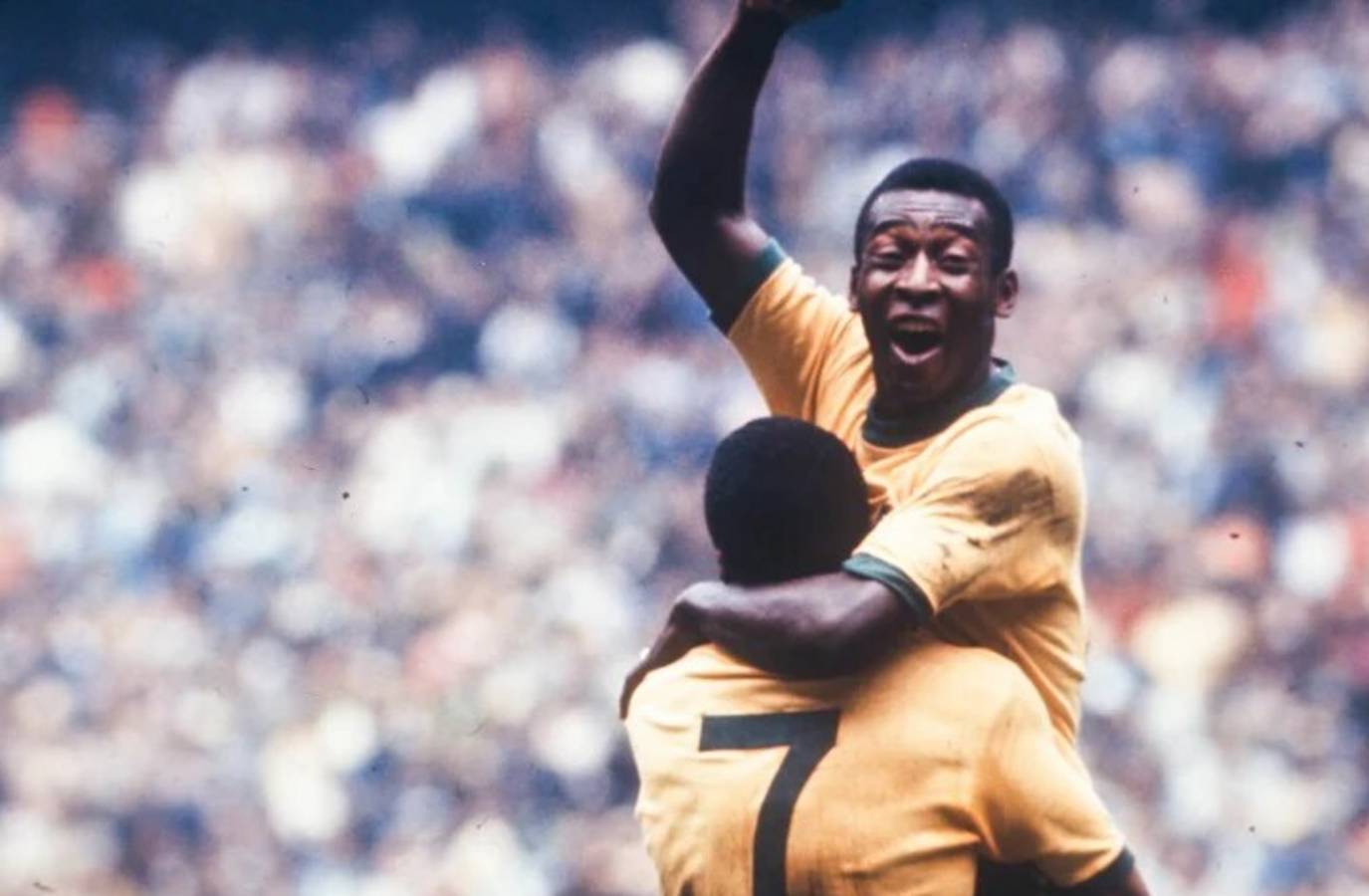
Pelé's World Cup journey is a story of arrival, pain, return, and completion. It began with a 17-year-old changing the sport in 1958 and ended with the same player helping Brazil keep the Jules Rimet Trophy forever in 1970.
The teenager who changed Brazil's place in football arrived at the 1958 World Cup with talent, but not yet with the certainty that later became attached to the yellow shirt. He scored the only goal against Wales in the quarter-final, a hat-trick against France in the semi-final, and twice in the final against Sweden, helping Brazil win 5-2 and lift the World Cup for the first time.
Pelé's World Cup journey did not move in a clean line from one triumph to another. In 1962, he began Brazil's title defence with a goal and an assist against Mexico, but a thigh injury in the next match ended his active role in the tournament. Brazil still won the World Cup, but Pelé's absence remained part of the story.
The next turn was harsher. In 1966, Brazil went to England chasing a third straight World Cup, but Pelé was repeatedly fouled, physically targeted, and denied any rhythm. Brazil went out in the group stage.
Pelé came back in 1970 not as the teenager who had stunned Sweden, but as a complete footballer inside one of the greatest teams the World Cup has seen. Brazil had Jairzinho's direct running, Tostao's intelligence, Rivelino's left foot, Gerson's control, and Carlos Alberto's authority from the back. Pelé gave the team its final clarity, scoring, creating, drawing defenders, and making decisions that gave Brazil's football its rhythm.
The final against Italy carried the weight of the full journey. Pelé opened the scoring with a header, rising above Tarcisio Burgnich to put Brazil ahead. Italy equalised, but Brazil took command after half-time. Gerson scored, Jairzinho scored, and then came the fourth, the goal that became the permanent symbol of that team.
The move began from deep and moved through Brazil with complete control. Clodoaldo escaped a cluster of Italian players. Rivelino moved the ball forward. Jairzinho carried it from the left and found Pelé near the edge of the area. Pelé did not shoot. He waited for Carlos Alberto's run from the right and rolled the pass perfectly into his path. Carlos Alberto struck it first time into the far corner.
The finish gave the goal its violence. Pelé's pass gave it its intelligence. Brazil's movement gave it its immortality. Brazil won 4-1 and became world champions for the third time, after 1958 and 1962. Under the rule then in place, the first country to win the World Cup three times would keep the Jules Rimet Trophy permanently.