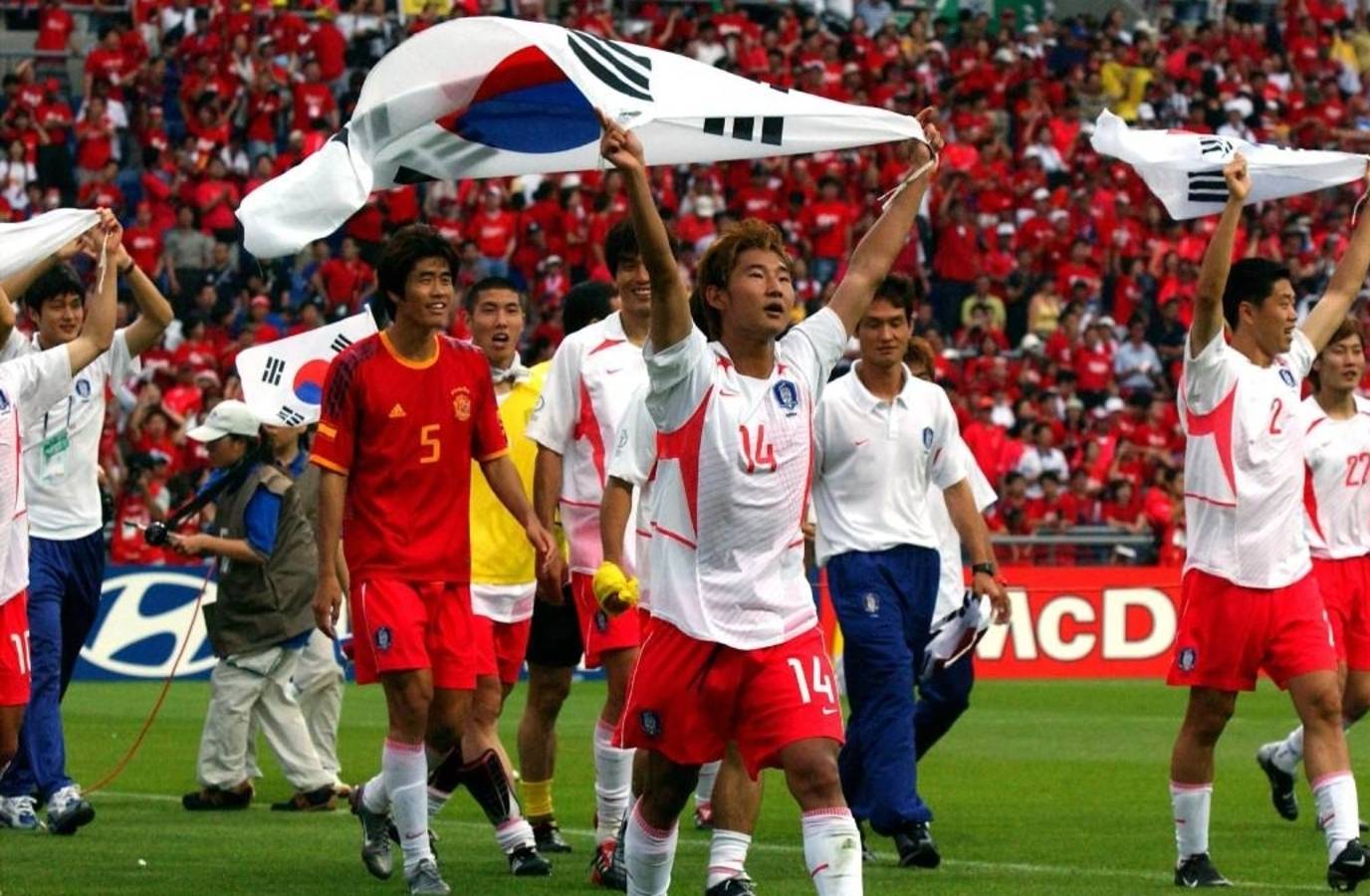
South Korea's 2002 FIFA World Cup run remains one of the most extraordinary stories in football history. The team, led by Dutch coach Guus Hiddink, achieved something no Asian nation had ever managed before — reaching the semi-finals.
Under Hiddink's guidance, the Taeguk Warriors transformed from World Cup underachievers into one of the tournament's biggest sensations. They played with intensity, discipline, and belief, eliminating Portugal and Poland while advancing alongside the United States.
The knockout rounds were where South Korea truly captured global attention — and where the controversy began. In the Round of 16, they defeated Italy 2-1 after extra time, with Francesco Totti being sent off for simulation. The quarter-final against Spain only intensified those feelings, with two Spanish goals being disallowed in decisions that remain heavily debated.
Despite their historic performance, the achievement was quickly overshadowed by questions surrounding the officiating. FIFA later banned Ecuadorian referee Byron Moreno for misconduct in unrelated matches, and several key decisions from South Korea's victories continued to be dissected by analysts, journalists, and fans for years.
The debate over whether South Korea's run was purely a sporting miracle or aided by controversial refereeing decisions has never fully disappeared. Beyond the controversy, the historic performance had a major impact on South Korean football, igniting unprecedented football fever across the country and making the national team a symbol of pride and belief.