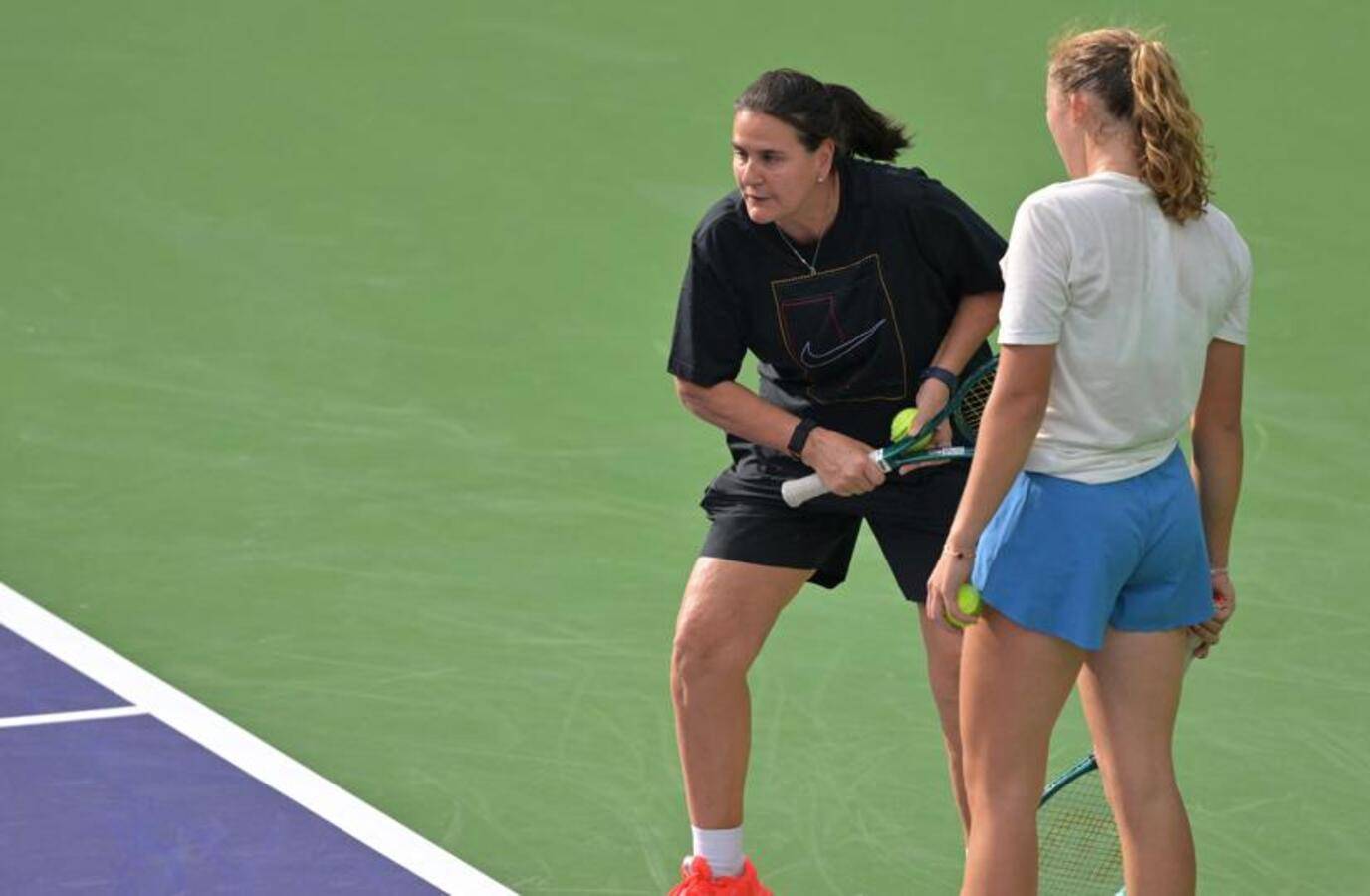
Mumbai: In a sport where players from both genders share the most prestigious courts on the biggest Slam stages, the men-women ratio in coaches is surprisingly skewed. Female coaches are a rare sight in tennis, with only a handful of top singles players having a woman as their primary coach.
According to the Women's Tennis Association (WTA), just three singles players in the top 50 currently have a woman as their primary coach: Andreeva, Kostyuk, and Anna Kalinskaya. The number remains a handful even when expanding the search to the top 100.
Former world No.1 Andy Murray's decision to bring on Amelie Mauresmo during his playing days is a rare exception in the men's ATP tour, where finding a female coach is even rarer.
So, why is the men-women ratio in coaches so skewed in a sport where players across gender share the most prestigious of courts on the biggest of Slam stages?
According to Ann Grossman-Wunderlich, the American former world No.29 who competed on the WTA tour through the 1980s and 1990s, it's a combination of cultural and societal factors, including the difficulty for women to break into the male-dominated 'boys' club' of elite tennis coaching.
Former female stars have only taken up temporary coaching gigs, like Kim Clijsters and Agnieszka Radwanska, who was briefly part of Magda Linette's team.
The Women's Tennis Coaching Association (WTCA) was founded to give coaches (female or male) more opportunities and a development pathway for women coaches. However, the non-profit body has hit a bit of a roadblock due to a lack of membership after the pandemic.
The WTA has a Coach Inclusion Program to fast-track female coaches up the ladder, with numbers showing a 6% increase in registered female coaches from 2017 to 2025.
Younger players are starting to have female coaches by their side, like Canada's Victoria Mboko, whose stunning rise to the top 10 was shaped by former French world No.3 Nathalie Tauziat.
As the likes of Andreeva (ranked 8th) and Kostyuk (15th) continue to rise, the stocks of female coaches can grow, making it more acceptable to have a female coach.