
COP30: Fissures Emerge as Climate Negotiators Struggle for Consensus in Belem
The Like Minded Developing Countries, which includes India and China, will not accept prescriptive text on developing a fossil fuel phaseout roadmap | World News
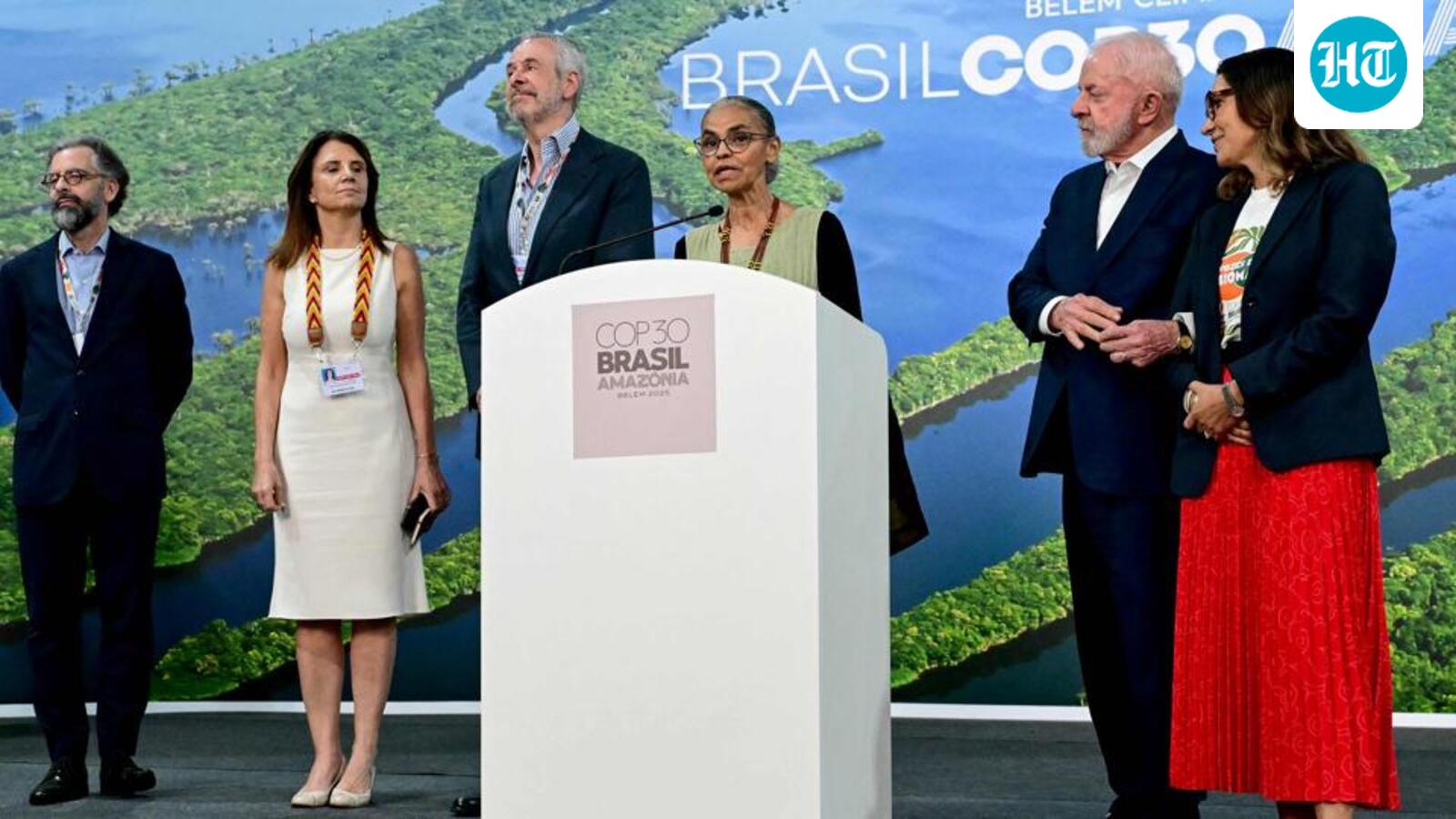
Belem, Brazil: Tensions ran high at the COP30 climate summit on Thursday as negotiators failed to reach a consensus on key climate issues, casting a shadow over the possibility of a traditional agreement for the first time in the conference's history.
The presidency had made it clear that it wouldn't push for a cover text unless parties took the lead, but hopes of a multilateral show of unity remain. Three major disputes have emerged between developing and developed countries: a roadmap for fossil fuel phaseout, Article 9.1, which requires developed countries to provide financial aid to developing nations, and addressing the disproportionate impact of unilateral trade measures on developing countries.
Developing countries, including India and China, are resistant to prescriptive language on fossil fuel phaseout, while developed countries, led by the EU, refuse to revisit Article 9.1. India's delegate emphasized the importance of national circumstances and differentiated responsibilities, citing the Paris Agreement.
However, the most contentious issue centers around draft language calling for countries to develop just, orderly, and equitable transition roadmaps. Developing countries have expressed concern that none of the developed countries are on track to meet their 2030 greenhouse gas emission reduction targets.
India's Union Environment Minister, Bhupender Yadav, emphasized the need for nationally determined, demand-driven transition pathways, rather than a uniform approach. He outlined four key principles for a just transition: an economy-wide transformation, strengthening resilience, creating employment, and ensuring global equity.
India joined other developing countries in calling for the establishment of a just transition mechanism to identify gaps and advance practical solutions. The global south requires affordable access to finance, technology, and capacity building to ensure no one is left behind. Yadav stressed the importance of operationalizing equity and the differentiated responsibilities of countries to advance a truly just transition.
In another intervention, Yadav highlighted the need for adaptation, citing the 2025 Adaptation Gap Report, which estimates that developing countries will require between $310 billion and $365 billion annually by 2035. India continues to prioritize adaptation, mainstreaming it through national and state action plans and increasing adaptation-relevant expenditure by 150% over seven years.


