
Cosmic Visitor: NASA Captures Stunning Images of Interstellar Comet 3I/Atlas
The closest the comet will come to Earth is 167 million miles (269 million kilometers) in mid-December. | World News
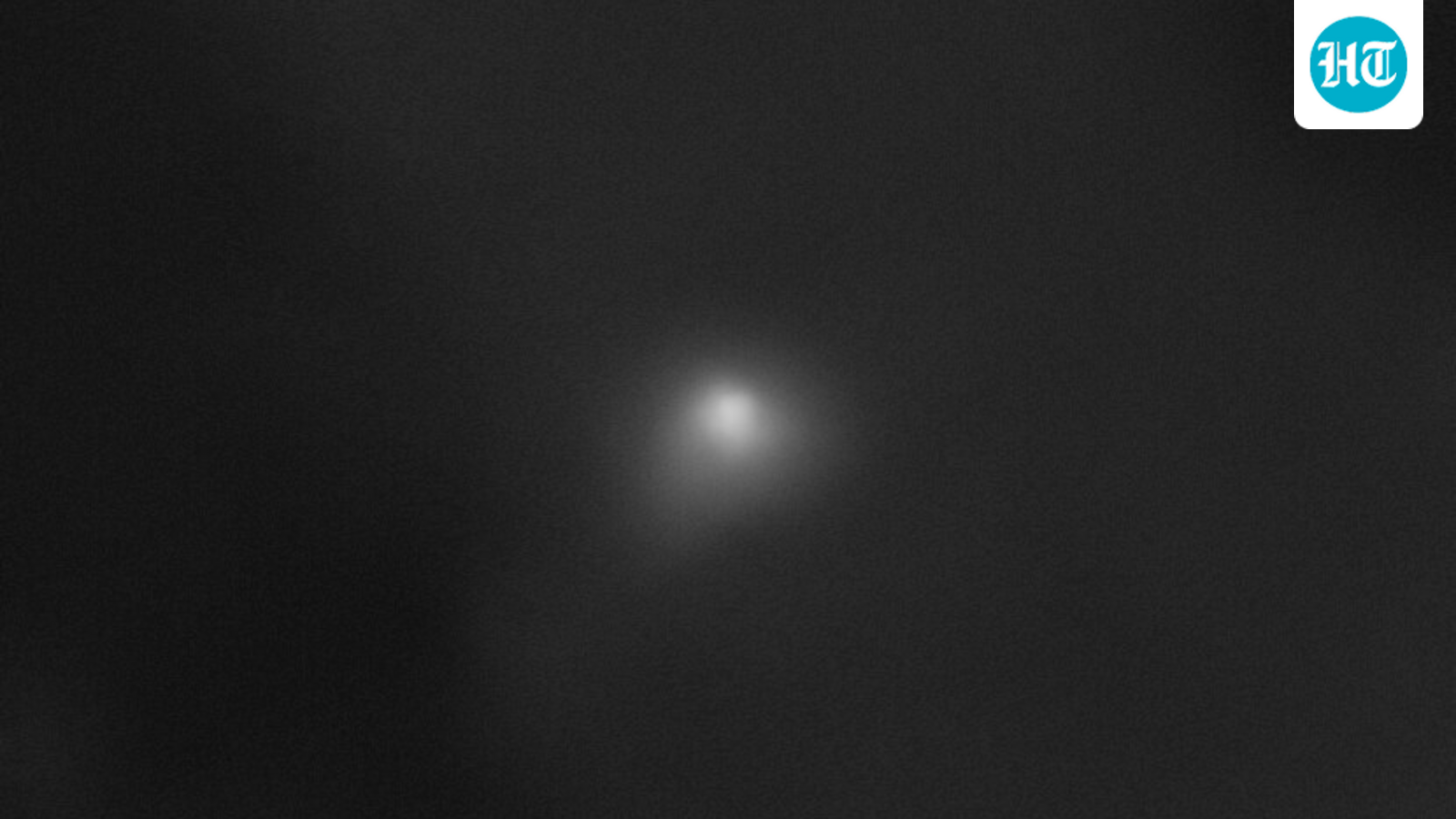
In a rare celestial event, NASA has released close-up images of the interstellar comet 3I/Atlas, which is making a quick tour of our solar system. Discovered this summer, the comet is only the third confirmed object to visit our corner of the cosmos from another star.
As it passed just 18 million miles away from Mars, three NASA spacecraft and two European Space Agency satellites zoomed in on the comet, revealing a fuzzy white blob. The comet, which is about 190 million miles from Earth, is now visible in the predawn sky using binoculars or a telescope.
"Astronomers are excited about this rare opportunity to study an interstellar visitor," said NASA's acting astrophysics director, Shawn Domagal-Goldman. The comet will come closest to Earth in mid-December, at a distance of 167 million miles, before disappearing back into interstellar space.
Scientists believe the comet may have originated in a star system older than our own, with observations suggesting it could be anywhere from 1,444 feet to 3.5 miles across. The comet's exceptional speed and ancient origins make it a unique window into the past, predating the formation of our Earth and sun.
While some have speculated about the comet's origins, NASA officials have dismissed rumors of it being an alien ship. "3I/Atlas is a comet, not a spacecraft," said NASA's associate administrator, Amit Kshatriya. The space agency remains on the hunt for life beyond Earth, but for now, the comet is a fascinating and rare celestial visitor.
In the coming weeks, astronomers will continue to study the comet using ground telescopes and the Webb Space Telescope. The European Space Agency's Juice spacecraft, bound for Jupiter, has been observing the comet since its closest pass to the sun, although scientists won't receive the data until February due to limitations caused by the spacecraft's heat shield.


