
Ethiopia's Dormant Volcano Erupts After 10,000 Years, Impacting Flights Across the Globe
The long-silent volcano, situated in Ethiopia's Erta Ale Range, erupted for the first time in nearly 10,000 years. | World News
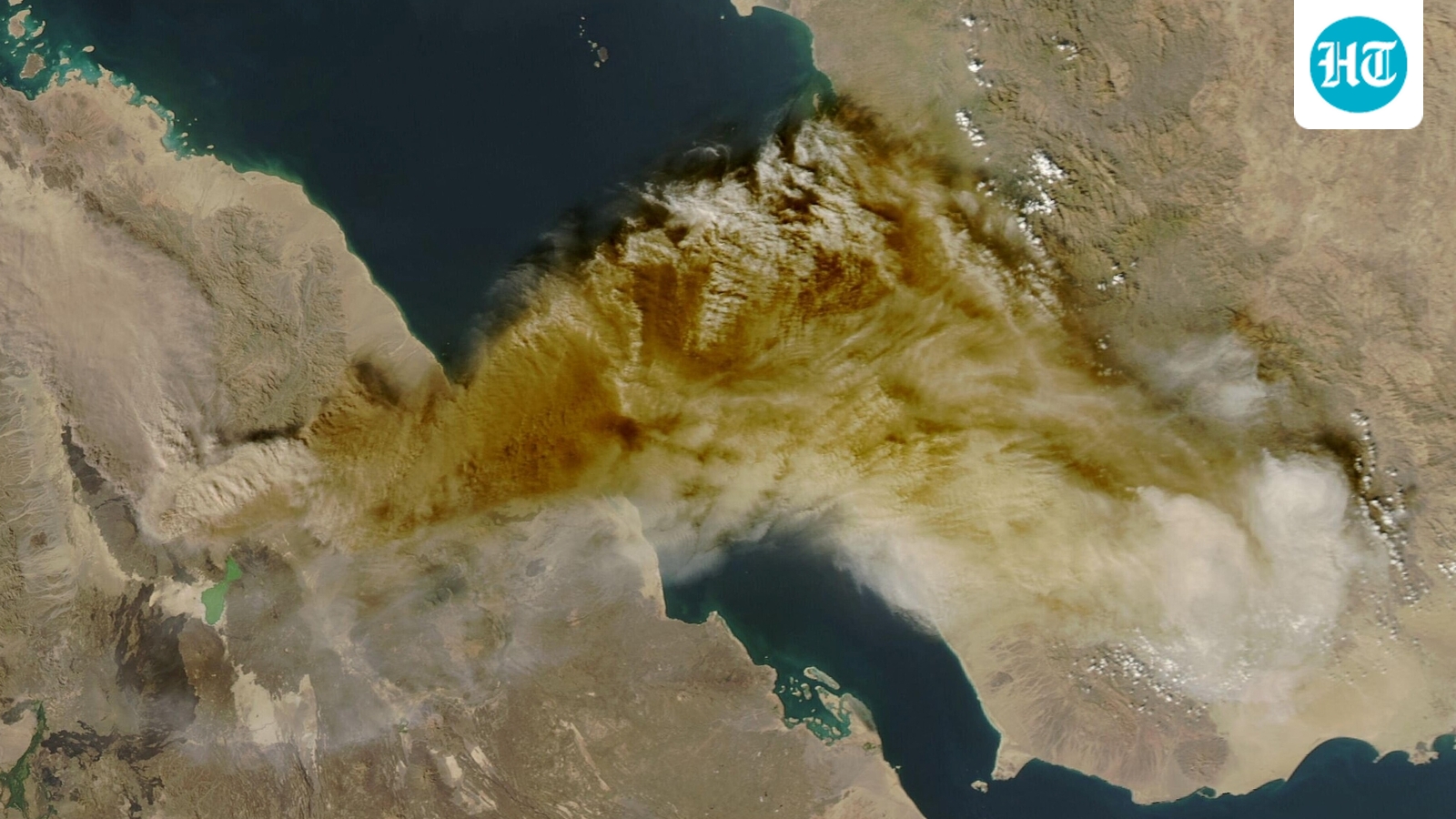
A historic volcanic eruption has shaken Ethiopia's Erta Ale Range, sending a massive ash cloud drifting toward northern India. The Hayli Gubbi volcano, long silent, erupted for the first time in nearly 10,000 years, according to the Toulouse Volcanic Ash Advisory Centre. The sudden eruption has sent ash clouds sweeping across the Red Sea, affecting Oman and Yemen before shifting eastwards.
Videos on social media captured the dramatic moment, with people rushing to witness the spectacle. However, local authorities have reported no casualties, but the eruption poses significant economic implications for the local community.
The thick ash cloud is expected to impact northwest India, with Gujarat, Rajasthan, Delhi-NCR, and Punjab potentially affected. The Indian Meteorological Department (IMD) has warned that the ash plumes, consisting of volcanic ash, sulphur dioxide, and small particles of rock, will primarily impact flights, forcing airlines to re-route or cancel flights.
While the impact on flight operations is minimal today, the situation is expected to worsen on Tuesday. Local authorities are working to mitigate the effects of the eruption, which has covered many villages in ash, leaving animals with limited food sources. The community is bracing for the economic consequences of this rare and historic event.


