
Mystery Comet 3I/ATLAS: Scientists Scramble for Clues as NASA Stands Firm on Intergalactic Origins
3I/ATLAS is traveling away from us into deeper space, last scramble for data raises question about the interstellar object.
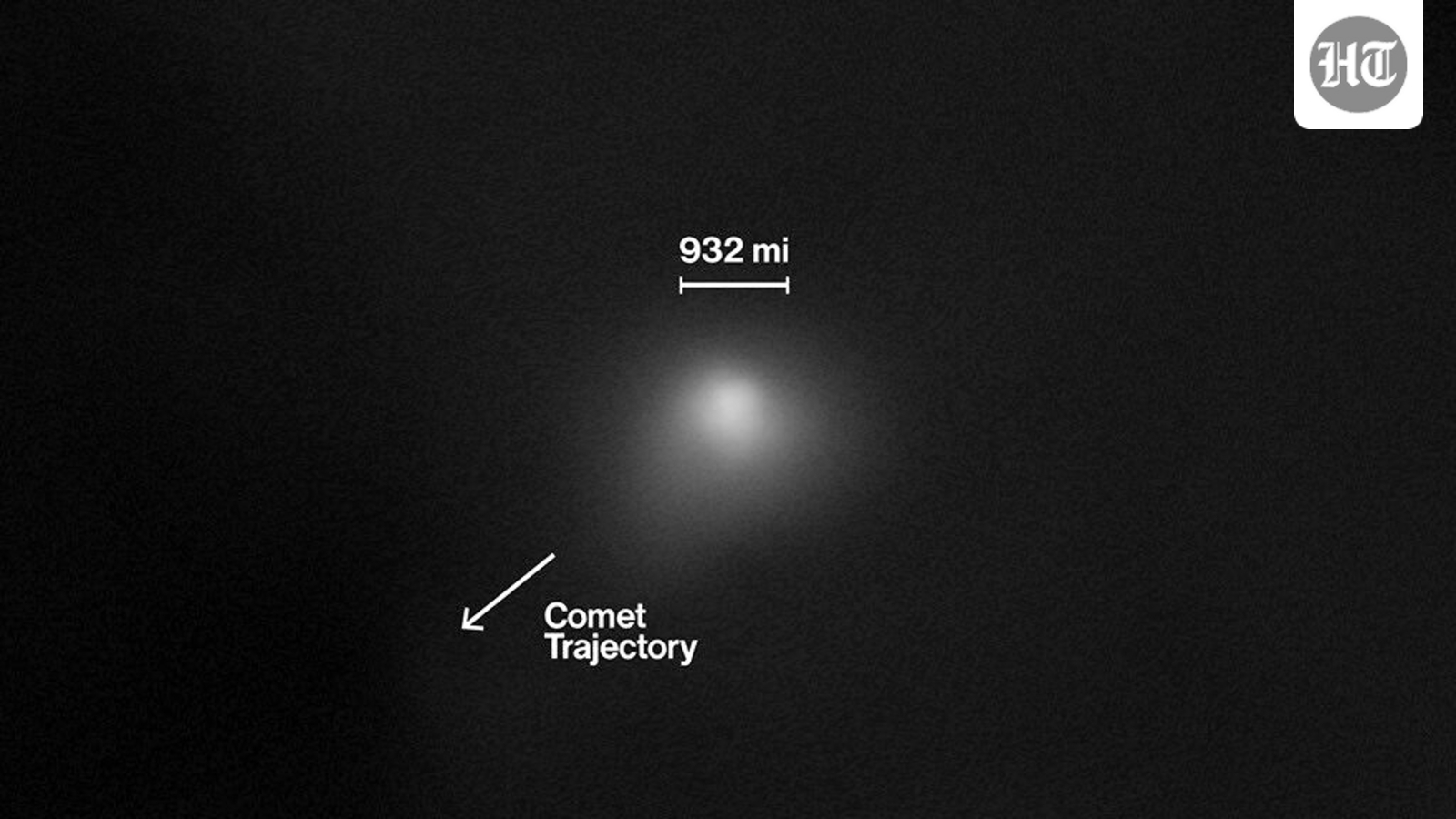
The enigmatic comet 3I/ATLAS is disappearing into the vast expanse of space, leaving scientists at NASA and other institutions racing against time to gather as much data as possible. Despite growing speculation about its true nature, NASA remains convinced that this interstellar object is a comet. However, its unusual characteristics have sparked debate among experts.
The comet's journey began with typical comet behavior, displaying a dust-gas tail, a nucleus surrounded by a brilliant coma, and intense outgassing. However, astronomers noticed that its coma was dominated by carbon dioxide (CO₂) instead of the usual water-ice and carbon-monoxide signature found in regular comets. The observations led some scientists to suggest that 3I/ATLAS might not be a conventional comet but a new class of interstellar body.
While NASA officials maintain that 3I/ATLAS 'looks and behaves like a comet,' alternate theories persist. Some scientists propose that the object could be of 'exotic' origin, including the possibility of an artificial origin. The arrival of 3I/ATLAS presents a rare opportunity for scientists to study its composition and behavior, potentially offering insights into the building blocks of other star systems.
The coming months will be crucial for astronomers as they attempt to gather better telescopic data, spectral observations, and perhaps even spacecraft tracking to help resolve the mystery surrounding 3I/ATLAS. As the comet disappears into the distance, scientists are left with more questions than answers about its true nature and origins.


