
Thai Peace Deal with Cambodia Hits Roadblock Amid Border Tensions and Deadly Land Mine Incident
Thailand suspended a peace process with Cambodia agreed last month alongside US President Donald Trump after Thai soldiers were injured by land mines. | World News
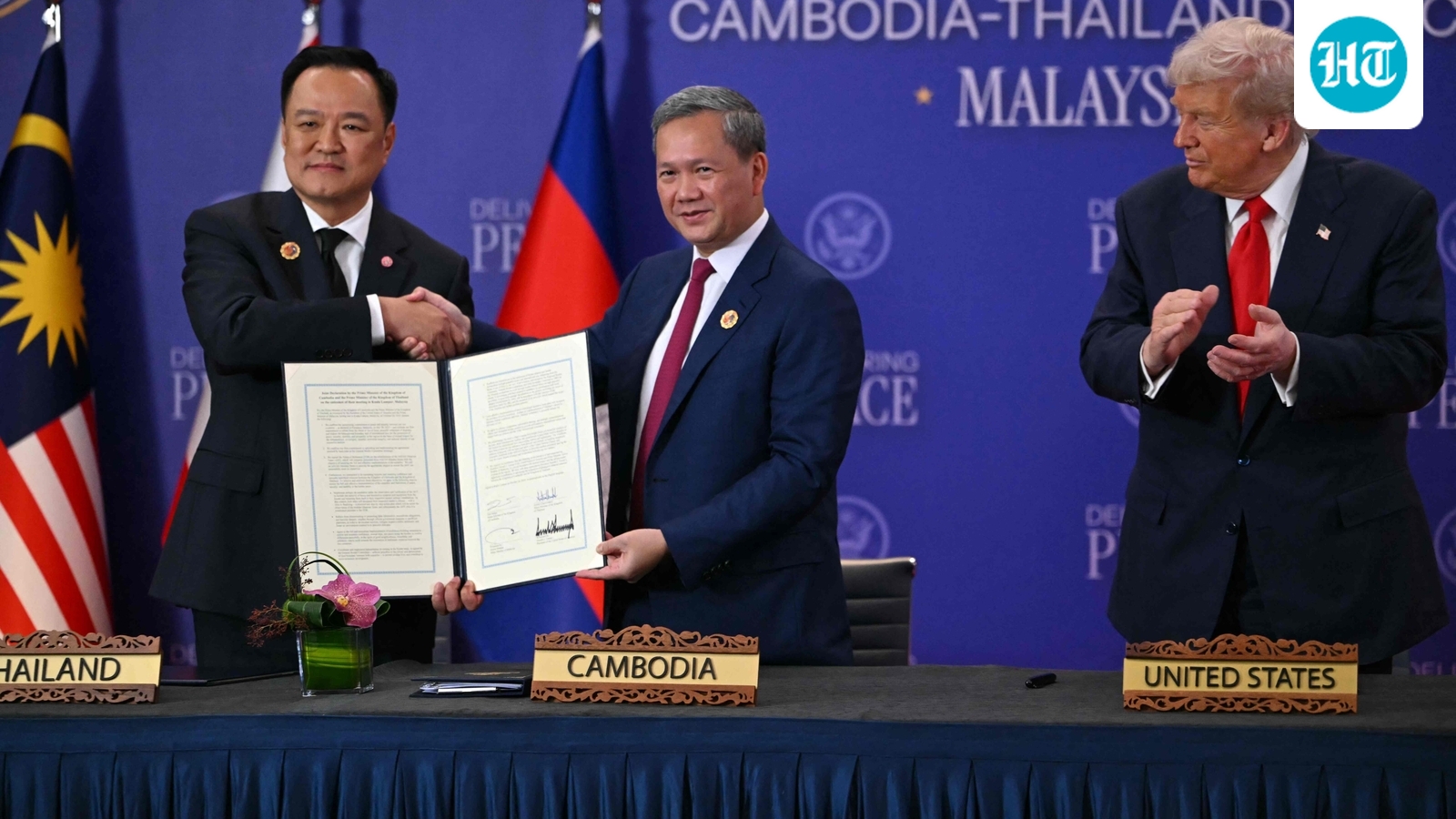
A landmark peace deal between Thailand and Cambodia, brokered by the US, has been put on hold following a recent land mine incident that left Thai soldiers injured along their border. The suspension of the peace process, agreed upon last month during US President Donald Trump's Asia trip, was announced by Thai Defense Minister Nattaphon Narkphanit after a meeting of the National Security Council.
The joint declaration, which aimed to normalize ties between the two nations, included the removal of heavy weapons from border zones and cooperation on land-mine clearances. However, tensions between the two countries remain high, with the Thai government deciding to step up military operations to protect its sovereignty and secure the border.
Thai Prime Minister Anutin Charnvirakul plans to visit soldiers injured in the blast, which was the seventh such incident in four months. The Thai army has accused Cambodia of laying new mines, while Cambodia's defense ministry has denied this, suggesting that the mines were likely remnants of past conflicts that have not been cleared.
The suspension of the peace deal may have significant implications for trade relations between the two countries. The US had threatened to scupper trade deals with both Thailand and Cambodia unless they halted fighting, and the Thai government had sought a better trade deal in exchange for agreeing to the peace process.
Under the peace declaration, Thailand had agreed to eliminate tariff barriers on 99% of US goods, while the US would impose 19% tariffs on Thai products, with some set to be tariff-free. The framework of the trade deal was non-binding, with detailed talks to follow.
The Thai government may consider revoking the peace deal altogether unless Cambodia responds to Thailand's formal protest, according to government spokesman Siripong Angkasakulkiat. The situation remains volatile, with both countries vying for control of their disputed border.


