
Trump's 'Hang Them' Threat: A Row Over Free Speech and Sedition Claims
President Donald Trump on Truth Social shared a post calling for the hanging of Democrat lawmakers who urged service members to refuse unlawful orders. 
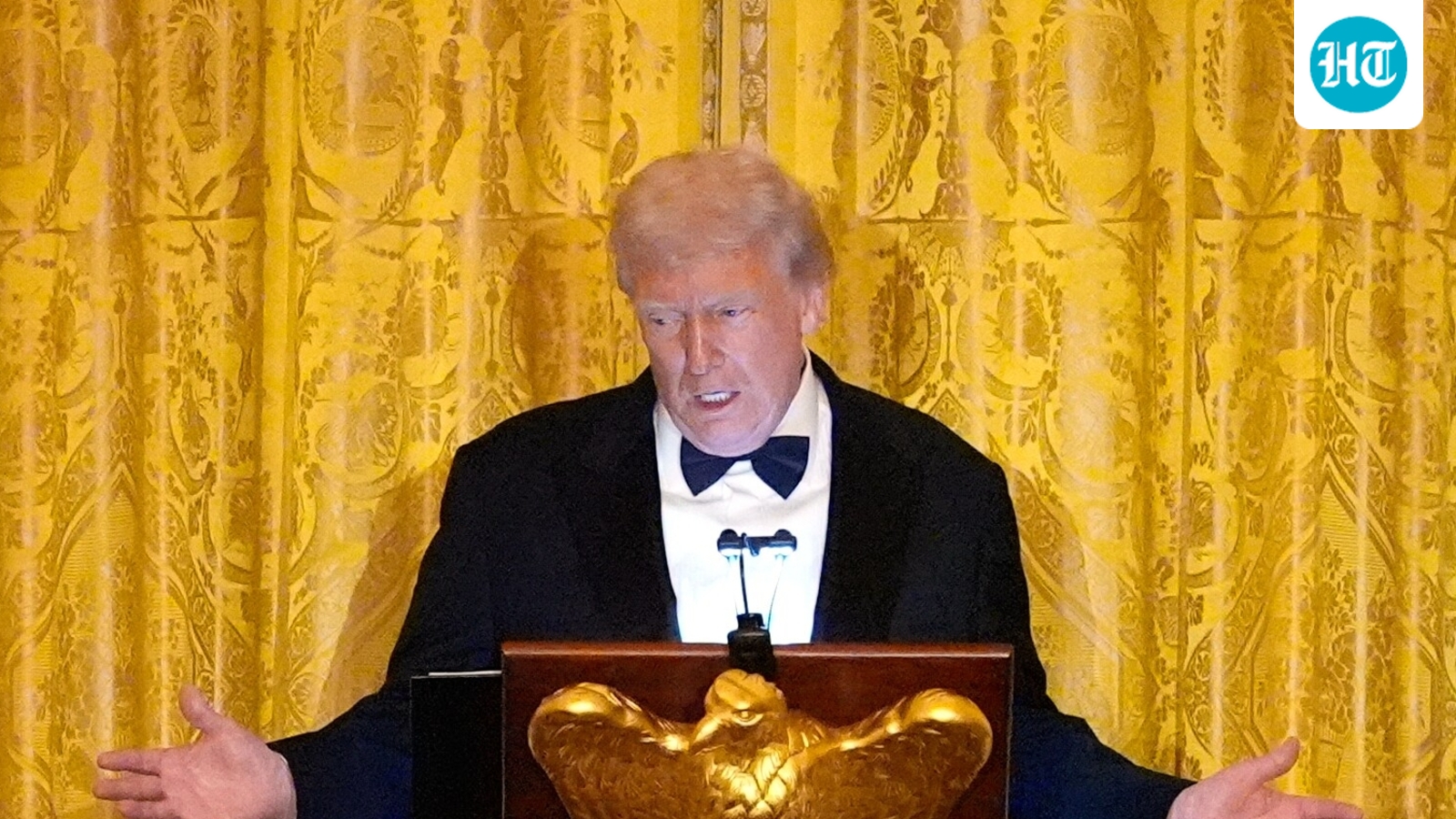
President Donald Trump sparked controversy with a series of posts on Truth Social, targeting six Democrat lawmakers and labeling their actions 'seditious.' He went so far as to suggest that they be 'hanged,' drawing criticism from lawmakers, including Congresswoman Pramila Jayapal and Senator Chuck Schumer.
The six lawmakers in question, Sen. Elissa Slotkin, Sen. Mark Kelly, Rep. Jason Crow, Rep. Maggie Goodlander, Rep. Chris Deluzio, and Rep. Chrissy Houlahan, released a video earlier this month, expressing concern that the Trump administration was pitting the US military and intelligence community against the American people. They claimed that the current administration was threatening the principles of the US Constitution.
Trump's posts were seen as a threat to the opposition, with many taking to social media to express their concerns. Representative Eric Swalwell called Trump's behavior 'weak,' while Senator Schumer warned that Trump's language could be interpreted as a call to violence.
However, the White House Press Secretary, Karoline Leavitt, clarified that Trump did not intend to call for the execution of members of Congress. She stated that Trump's intention was to emphasize the seriousness of the situation.
The controversy has raised questions about free speech and sedition laws in the US. While there is no provision for charging civilians with sedition, 'seditious conspiracy' carries a maximum penalty of 20 years. The Uniform Code of Military Justice includes a section on sedition, with possible penalties including death.
The debate highlights the delicate balance between free speech and national security. As the US continues to navigate the complexities of politics and governance, one thing is clear: the line between acceptable criticism and seditious behavior is increasingly blurred.


