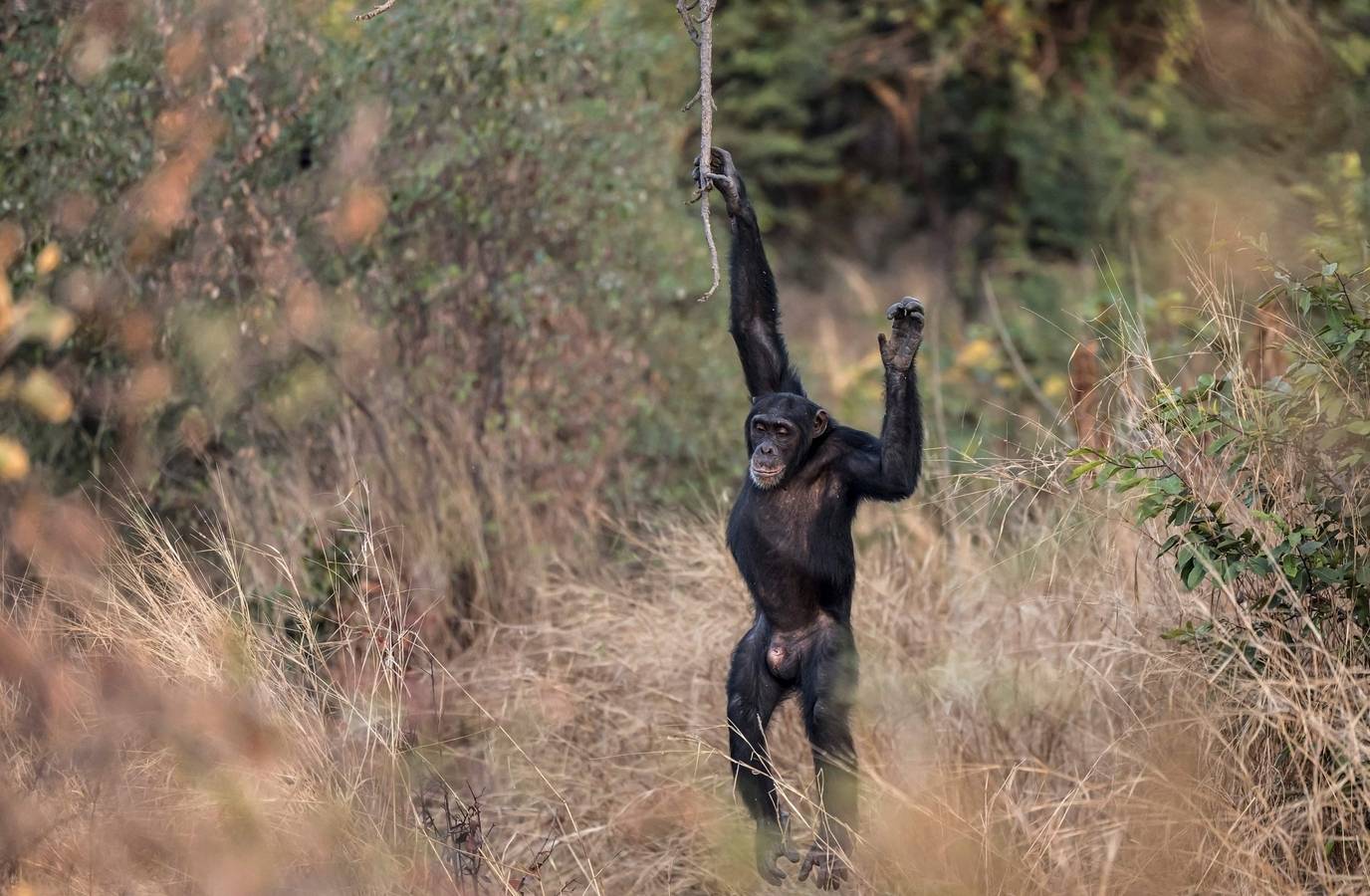
For two decades, researchers observed members of the Ngogo chimpanzee group in Kibale National Park, Uganda, but their stable community fractured into deadly violence. The researchers documented the first clearly recorded example of a group of wild chimpanzees splitting into two factions, with one launching coordinated attacks against the other, resulting in 28 deaths.
Adult males and infants were targeted, with the attackers using biting, pounding, dragging, and kicking. The researchers began studying the Ngogo chimpanzees in 1995, and this was the largest-known group of wild chimpanzees, peaking at around 200 members.
The researchers believe a combination of factors may have destabilized the group, including its large size, feeding competition, and a change in the alpha male. The group split into two distinct groups, labeled the Western and Central groups, with the Western group perpetrating the violence.
The study included observations through 2024, with seven adult males and 17 infants killed, for a total of 24. The violence has continued, with additional killings reported in 2025, raising the death toll to 28.
Researchers have cautioned against drawing parallels between chimpanzee violence and human behavior, noting that while they share a similar evolutionary history, they are fundamentally different.