₹4.5K-cr Boost for SCL Mohali: Centre's Plan to Revolutionise Chip Manufacturing
The Indian government will invest ₹4,500 crore to modernize the Semi-Conductor Laboratory in Mohali, enhancing production and supporting startups in chip design | India News
The Indian government has announced a ₹4,500 crore investment over the next three years to modernise the Semi-Conductor Laboratory (SCL) in Mohali. The facility, which is set to become a national tape-out facility, will enable students, researchers, and startups to send their chip designs for manufacturing.
The investment, part of the ₹76,000 crore allocated to the India Semiconductor Mission (ISM) 1.0 in 2021, aims to transform SCL into a hub for cutting-edge chip design and manufacturing. The facility, which currently produces custom chips, optical components, and micro-mechanical devices, will be upgraded to handle more complex technologies, including 28nm to 180nm nodes.
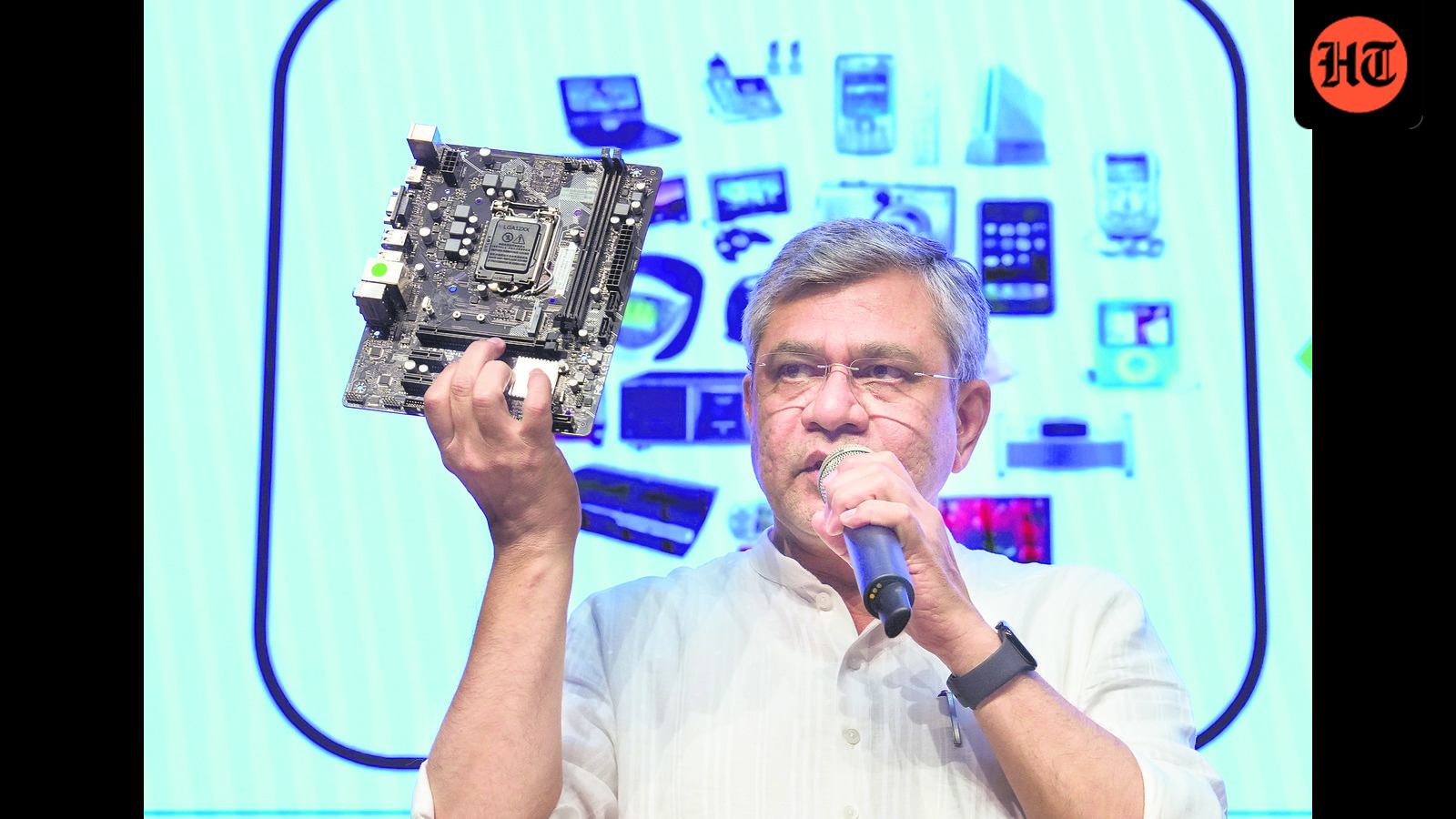
According to IT and Electronics Minister Ashwini Vaishnaw, the government's five-point roadmap for SCL's future includes modernising the facility, scaling up production, establishing it as a national tape-out facility, expansion, and strategic self-reliance. The minister emphasized the importance of SCL staying in government hands to support new startups and create new intellectual property.
Vaishnaw also announced that the ministry has already trained over 60,000 students in just three years, exceeding the target of 85,000 engineers to be trained in 10 years. The India Semiconductor Mission has also made significant progress, with 10 plants under construction and two plants already in pilot production.
The SCL Mohali facility was established in 1976 with the vision of creating India's first indigenous chip fabrication unit. However, a devastating fire in 1989 set back the facility significantly, and it took several years to recover. The facility has since undergone several upgrades, including the development of in-house technologies and the upgrade to 180-nanometre nodes in 2011-12.
The government's investment in SCL Mohali is expected to play a crucial role in India's semiconductor programme, with the aim of achieving strategic self-reliance and using home-made chips in strategic sectors.