Aravalli Forest Restoration: India's Environment Minister Unveils Green Credit Scheme
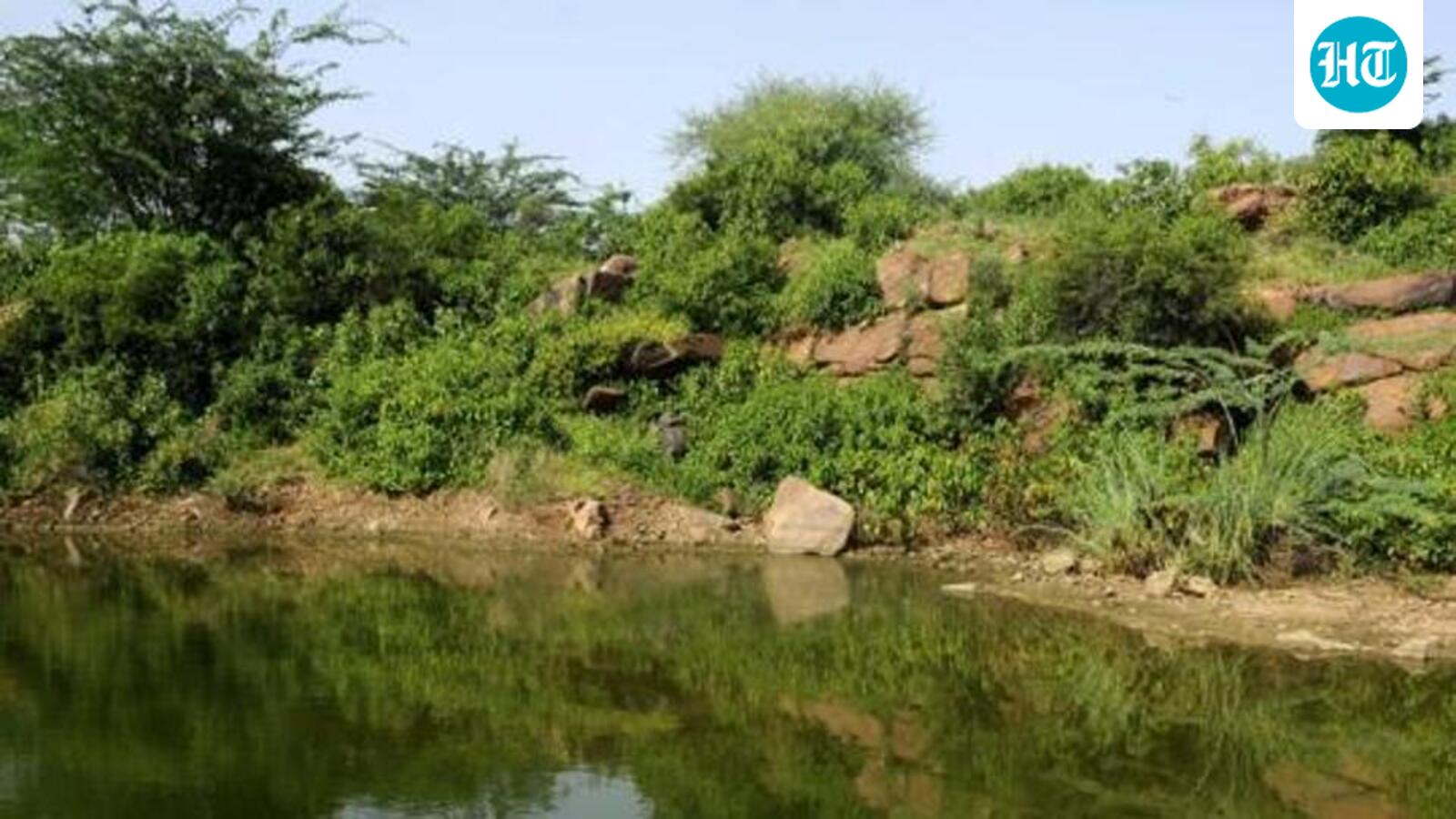
Image Source: Internet
Union Environment Minister Bhupender Yadav has announced a new Green Credit scheme for the Aravalli range, which spans across Delhi, Haryana, Rajasthan, and Gujarat. Under this initiative, organisations can lease forest land for afforestation and timber projects without paying environmental compensation fees. However, this does not imply that mining will be allowed in the region, as previously feared. In fact, Yadav clarified that neither mining is currently permitted in the Aravalli region of Delhi nor will it be in the future. Similarly, mining will not be allowed in most districts of Haryana. The Green Credit scheme aims to encourage organisations to take up afforestation in degraded forest land, with a goal of achieving 40% canopy cover within four to five years. This initiative has already begun, with 1,000 acres of land being restored in Gurugram and Manesar. The Aravalli range has been extensively degraded over the years, with over 40% of its forest cover lost since 1970. The region is also facing significant challenges due to the extraction of building materials, including granite, quartzite, and sand. To address these issues, the environment ministry has released an eco-restoration framework for the Aravalli landscape. This framework proposes a replicable model for rehabilitating degraded forest patches in urbanising regions of the Aravalli range. The report, drafted by the Sankala Foundation, highlights the need for forest and biodiversity management, invasive species control, water resources management, livelihood diversification, urban planning, and adaptive monitoring. The framework offers a robust framework for rehabilitating degraded forest patches in urbanising regions of the Aravalli range. It balances ecological restoration with social, economic, and environmental priorities to foster sustainable development and improve quality of life. The report will be used to develop a model eco-restoration plan for the Aravalli landscape, which can be replicated in all four participating states across 29 districts. Field surveys in the four Gurugram villages found that forest patches in the project area are highly degraded, fragmented, and invaded by species such as Prosopis juliflora, Lantana camara, and Parthenium hysterophorus. These invasive species have significantly suppressed native biodiversity, and all villages report complete reliance on groundwater for irrigation, which has contributed to the depletion of aquifers and adversely affected forest health. Over 43% of households rely on forests for firewood, medicinal plants, and fodder. Women play a key role in resource management, but alternative livelihoods remain limited. The Aravalli range has lost over 40% of its forest cover since 1970, with tree felling and illegal construction fragmenting habitat continuity. In Haryana and Delhi, ridge forests are now interspersed with real estate developments and highways. Extraction of building materials has devastated thousands of hectares, with 2,400 mining leases operating within or near the Aravalli hill system in Rajasthan until judicial interventions halted activity. Between 1999 and 2019, forest cover declined by 0.9%, with the central Aravallis losing 32% since 1975. Projections suggest a further 22% degradation by 2059.