Bangladesh in Turmoil: Khaleda Zia's Health Crisis and Sheikh Hasina's Exile
Will Khaleda Zia's son return from London? That's a key question ahead of elections planned over a year after students-led protest ousted Hasina | World News
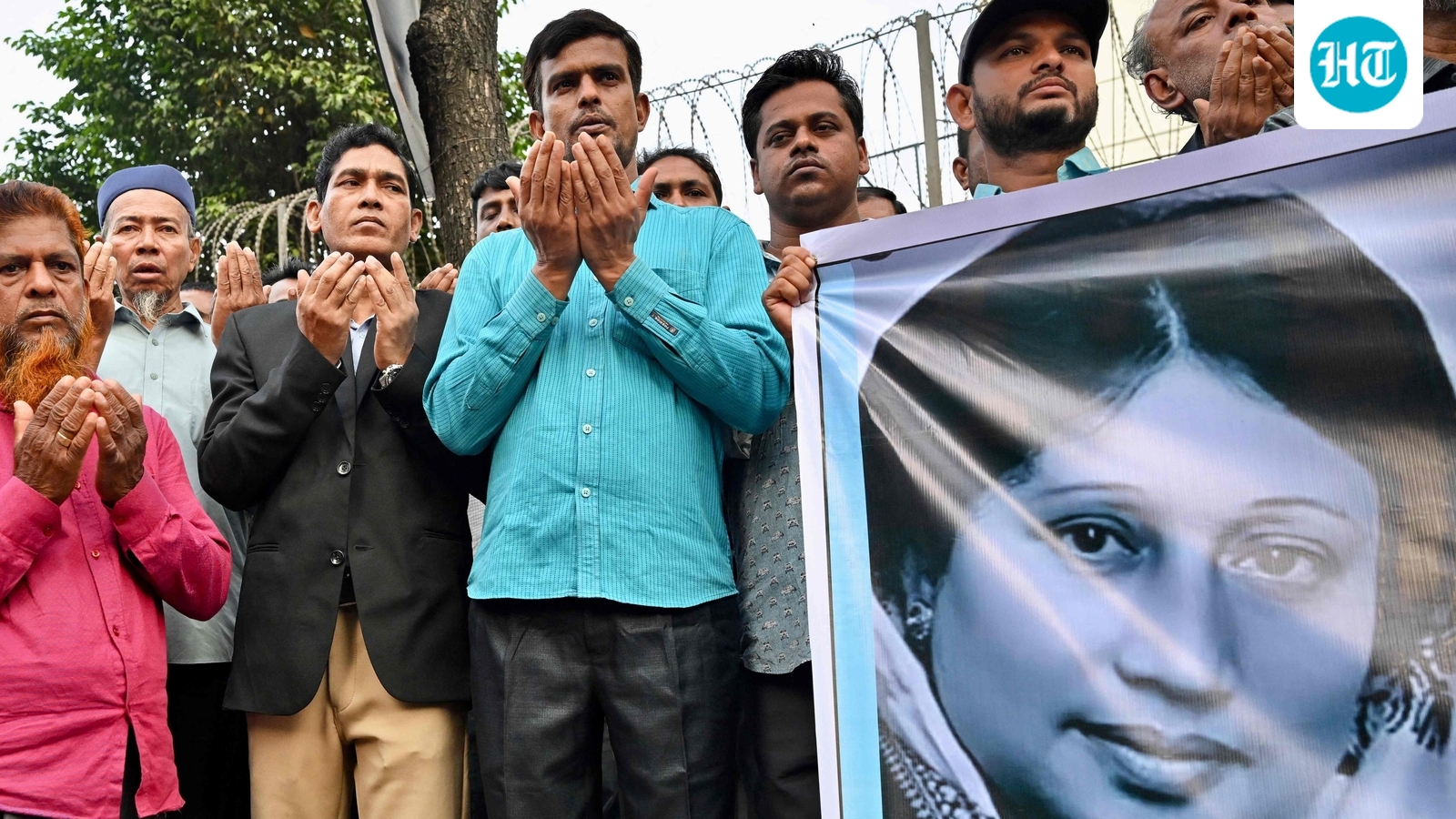
Bangladesh is facing a perfect storm as its two most prominent political leaders, Sheikh Hasina and Khaleda Zia, are both sidelined due to health issues. Khaleda Zia, the 80-year-old former prime minister and chairperson of the Bangladesh Nationalist Party (BNP), is in a 'very critical' condition at a Dhaka hospital after being admitted with a severe chest infection. Her son, Tarique Rahman, is still abroad and has expressed uncertainty about his return to Bangladesh.
The BNP has demanded elections either in December or February next year, while the interim administration led by Nobel Peace Prize laureate Muhammad Yunus has promised elections by April 2026. However, there is no consensus on a timetable and process for elections, leaving the country in a state of uncertainty.
As the country navigates this crisis, new political forces are emerging. Student leaders who spearheaded the 2024 uprising have formed a new party and are demanding a rewritten constitution. Religious hardliners, including the Jamaat-e-Islami, are gaining influence and holding massive rallies in Dhaka.
The situation is further complicated by Sheikh Hasina's self-imposed exile in India after being sentenced to death for 'crimes against humanity' by a tribunal in Dhaka. Her stay in India has become a contentious issue between the Narendra Modi government and Yunus's regime.
As Bangladesh struggles to find its footing, many are questioning the legacy of its founding father, Sheikh Mujibur Rahman, whose image has been removed from currency and the title 'Father of the Nation' has been formally removed. Critics are blaming his post-independence policies for the country's corruption and political system.
The 'hope of the thousands who braved lethal violence' during the 2024 protests remains unfulfilled, according to Human Rights Watch. The government is 'stuck, juggling an unreformed security sector, sometimes violent religious hardliners, and political groups that seem more focused on extracting vengeance'.