BLOs Refuse to Budge as CEO's Office Standoff Enters Second Day
BLO group sits through night at CEO office as standoff over workload intensifies | India News
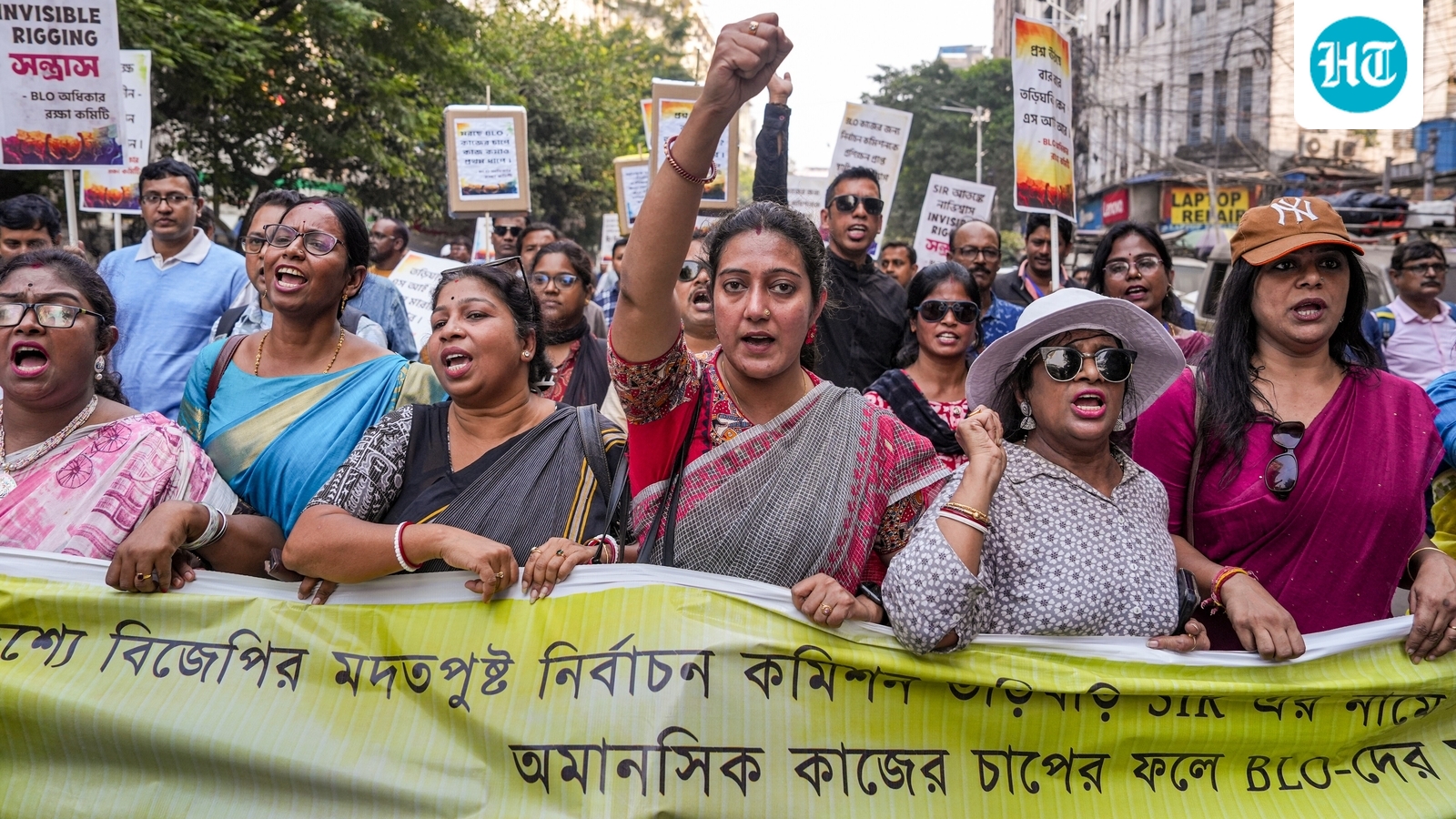
In a tense standoff, a group of booth-level officers (BLOs) camped outside the West Bengal Chief Electoral Officer's office overnight, demanding that CEO Manoj Kumar Agarwal personally accept their charter of demands. The protest, sparked by 'excessive work pressure' and 'inhuman workloads' under the Statewide Intensive Revision (SIR) process, began on Monday evening and continued into Tuesday morning.
The BLOs, part of the newly formed BLO Adhikar Raksha Committee, had been demonstrating since Monday afternoon, with a 13-member delegation briefly submitting a deputation to the CEO's office. However, fresh unrest erupted, and the protesters regrouped, refusing to leave until Agarwal met with them.
The situation turned chaotic on Tuesday afternoon, with slogans being shouted and police personnel intervening to maintain order. Despite the tension, seven BLOs, including committee convenor Moidul Islam, stayed inside the office premises overnight, determined to submit their charter of demands.
The protest comes amid growing concerns among BLOs across the state, with at least three reported suicides in recent weeks, with their families attributing the intense workload to door-to-door distribution and collection of SIR forms.
As the standoff enters its second day, the BLOs remain resolute, calling for 'humane treatment and manageable duties.' They are waiting for the CEO to meet with them and address their concerns.
Meanwhile, the CEO, Manoj Kumar Agarwal, has maintained that it's 'not possible' for him to accept every deputation and has offered the services of two deputy CEOs to receive the charter of demands. However, the BLOs have rejected this offer, insisting that only the CEO can accept their deputation.
The situation remains tense, with security personnel maintaining a strong presence outside the CEO's office. The outcome of the standoff remains uncertain, but one thing is clear – the BLOs are determined to be heard and seen as they demand a more manageable workload and humane treatment.