Delhi Chokes on Toxic Air, Officials Scramble to Avoid Harsher Curbs
Delhi AQI: Air quality remained severe across multiple areas, with 21 of Delhi’s 39 monitoring stations reporting an AQI of 400 or above. | India News
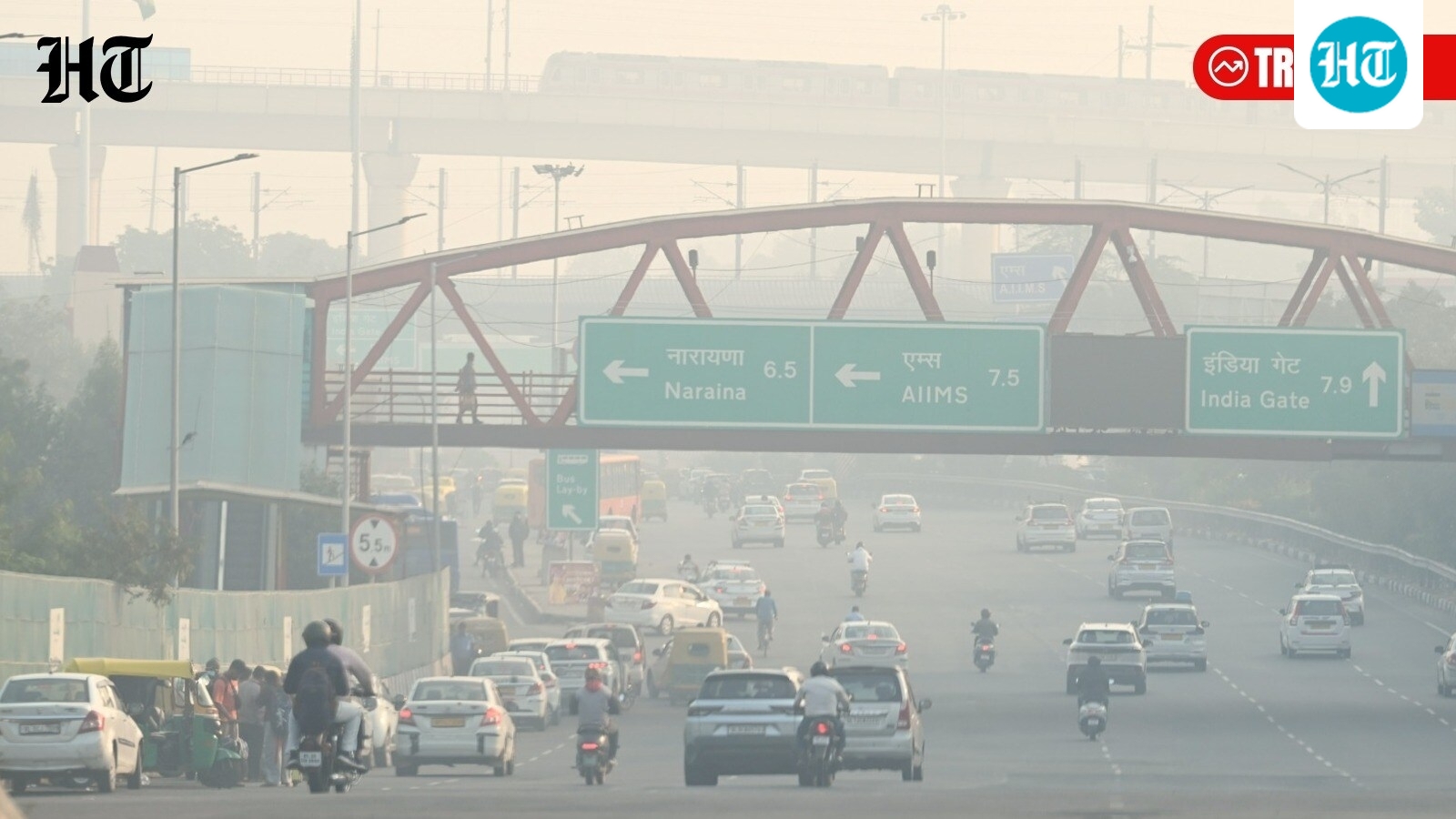
Delhiites woke up to a thick haze on Sunday, as pollution levels soared to alarming heights. According to the Air Quality Early Warning System, the city's 24-hour average AQI stood at 361 on Saturday, categorizing it in the 'red zone'. The Central Pollution Control Board (CPCB) classifies air quality as 'good' between 0 and 50, 'satisfactory' between 51 and 100, 'moderate' between 101 and 200, 'poor' between 201 and 300, 'very poor' between 301 and 400, and 'severe' above 400.
Several areas in Delhi recorded 'severe' pollution levels, with monitoring stations reporting AQI readings of 415 at Alipur, 420 at ITO, 426 at Nehru Nagar, 424 at Vivek Vihar, 435 at Wazirpur, and 430 at Burari. At 7 am on Sunday, 21 out of 39 monitoring stations recorded an AQI of 400 or above.
Meanwhile, neighboring cities in the National Capital Region (NCR) also struggled with poor air quality. Noida recorded an AQI of 354, Greater Noida 336, and Ghaziabad 339, all in the 'very poor' category.
Despite the challenges, officials claim that government measures have led to an improvement in air quality this year. The Delhi Pollution Control Committee (DPCC) cited CPCB data showing six out of the first seven days of November had better AQI than last year. DPCC chairman Sandeep Kumar attributed the improvement to timely implementation of departmental instructions.
However, officials are working to avoid stricter curbs under the Graded Response Action Plan (GRAP) Stage III. Kumar said that with sustained efforts from various government departments and cooperation from residents, the city may be able to avert the need for harsher measures. 'Last year, GRAP 3 was implemented on November 13. This time, with support from all departments and the residents of Delhi, we hope to prevent reaching that stage,' he said.
The poor air quality is attributed to a combination of factors, including vehicular pollution, industrial activity, and construction dust. PM2.5 and PM10 – fine and coarse particulate matter – remained the primary pollutants driving Delhi's toxic air. These microscopic particles can penetrate deep into the lungs and bloodstream, posing serious health risks.
Concerns have been raised about the accuracy of Delhi's AQI data, with some questioning the reliability of the monitoring stations. However, DPCC officials maintain that the sensors measure pollution over a two-three kilometre radius and that water sprinkling does not significantly skew readings.
As the city struggles to breathe, officials are working to improve air quality and prevent the need for harsher curbs. With sustained efforts, they hope to avert the worst-case scenario and provide a healthier environment for Delhiites.