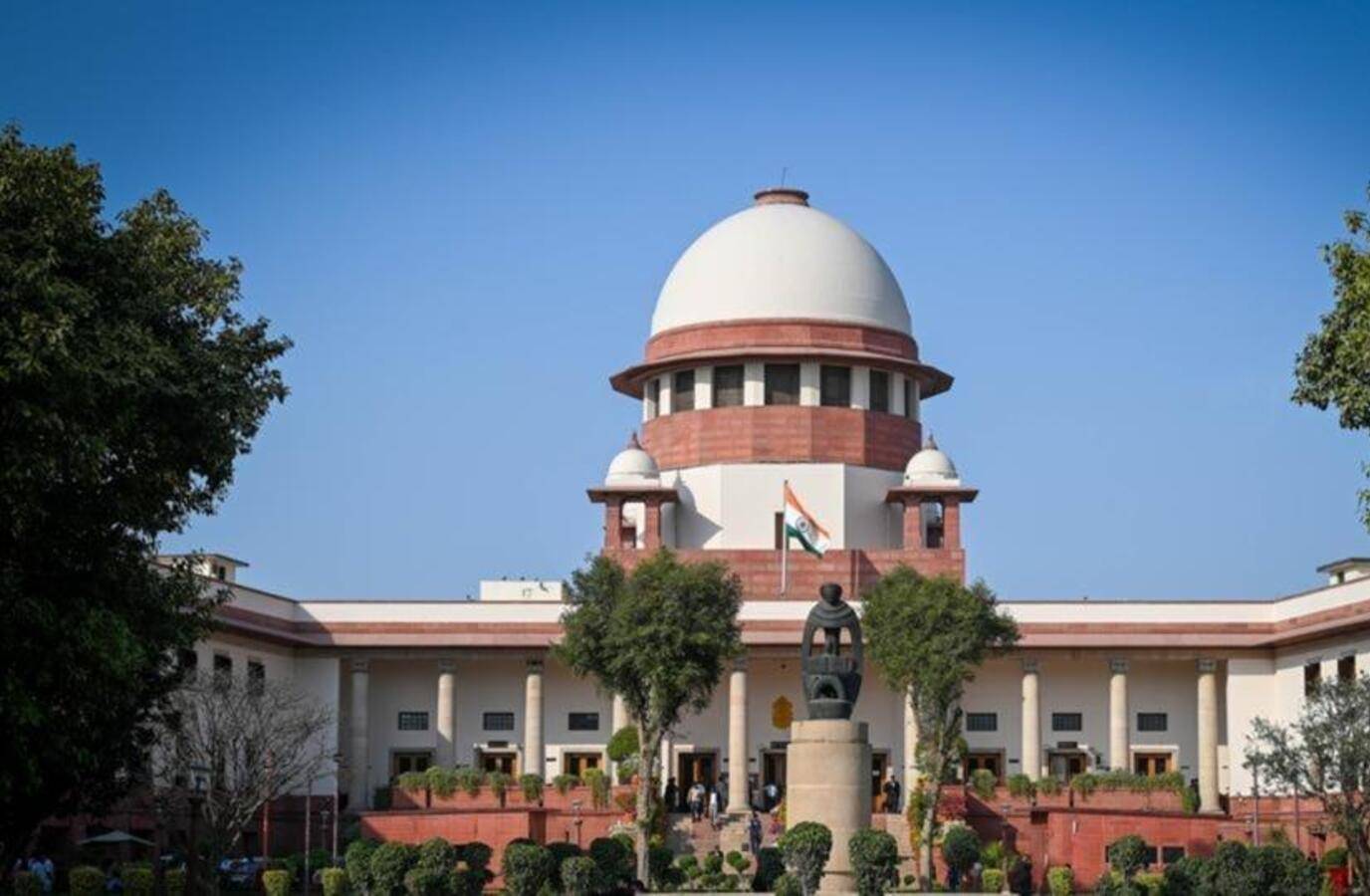
Delhi Chokes Under Thick Haze: Air Quality Plummets to 'Very Poor' Category
Toxic haze hangs over capital as 12 stations log 'severe' air quality, average AQI at 373 | India News

Delhi was shrouded in a thick grey haze on Monday as the city's air quality plummeted to the 'very poor' category, with a 24-hour average Air Quality Index (AQI) of 373. Among the 39 functional monitoring stations, 12 recorded 'severe' air quality, while 27 logged 'very poor' readings. Anand Vihar emerged as the most polluted area, with an AQI of 425, according to the Central Pollution Control Board's (CPCB) SAMEER app.
Delhi's air quality was the worst in the National Capital Region, followed closely by Noida at 366, as per the CPCB. The CPCB standards categorize air quality as follows: 'good' (0-50), 'satisfactory' (51-100), 'moderate' (101-200), 'poor' (201-300), 'very poor' (301-400), and 'severe' (401-500).
Data from the Decision Support System for Air Quality Management revealed that vehicular emissions were the largest contributor to pollution, accounting for 15.7% of the total share. Industries in Delhi and surrounding areas, residential sources, construction activities, and waste burning also contributed significantly to pollution.
The Air Quality Early Warning System forecasted that Delhi's air quality will remain in the 'very poor' category from Tuesday to Thursday, and may oscillate between 'very poor' and 'severe' levels over the next six days. This December, the city's air quality has persistently remained in the 'red zone' with AQI readings above 300 from December 1 to 8.
The India Meteorological Department reported a maximum temperature of 21.8 degrees Celsius, 1.1 notches above normal, and a minimum temperature of 11.0 degrees Celsius, 3.5 degrees above normal. The IMD had forecasted a minimum temperature of 10 degrees Celsius and a maximum of 22 degrees Celsius, accompanied by moderate fog. The prevailing average wind speed of less than 10 km per hour is expected to prolong the spell of poor air quality in the capital.