
Tahir Khan, 35, recalls the day he was handed his waiter's uniform. The job paid ₹12,000 a month, barely enough to scrape a living for him, his wife, and two kids. However, he had no other option. His workplace, Lemon Green B&B in Hauz Rani, was sealed as part of a crackdown on illegal hotels. Khan returned to his house, a single, dimly lit room with a bed and a kitchen slab, where the rent is ₹5,000 a month.
He doesn't know if this matchbox room is in an illegal structure. "It probably is." The story of Khan, his wife, and his kids finds echoes in millions of others in Delhi's nearly 1800 unauthorised colonies.
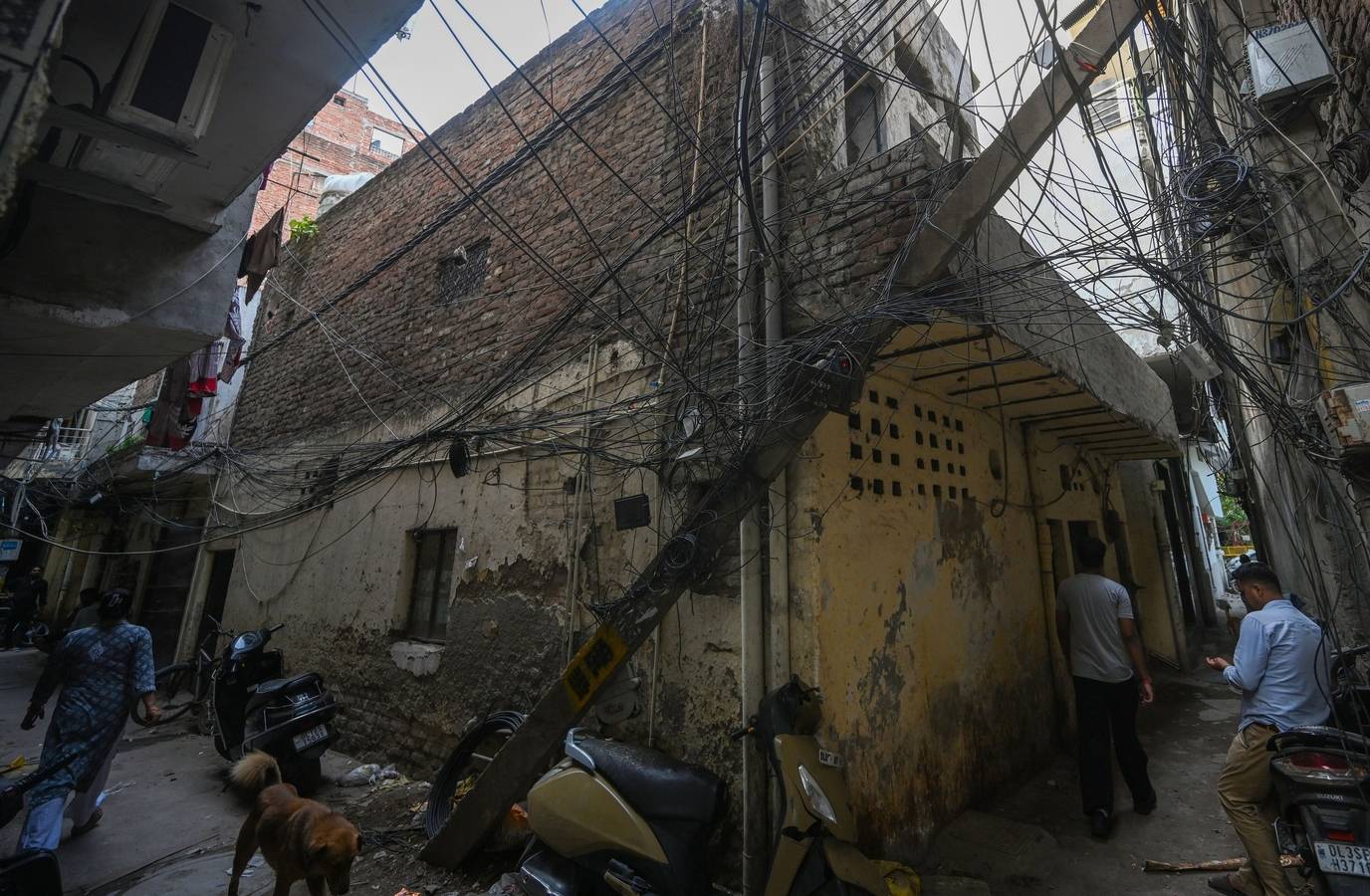
These areas are populated mostly by migrant workers who have come to the Capital chasing dreams. Almost all colonies are on private or agricultural land or so-called urban villages, usually without formal planning or approvals for structural or fire safety.
On June 3, a fire broke out at Flourish Stay B&B, killing 23 people. The establishment had permission for only six rooms but was operating at least 26 across four storeys, a basement, and the roof, along with a restaurant on the ground floor. There was no fire exit.
Delhi's unauthorised growth has resulted in a human cost of unplanned development. Millions live in areas never designed to handle emergencies, with narrow lanes preventing fire tenders from reaching affected buildings. Electrical networks evolve ad hoc, and open spaces are scarce.