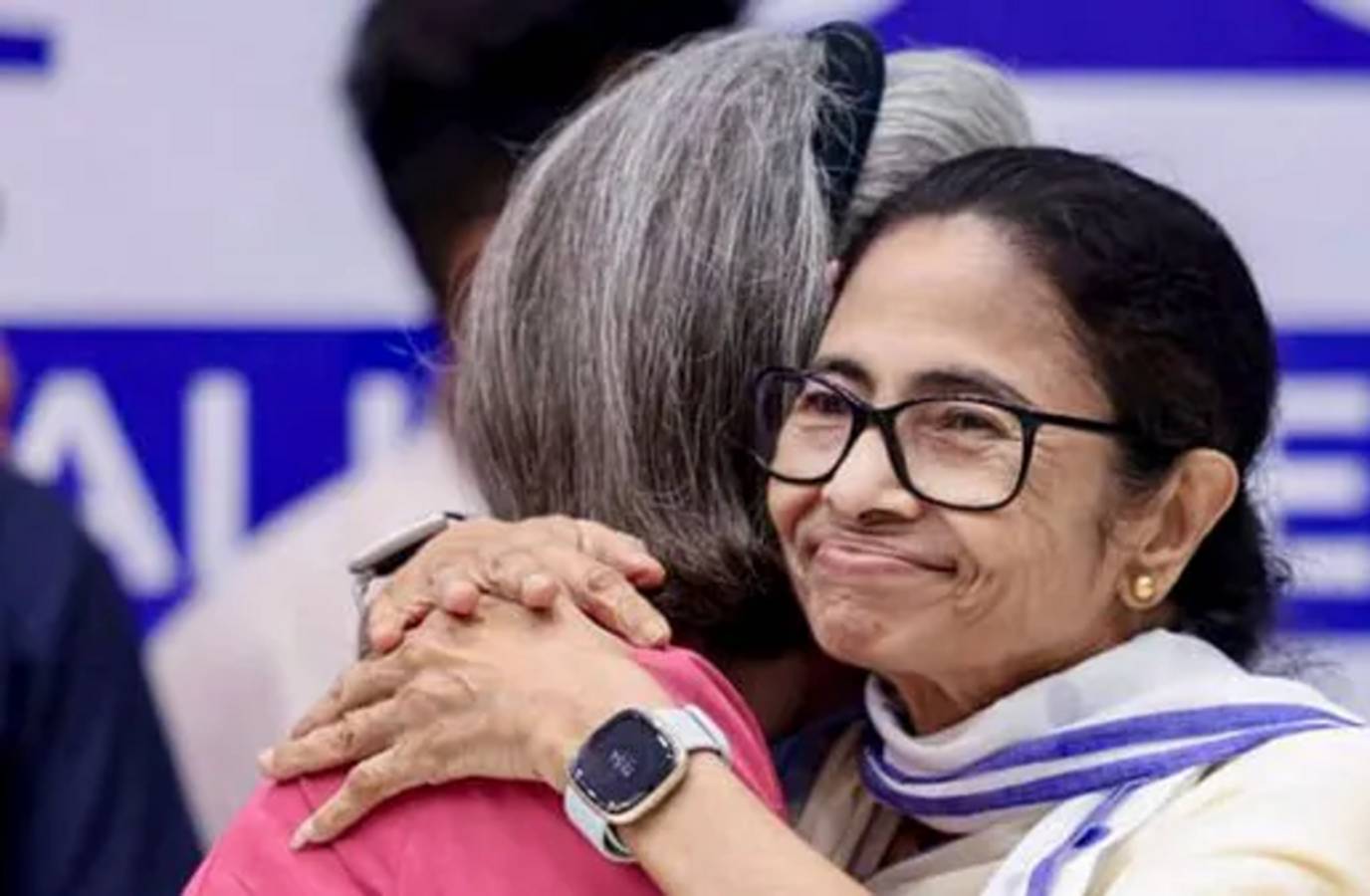
Politicians have a way of messaging. Behind every handshake and hug lies a reason. One such warm hug hit the headlines when Congress leader Sonia Gandhi met former chief minister Mamata Banerjee this month.
The meeting coincided with a series of exits from the crisis-hit Trinamool Congress (TMC) following its loss of power in West Bengal in May after 15 years.
Gandhi did not merely comfort the embattled Banerjee, who quit the Congress in 1998 to form the TMC. She pushed for unity, triggering speculation about the breakaway faction’s merger with the Congress.
A merger would not only salvage the TMC but also infuse fresh life into the Congress in West Bengal, potentially creating a semblance of an Opposition against the Bharatiya Janata Party (BJP).
The Left parties, which the TMC decimated along with the Congress during its 15-year rule, have not shown any signs of recovery.
The two parties must overcome structural hurdles for any merger attempt to reach fruition, years after Banerjee became West Bengal’s first woman chief minister, thanks to her resilience, overcoming a severe head injury sustained during a public protest against the Left Front government in the 1990s.
Gandhi’s hug set the tone for greater synergy between the two parties.
In 2018, Gandhi embraced Bahujan Samaj Party (BSP) leader Mayawati at HD Kumaraswamy’s swearing-in ceremony as Karnataka chief minister, as non-BJP leaders assembled to showcase their unity, which did not last long.
Gandhi has shown special bonhomie towards women leaders.
Political embraces and handshakes have been a part of India’s political culture.