Government Unveils Ambitious Legislation Agenda for Winter Parliament Session
According to a bulletin issued by the Lok Sabha, 10 bills have been listed by the government in its legislative agenda for the upcoming winter session of Parliament, scheduled to be held from December 1 to 19 | India News
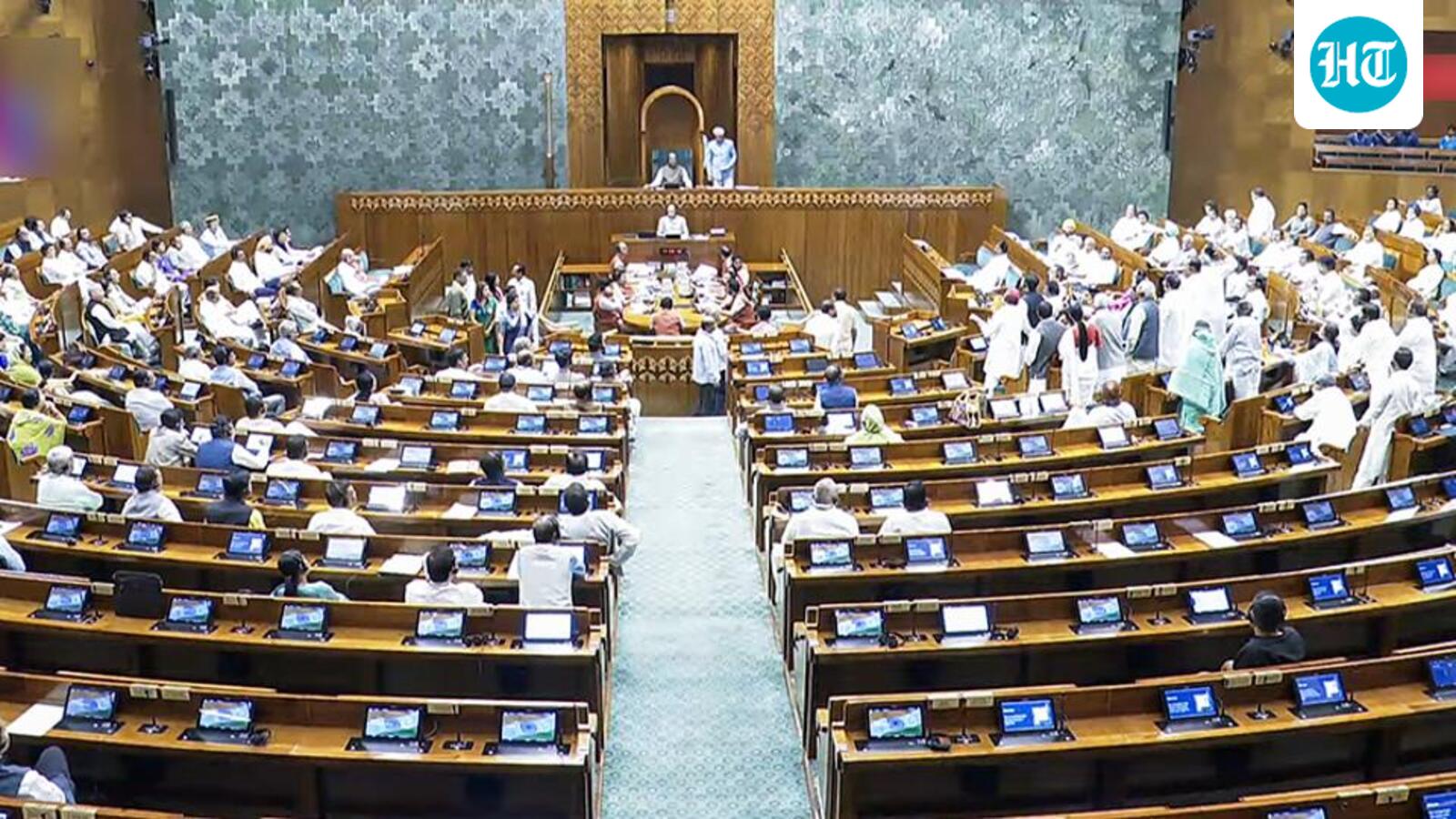
India's winter session of Parliament, set to commence on December 1, will witness the introduction of 10 key bills aimed at transforming the country's energy, education, and business sectors. The legislative agenda, released by the Lok Sabha, includes the Atomic Energy Bill 2025, which seeks to allow private players in the nuclear energy sector, a move aligned with the government's ambitious target of 100 GW nuclear power capacity by 2047.
The Higher Education Commission of India Bill, 2025, is another significant legislation that aims to create a single regulator for higher education, merging the University Grants Commission (UGC), the All India Council for Technical Education (AICTE), and the National Council for Teacher Education (NCTE). This move is expected to simplify the regulatory framework for institutions running teacher education, professional, and general courses.
The bill also proposes to give autonomy to universities and other higher educational institutions, allowing them to achieve excellence in teaching, research, and innovation. The National Education Policy (2020) had envisioned the creation of HECI for "light but tight" regulation in higher education, which would enable the sector to thrive.
Other notable bills on the agenda include the National Highways amendment bill, aimed at ensuring faster land acquisition for highway projects, and the Securities Markets Code Bill (SMC), 2025, which seeks to consolidate the provisions of existing laws into a rationalized single code. The government will also make further amendments to the companies Act, 2013, and LLP Act, 2008, to facilitate Ease of Doing Business.
Additionally, the government plans to bring the 131st Constitution amendment bill to include the Union Territory of Chandigarh under the ambit of Article 240 of the Constitution, which empowers the President to make regulations for the UT and legislate directly. The winter session will also see amendments to the insurance and arbitration laws, as well as a bill to apply the latest amendments of the GST law in Manipur.
The legislative agenda reflects the government's commitment to transforming India's energy, education, and business sectors, and is expected to have a significant impact on the country's growth trajectory.