India Boosts Electronics Manufacturing with ₹65,111 Cr Output from 17 New Projects
An official within the IT ministry had told HT that the government plans to announce new projects under the ECMS every fortnight | India News
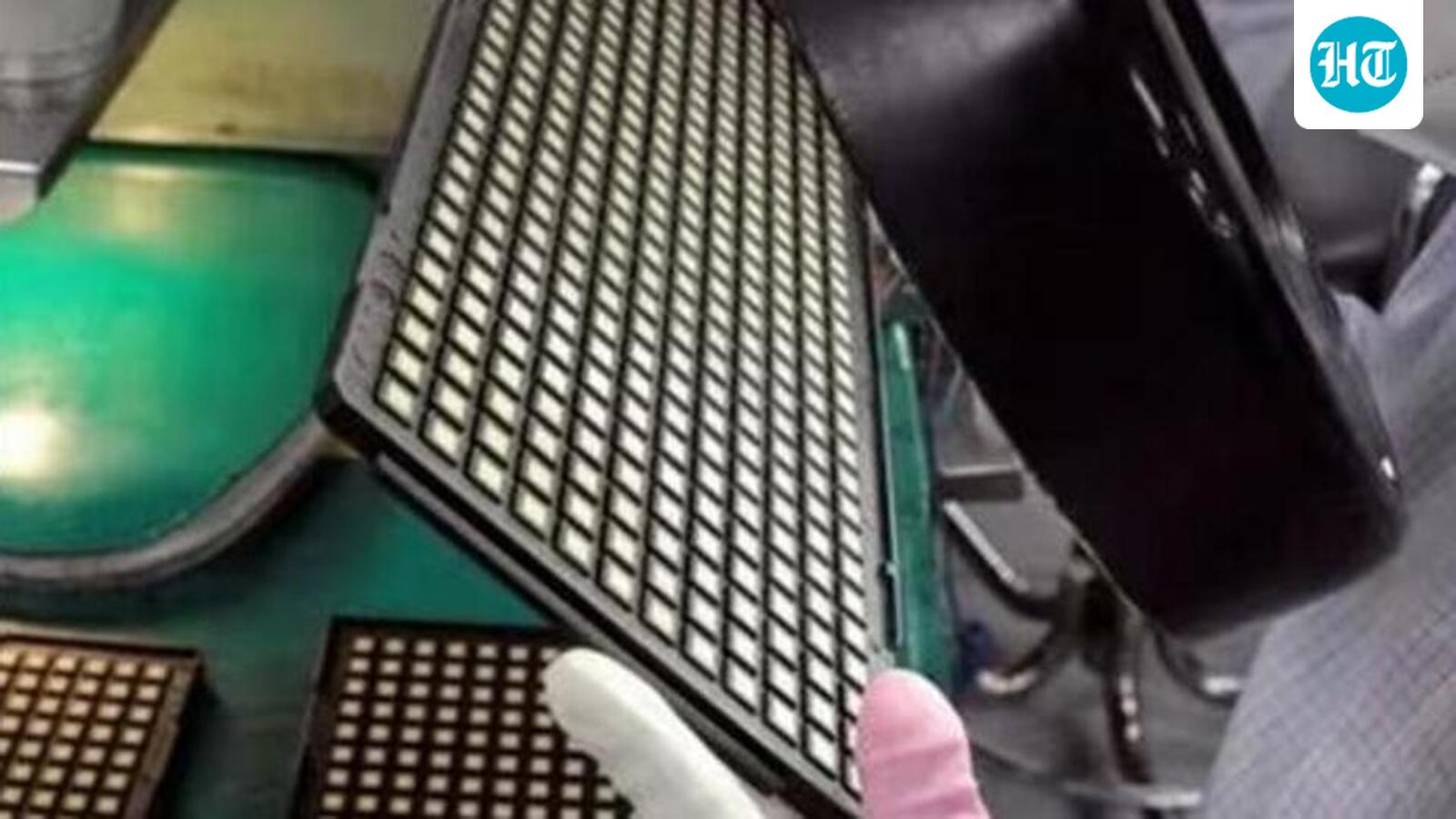
The Indian government has bolstered its efforts to establish the country as a major electronics manufacturing hub, approving 17 new projects under the Electronics Component Manufacturing Scheme (ECMS). The second tranche of projects, worth ₹7,172 crore, will set up manufacturing units across nine states and union territories, with a total expected output of ₹65,111 crore.
The Ministry of Electronics and Information Technology (MeitY) has cleared projects worth ₹12,704 crore out of a total ₹1.15 lakh crore of expected investments under the scheme. This marks a significant step towards deepening the value chain in India, as emphasized by IT Secretary S Krishnan.
The approved projects will focus on producing critical components such as camera modules, connectors, oscillators, and enclosures, with the largest chunk going to multi-layer PCBs at ₹3,183 crore. This marks the largest ever expansion in PCB manufacturing, with ₹6,463 crore per year added, covering 32-33% domestic demand.
The government's strategy involves developing in-house design teams, maintaining six-sigma production standards, and using swadeshi services and products across factories, plants, and labs. IT Minister Ashwini Vaishnaw outlined three priorities for the industry: development of in-house design teams, six-sigma production standards, and swadeshi services and products.
To address the growing demand for skilled workers, the government is developing a new electronics manufacturing skilling framework under Skill India, in partnership with social-sector organisations. This will focus on providing hands-on training to youth in Tier-2 and Tier-3 cities, making them directly employable.
The industry has welcomed the government's efforts, with ICEA Chairman Pankaj Mohindroo urging the industry to build indigenous capital goods capabilities as a national mission. The development of advanced machinery tools and procedures is crucial for competitive electronic manufacturing, and local capability will decide the depth and resilience of India's value chain.
The event also showcased a prototype of India's first energy-efficient edge silicon chip, developed together by Cyient Semiconductors and Azimuth AI. The platform-on-chip, called ARKA-GKT1, offers up to ten times higher performance for applications such as smart utilities, smart cities, battery systems, and industrial Internet of Things.