India's New Vehicle Safety Protocol: A Shift Towards Pedestrian-Friendly Designs
India's Bharat NCAP 2.0 will assess new cars on their protection of pedestrians, giving 20% weightage to vulnerable road user safety in ratings. | India News
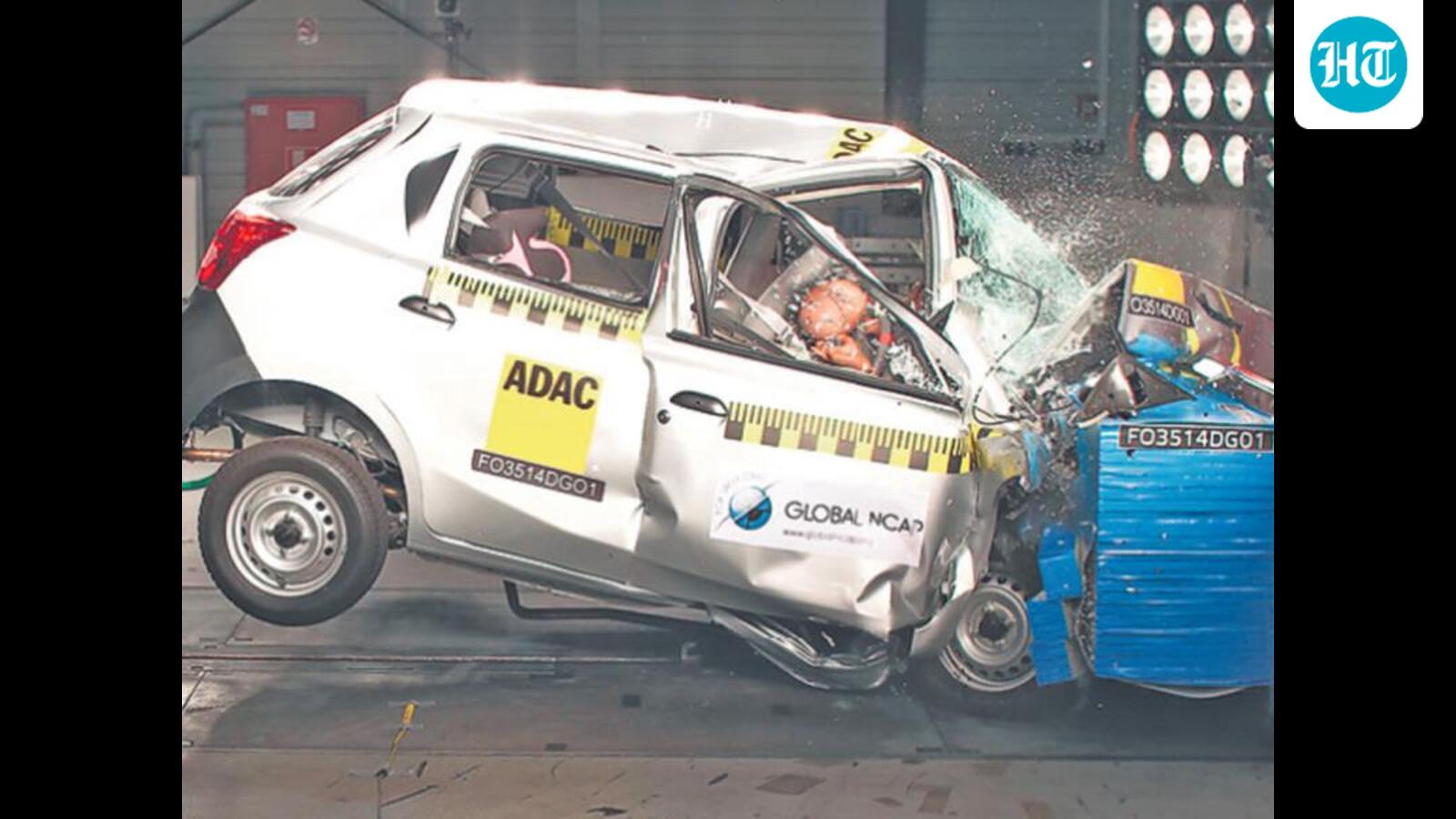
India is set to make a significant leap in road safety with the Centre releasing a draft vehicle safety protocol. The new Bharat NCAP 2.0, which marks a shift from evaluating occupant protection only, assigns a 20% weightage to vulnerable road user (VRU) protection. This move comes as pedestrians and two-wheeler users account for 20% and 45% of all road crash deaths in India, respectively.
The proposed protocol requires new car models to undergo rigorous assessments, including leg-form impact tests and adult and child head-form impacts. This will assess whether a car's front design can absorb impact energy and minimize injuries when it strikes a pedestrian. The Indian test methodology also includes an optional evaluation of Autonomous Emergency Braking Systems (AEBS) capable of detecting and intervening in scenarios involving pedestrian and motorcyclist collisions.
Experts say the changes to marking and assessment explicitly account for the high ride heights and wide front faces of sport utility vehicles (SUVs), which have become increasingly popular in India. Vehicle sales data shows SUVs have accounted for more than 50% of all passenger vehicles sold since 2023-24.
The revised protocol enforces both passive structural requirements and active safety technologies, meaning manufacturers will need to adapt both hardware and software systems to achieve high star ratings. The draft mandates that the five broad assessment areas carry the following weightages: crash protection (55%), vulnerable road-user protection (20%), safe driving features (10%), crash avoidance (10%), and post-crash safety (5%).
By assigning the highest weightage to crash protection and the second-highest to VRU protection, the new protocol ensures vehicles receiving high star ratings must excel in both protecting occupants during a collision and reducing the severity and probability of harm to unprotected road users. The protocol is open for stakeholder comments until 20 December 2025 and will be valid for a four-year period once finalized.
Industry experts and road safety advocates have welcomed the new assessment programme, calling it a 'very positive and meaningful development' that clearly reflects the government's priority on the safety of vulnerable road users. However, they also emphasized the need to augment VRU infrastructure and facilities to support the new protocol.