Kashmir said yes, Nepal delayed, and Sikkim refused. But in 1854, the East India Company found itself in a fix. It had hired three German geologists – brothers Adolph, Hermann, and Robert Schlagintweit – to complete the magnetic survey of the Indian subcontinent.
The 19th century was rife with the colonial project of knowledge-gathering. New tools aided calculations greatly, and trade offered an impetus for European countries to send scientific emissaries to hitherto unknown parts of their captured colonies.
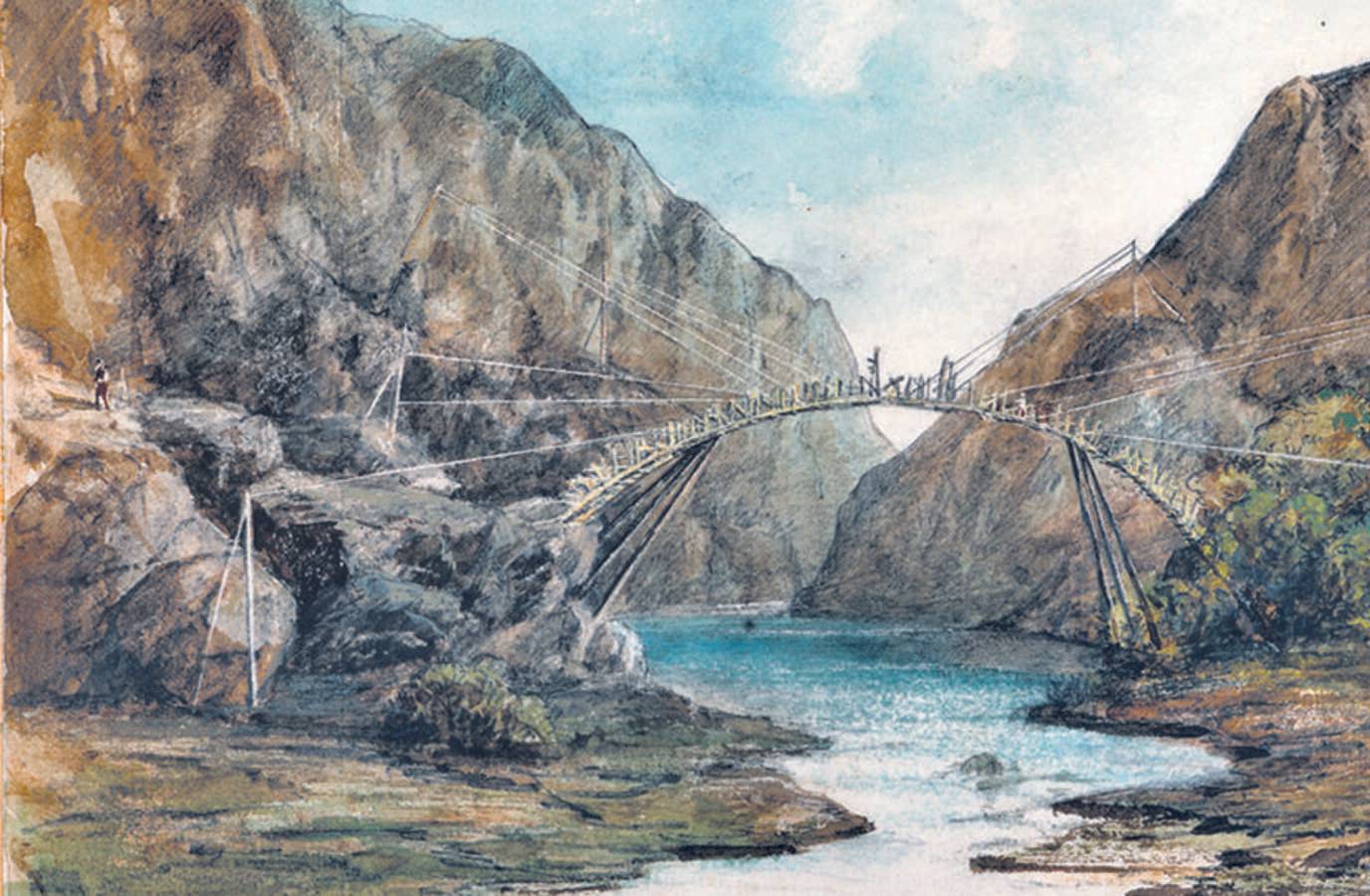
Starting Wednesday, 77 images depicting the upper Himalaya region from 170 years ago will be on public display. Of them, at least five will be publicly exhibited for the first time.
The works on display are high-quality prints of paintings made by the Schlagintweit brothers, who captured some of the first photographs and images of the Himalayan terrain and its far-flung habitations.
The exhibition will travel to Dehradun and Nainital, where it will be displayed at the Doon Library and Research Centre from May 1 to 9, and the CRST Inter College from May 12 to 18, respectively.