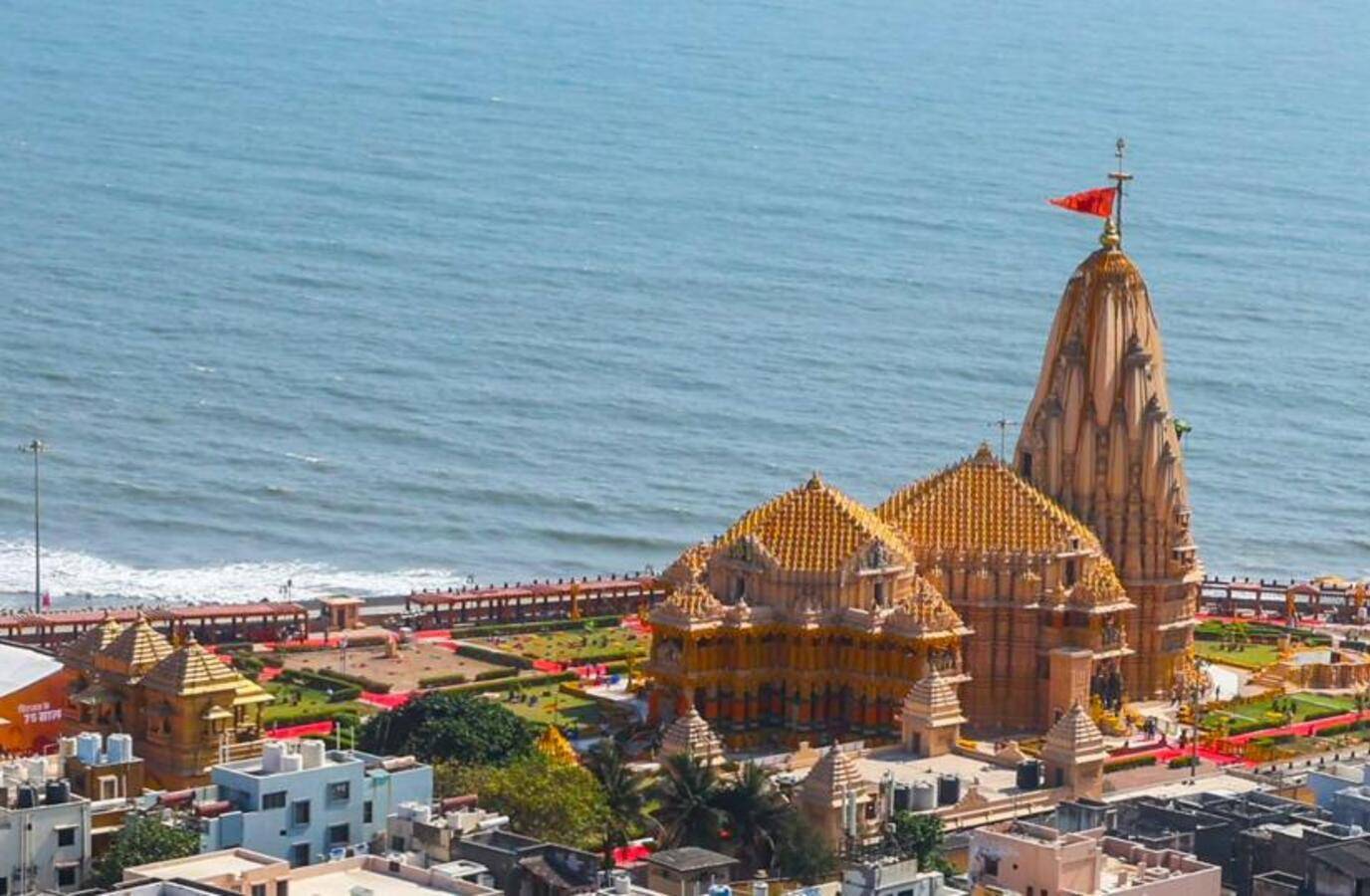
Somnath Temple, situated on the Arabian Sea, is a living symbol of India's enduring civilization and collective self-respect.
The temple has witnessed centuries of invasion, reconstruction, resistance, and national resurgence.
The Somnath Swabhiman Parv in 2026 commemorated this long historical journey, presenting it to a new generation with confidence, balance, and cultural pride.
From Mahmud of Ghazni's attack in 1026 CE to Emperor Aurangzeb's orders in 1706, Somnath faced repeated attacks and desecration, yet the pilgrimage tradition and faith of devotees remained unbroken.
The history of Somnath is not merely a history of suffering; it is equally a history of resistance and revival.
The relationship between Somnath and Maharashtra is rooted in geography, history, and political developments.
The Maratha connection with Somnath operated at cultural, economic, and strategic levels, with the contribution of Punyashlok Ahilyadevi Holkar being a significant chapter in Somnath's modern history.
After Independence, Sardar Vallabhbhai Patel resolved to rebuild Somnath, a symbol of national self-respect and civilizational renewal.
The Somnath Swabhiman Parv in 2026 gave renewed meaning to this long historical journey, commemorating one thousand years since Mahmud of Ghazni's first invasion.
The occasion was observed across the country as a celebration of enduring faith and national consciousness.