
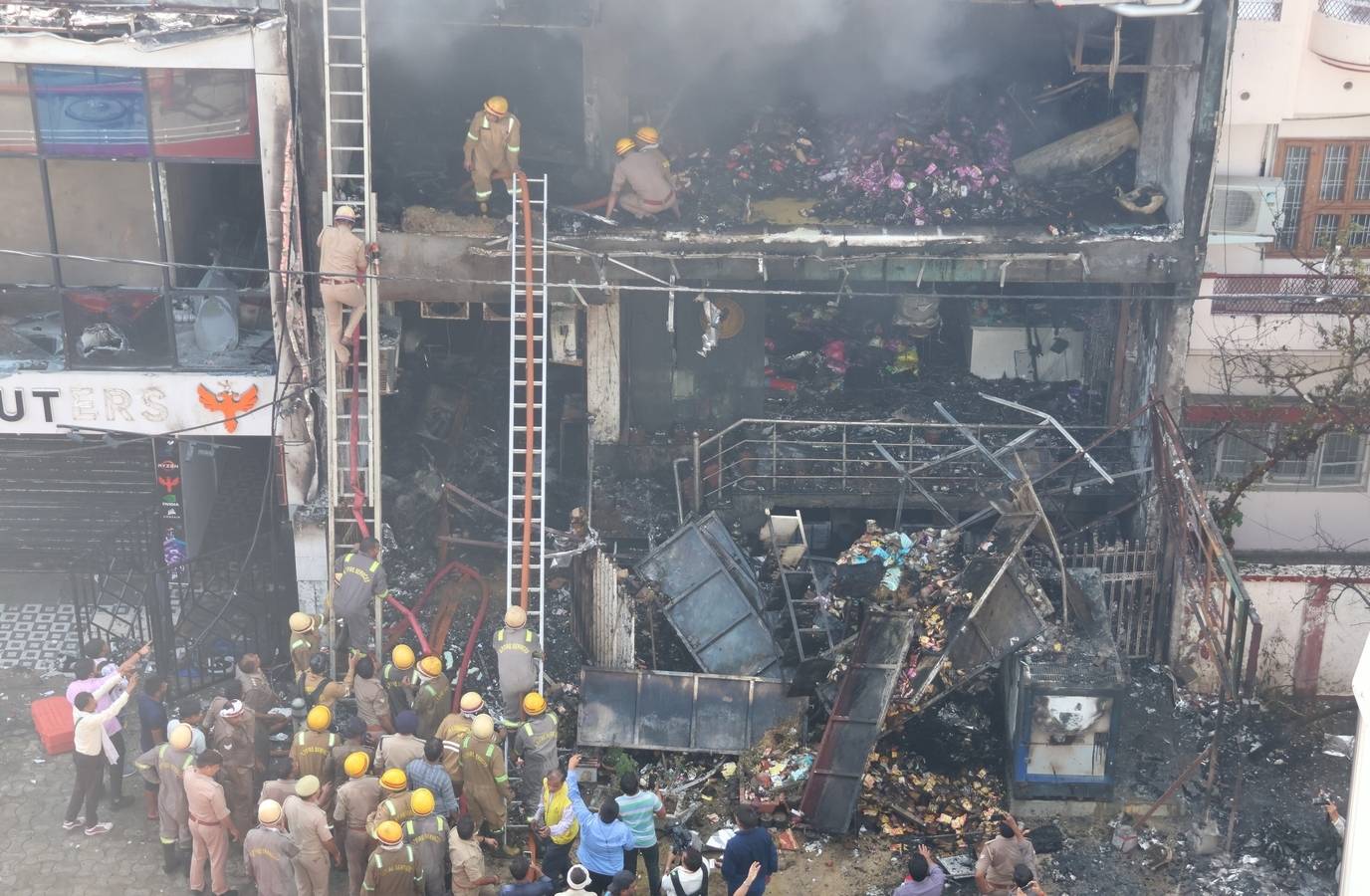
On a scorching day in late May 2024, Delhi's fire service took 220 emergency calls, its busiest that year. Officials had said at the time that around 70% of the incidents they responded to were fires triggered by electrical short circuits.
Across that summer, emergency response calls for fires more than doubled from a year earlier to cross 9,000, and deaths more than tripled compared to the 10 recorded during the same months the previous year.
Parts of Delhi that summer saw temperatures close in on 50°C, and scientists later confirmed 2024 to be the warmest year on record in global history.
That was a brutal year, but heatwaves have become increasingly common for much of north India. Every summer, the region sees the same grim cycle of fatal blazes blamed on “short circuits”, electrical faults and air conditioners.
On June 3 this year, a fire at a bed-and-breakfast facility in Malviya Nagar's Hauz Rani claimed 23 lives, including those of foreigners visiting Delhi for medical treatments.
Less than a month later, on June 22, a blaze that engulfed a multi-storey building in Lucknow's Aliganj killed 15, most of them youngsters.
While the definitive reason for the fires will only be declared once the inquiries are completed, the incidents raise a question worth looking into: what actually turns a wire or an AC into the spark that starts a blaze, and why the summer has so much to do with it.