Supreme Court Denies Bail to Umar Khalid and Sharjeel Imam in Delhi Riots Conspiracy Case
In the judgment, the bench drew a doctrinal line between conceptual orchestration and on-ground execution. | India News
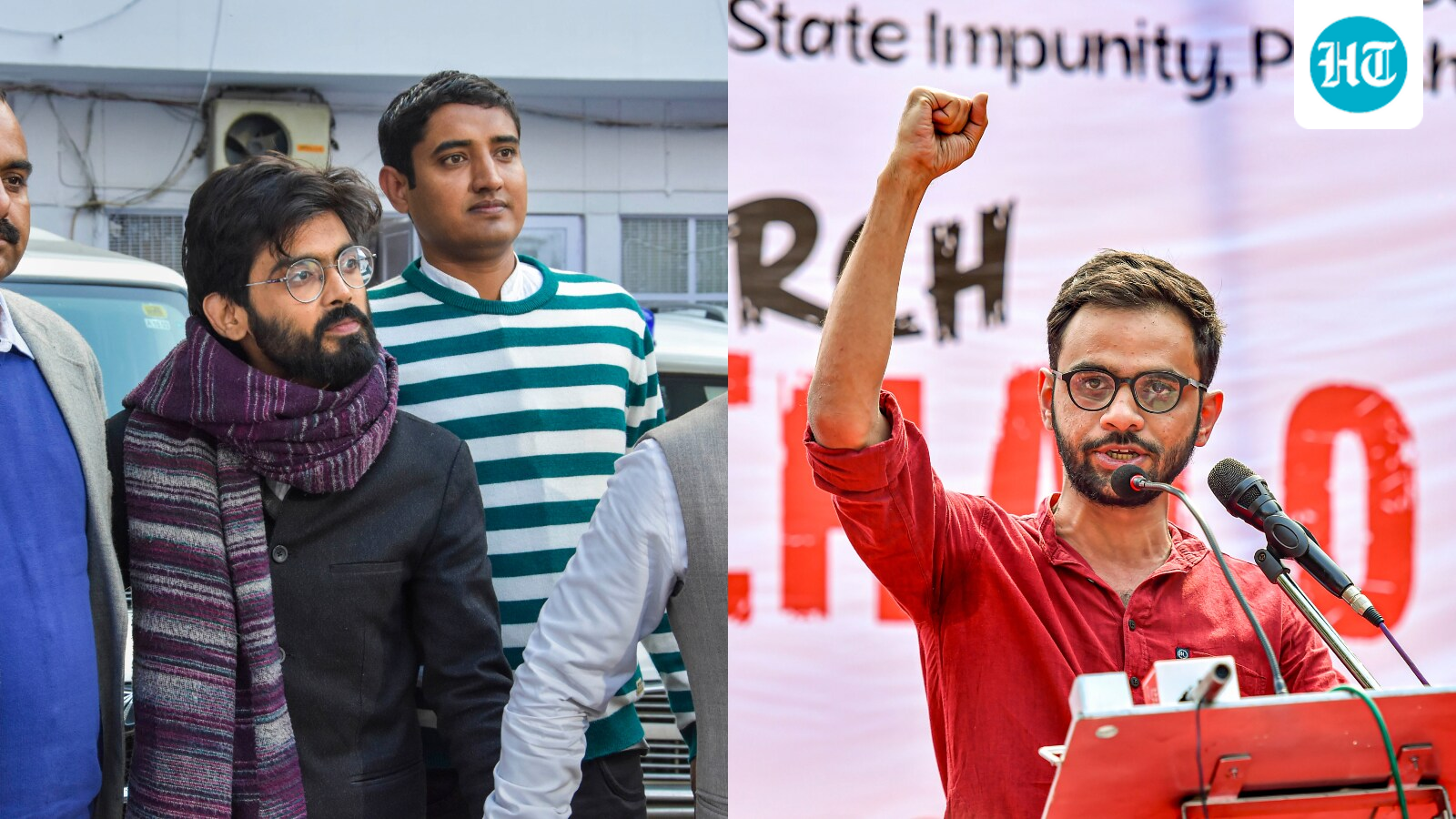
The Supreme Court has rejected the bail pleas of student activists Umar Khalid and Sharjeel Imam in the 2020 Delhi riots conspiracy case. In a 142-page judgment, the bench of justices Aravind Kumar and NV Anjaria held that the prosecution material places the two on a 'qualitatively different footing' from other accused, attributing to them 'central', 'formative', and 'strategic' roles in the alleged conspiracy.
The court drew a distinction between conceptual orchestration and on-ground execution, holding that bail under the Unlawful Activities (Prevention) Act (UAPA) must turn on role differentiation, hierarchy of participation, and statutory thresholds. The bench accepted the prosecution's structured narrative of the conspiracy, portraying Khalid and Imam as ideological drivers and coordinators of the alleged plot, operating at the level of planning, mobilization, and strategic direction from December 2019 onwards.
The court rejected the argument that absence from riot sites or lack of direct participation in violence is determinative in a conspiracy prosecution. Instead, it held that physical presence at the site of violence is not a condition precedent for criminal liability, and what matters is whether the accused is linked, prima facie, to the design, preparation, and orchestration that allegedly culminated in violence.
The prosecution's claim that the agitation evolved from conventional sit-in protests into a deliberate strategy of sustained 'chakka jams' - blocking arterial roads, paralysing civic life, and choking essential services - was also emphasized by the court. Khalid and Imam's alleged involvement in mobilization platforms, pamphleteering, meetings, WhatsApp groups, and speeches, tracing a continuous course of conduct from early December 2019 to January 2020, was seen as supporting an allegation of planned and differentiated disruption, not spontaneous protest.
The court acknowledged the constitutional concern of prolonged incarceration but held that delay cannot operate as a 'trump card' to override the statutory embargo under Section 43(D)(5) of UAPA once the prima facie threshold is crossed. The remedy, it said, lies in judicial supervision and expedition of trial, not in diluting the statutory standard at the bail stage.
Ultimately, the denial of bail turned on the court's conclusion that the prosecution material discloses reasonable grounds for believing that the accusations are prima facie true, thereby triggering the statutory bar under Section 43(D)(5). The court permitted Khalid and Imam to renew their bail pleas after the examination of protected witnesses or one year, whichever is earlier.