
Supreme Court Judge Urges Clearer Court Judgments for Public Understanding
Speaking at the second Ashoke Kumar Sen Memorial Lecture in New Delhi on Friday evening, Justice Nath said that just as the Constitution “speaks to everyone” | India News
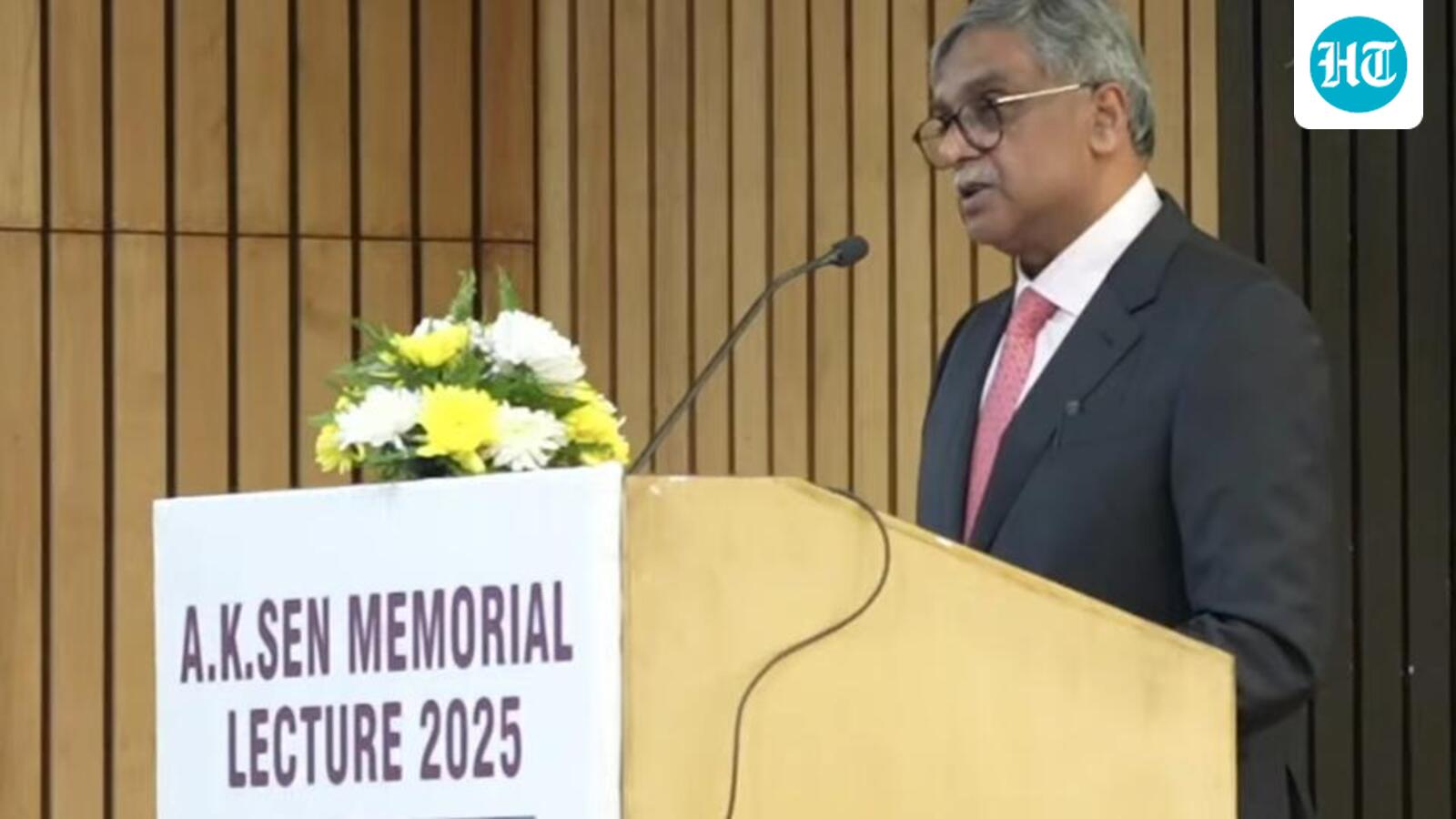
New Delhi: In a recent lecture, Supreme Court Judge Vikram Nath emphasized the importance of clear and accessible court judgments for the public. Speaking at the Ashoke Kumar Sen Memorial Lecture, Justice Nath stressed that judicial clarity is an act of respect towards the public, just as the Constitution is written for everyone.
Justice Nath used the example of the Constitution's accessibility to argue that court judgments should be written in a clear and steady tone, allowing ordinary people to understand the reasoning behind them. He highlighted the need for clear reasons and decisions that can be easily followed.
The Supreme Court judge also spoke about the legacy of Ashoke Kumar Sen, who played a pivotal role in reforming the legal profession with the Advocates Act of 1961. This reform abolished colonial-era hierarchies and opened the field to a unified class of advocates, making the profession more merit-based and mobile.
Justice Nath emphasized the importance of reading and legal learning in public life, describing the library as a 'workshop for the future.' He argued that wide reading equips lawmakers, lawyers, and judges with the necessary humility, patience, and generosity for fair and thoughtful decision-making.
Addressing young lawyers, Justice Nath highlighted the value of small professional habits, such as punctuality, respect, and straightforward language, which can become character over time. He also emphasized the importance of dealing with disagreement without raising one's voice and ensuring clarity remains a constant practice.
In the face of new questions involving artificial intelligence, digital rights, economic fairness, and environmental stewardship, Justice Nath urged the legal community to embody the ethos of Ashoke Kumar Sen: using influence to build institutions and sharpening justice, not just arguments. He concluded that the true tribute to Sen lies in daily choices to speak clearly, work steadily, and honor the law as a humane system of reasoning and fairness.