UN Climate Talks Hinge on Fossil Fuel Phaseout Dispute in Brazil
Developed countries have said they will not reopen discussions on finance, which they argue was addressed at COP29 in Baku in the New Collective Quantified Goal text | India News
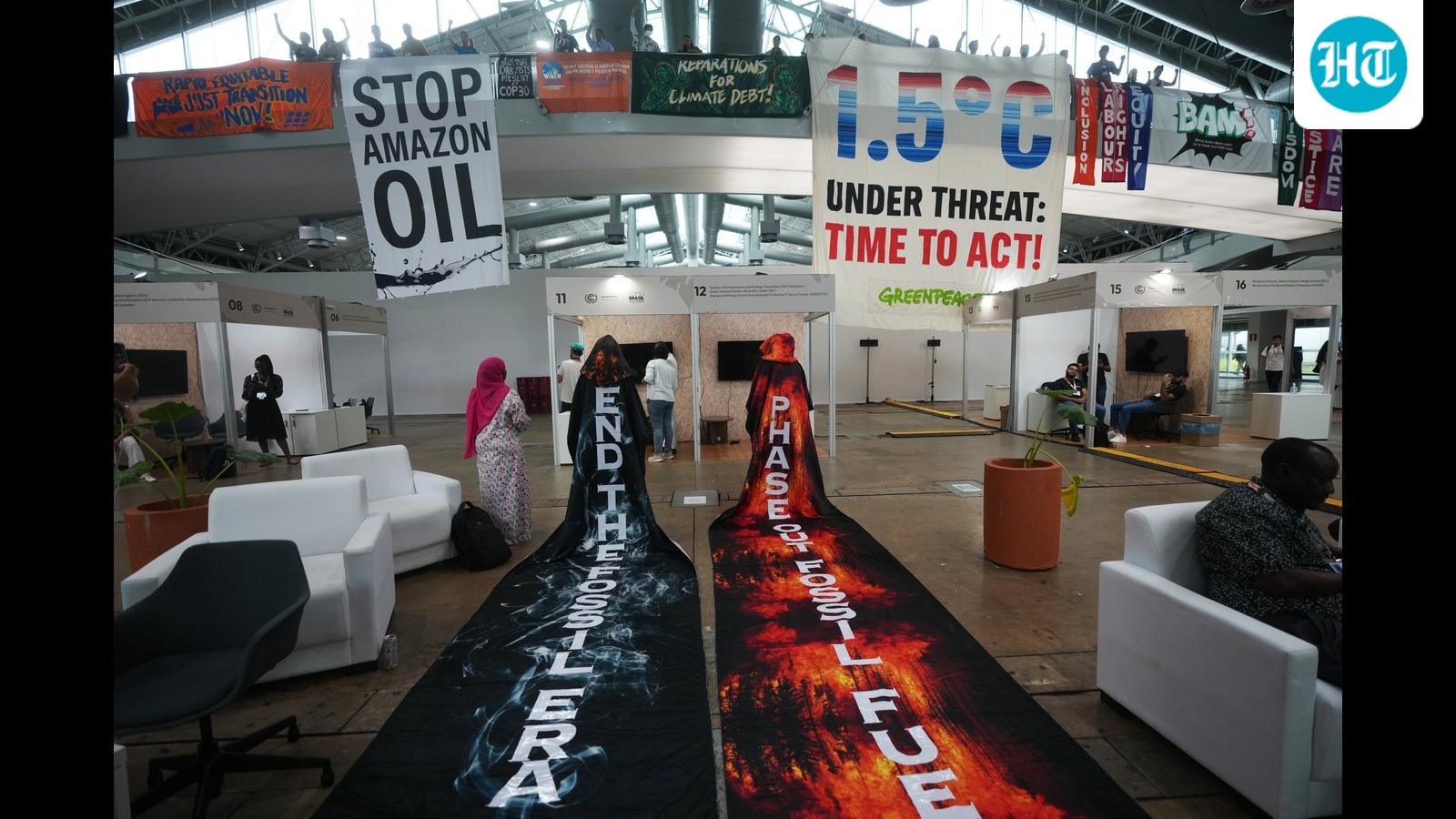
Belem, Brazil: UN climate talks have reached a critical juncture as negotiators failed to agree on a draft proposal put forward by the Brazil Presidency. Developed countries are adamant that discussions on finance cannot be reopened, citing progress made at COP29 in Baku. However, developing nations are pushing for a fossil fuel phaseout roadmap, which was surprisingly omitted from the draft agreement. EU climate commissioner Wopke Hoekstra has voiced strong opposition to the draft, stating that it lacks crucial elements such as science, global stocktake, and transitioning away from fossil fuels.
A fundamental divide exists between developed and developing nations over who should bear the burden of emissions cuts. China, India, Saudi Arabia, Nigeria, and Russia have rejected any prescriptive fossil fuel roadmap, while around 30 countries led by Colombia demand its inclusion. Climate activist Harjeet Singh has criticized developed nations for their 'hypocrisy' in posing as climate leaders while stalling progress in negotiations.
The draft agreement, which refers to a 'Belém Mission to 1.5', aims to enable ambition and implementation of nationally determined contributions and national adaptation plans. However, this has been met with resistance from developing countries, who argue that developed nations are not doing enough to address their historical responsibility for climate change. The 'Mutirao' text acknowledges the likelihood of a temporary overshoot of the Paris Agreement's 1.5°C warming goal and notes that developed countries failed to achieve the Intergovernmental Panel on Climate Change's previous target.
A key demand from developing countries has been met with the establishment of a two-year work programme on climate finance under Article 9. This provision requires developed countries to provide financial resources to developing nations for climate mitigation and adaptation. The text also reaffirms the call to scale up financing to developing countries from all public and private sources to at least $1.3 trillion per year by 2035.