
Humans were using dice to gamble thousands of years earlier than we realized, new research suggests.
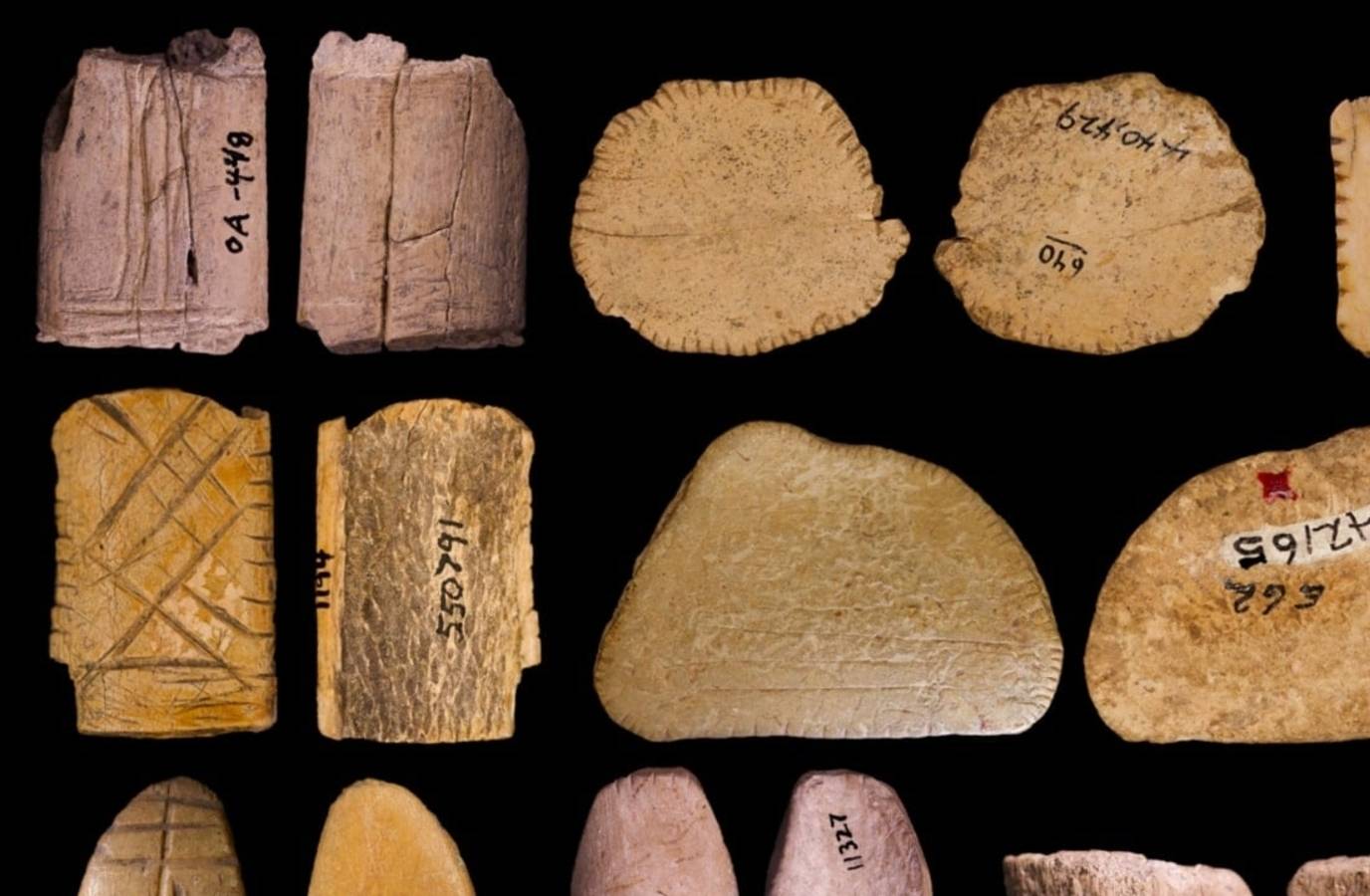
Using a new classification approach, a study determined that artifacts from more than 12,000 years ago were actually dice used by North American hunter-gatherers.
Previously, the first known dice dated back to the Bronze Age about 5,500 years ago, in such places as Mesopotamia and the Indus Valley of Asia.
“This really moves the needle significantly,” said Robert Madden, a Colorado State University archaeologist and author of the study published in the journal American Antiquity.
“Not only does it move it back in time some 6,000 years, but it also moves it out of the Old World and into the New World.”
Using existing research that had cataloged nearly 300 examples of historic Native American dice, Madden created a checklist to determine whether other previously discovered prehistoric artifacts were actually dice.
The earliest were two-sided, he said, mainly made of wood or bone. Often one side was blank and the other, the counting side, featured color or markings.
For the new study, Madden re-examined hundreds of artifacts, including some in museums and collections across the country, that ranged between about 450 and 12,800 years old.
He found more than 500 that could be classified as dice under his checklist.
The oldest ones, from New Mexico, Wyoming and Arizona, dated back to the last Ice Age.
“We had all these artifacts sitting there. We just didn’t know what they were,” he said.
The Ice Age hunter-gatherers using the earliest dice were members of egalitarian bands who shared food and resources, with little concept of personal property, let alone money, Madden said.
So when they gambled, he thinks they were probably betting things like rare, desirable stones that could be carved into tools or weapons.
Prehistoric gambling, much like betting games of today, gave people a way to interact and exchange ideas, goods and information, according to the study.
“These games created a context for people who didn’t really know each other to create relationships,” Madden said.
“This functionality likely has a lot to do with why gambling has had such staying power over millennia.”