
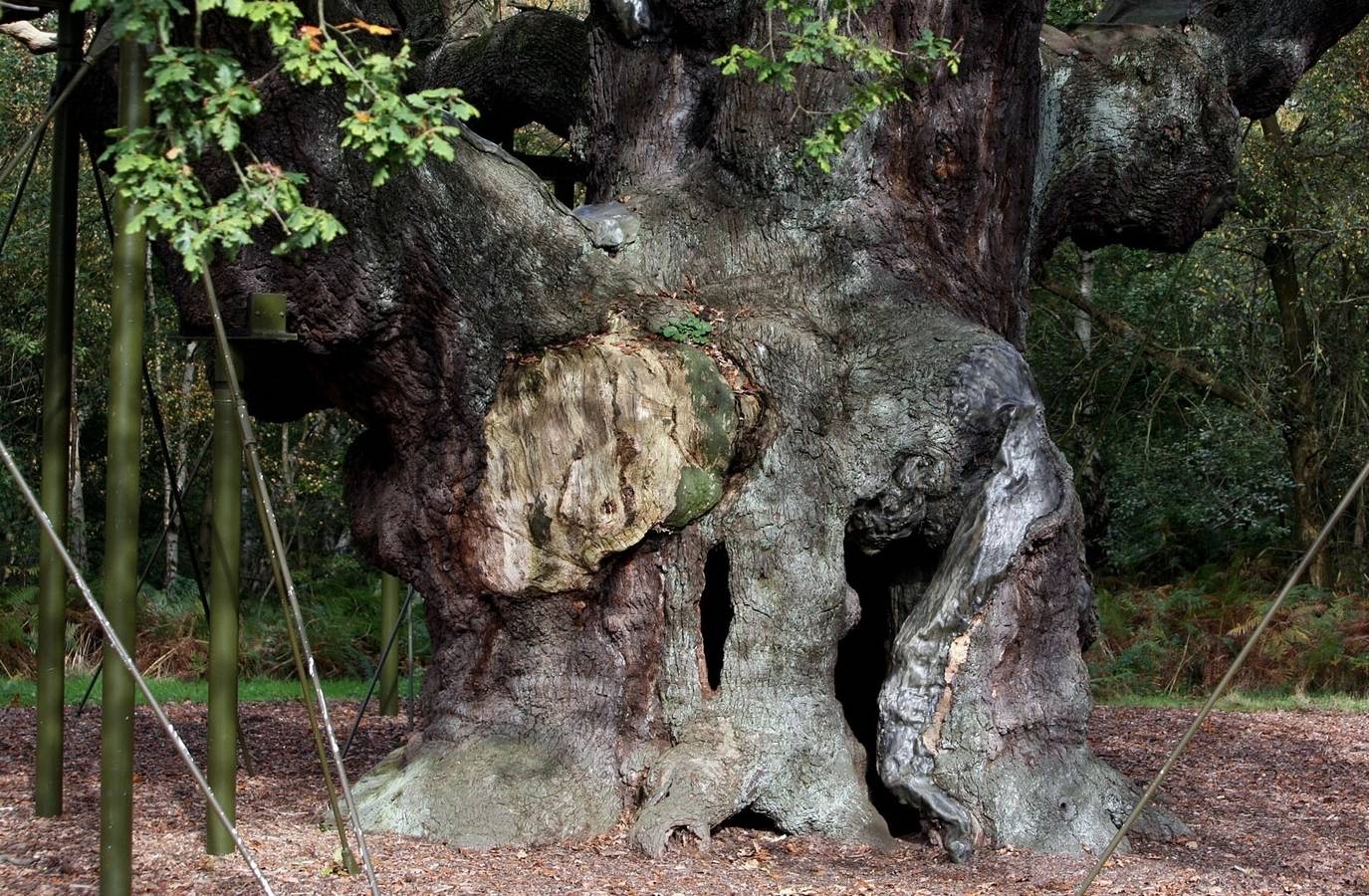
The 'Major Oak', an ancient tree in the UK's Sherwood Forest, has died after failing to produce leaves this spring. The tree, estimated to be between 1,000 and 1,200 years old, was a cultural icon due to its association with Robin Hood and its appearance in Victorian literature.
The tree's fame owes as much to literature and legend as to its remarkable age. Its story is inseparable from Robin Hood, Victorian romanticism, and centuries of storytelling that transformed an old oak into one of Britain's most recognizable natural landmarks.
The tree's connection to Robin Hood is rooted in folklore, with the legendary outlaw said to have used the tree's hollow trunk as a hideout while evading the Sheriff of Nottingham.
However, the tree's popularity may have contributed to its decline. Years of human activity around the tree compressed the soil surrounding its roots, making it harder for rainwater to penetrate, and climate-related stresses such as heatwaves and droughts took their toll.
The tree had been protected by conservation measures since the early 20th century and fenced off from visitors since the 1970s. Despite these efforts, experts believe a combination of age, environmental pressures, and intense public interest gradually led to the tree's demise.