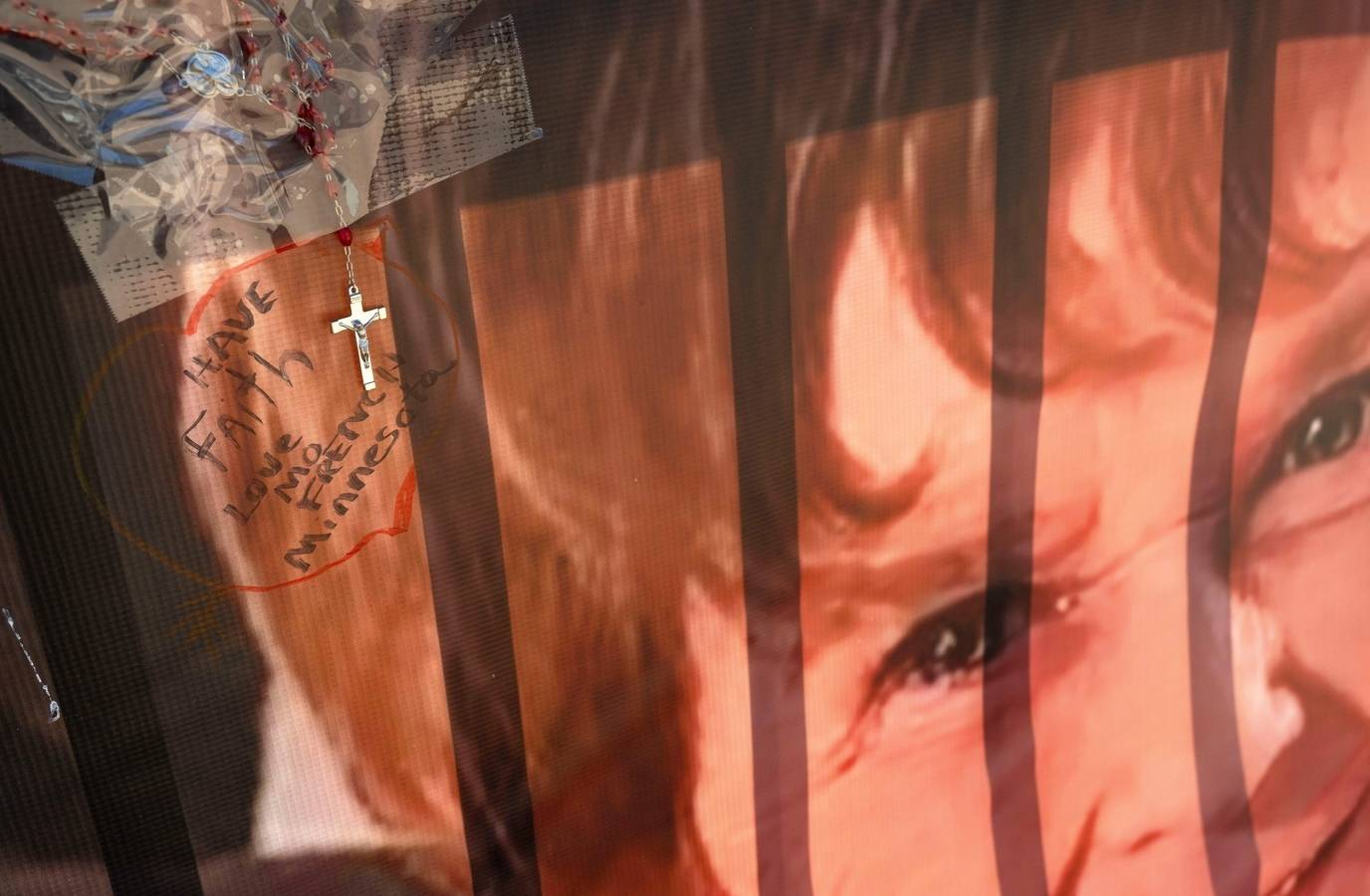
Nancy Guthrie, an 84-year-old woman, has been missing for over 100 days after she was reported missing on February 1. Despite the efforts of the Pima County Sheriff's Office and the FBI, no major progress has been made in tracking her down. Recently, a claim of her body being found in Mexico turned out to be false, leaving the family, including TODAY show host Savannah Guthrie, to hold onto hope. Experts have now explained that even if her body is not recovered, the case could still be a prosecutable homicide, but there are certain conditions that need to be met.
According to experts, a no-body case can still be viable if investigators can put together a chain of circumstantial and forensic evidence that proves Guthrie is dead and that a criminal act caused her disappearance. The authorities have released doorbell camera footage of a man in a mask, carrying a backpack, on Guthrie's porch the night before she was reported missing, which is believed to be the suspect who had a role in her disappearance.
Criminal defense attorney Michael T. van der Veen noted that early 'disruptions' like blood on the porch and the sudden disconnecting of her pacemaker, coupled with the footage of the person known as 'porch guy', all help the case. He added that prosecutors can prove it circumstantially because judges give a jury instruction that circumstantial evidence is just as strong or stronger than direct evidence.
Former police officer and criminal investigation professor Daniel K. Maxwell also weighed in on the case, stating that investigators have to first prove that a homicide has taken place, even when they don't have a body, and have to link a specific person to the case. He emphasized the importance of physical evidence, including direct and indirect evidence, as well as circumstantial evidence.